Skip to content Accessibility statement

MChem (Hons) Chemistry (with a year in York)

Undertake independent research and gain an advanced degree in modern chemistry.

Year of entry: 2027/28

UCAS code
F103
Institution code
Y50
Start date
September 2027
View semester dates
Length
4 years full-time
Typical offer
School/department

Apply for this course

Explore the fascinating world of chemistry.

You'll learn to analyse molecules, their structures and shapes, and how and why they react.

Become an adaptable chemist through research-led practical and classroom sessions. You'll graduate ready to work in a range of sectors that thrive on innovation including technology, medicine and research.

Accreditation

Master's level: This course is accredited by the Royal Society of Chemistry. It fulfils the academic requirements for Chartered Chemist (CChem).

Course highlights

  • Chemical uses of lasers
  • Designer polymers and advanced nanomaterials
  • The molecular nature of life
  • Synthetic pathways to biologically and industrially important molecules
  • Study of novel systems using modern spectroscopic techniques
in the Complete University Guide, 2026.
in the Times and Sunday Times Good University Guide, 2026.
for 'Assessment and feedback' among universities included for Chemistry in the National Student Survey (NSS), 2025.
Our lecturers are often experts in their field. They teach the knowledge that they use on a daily basis, which gives significance to what we are learning. It gives you lots of different ideas about the research you could go on to do.
Jenny, Chemistry student . Read Jenny's blog post.

Course content

In Years 1 and 2, you'll take the same mixture of core and option modules as students on the BSc course.

Core modules balance a good understanding of the basic principles of chemistry with opportunities to see the exciting contributions chemistry can make in the modern world.

Option modules are an opportunity for you to focus on topics which interest you.

In Year 3, you'll have a wider choice of option modules, and learn advanced practical techniques in preparation for an extended research project in Year 4.

We aim to break down the artificial barriers between different branches of chemistry, helping you to understand chemistry as a unified discipline with common underlying principles.

Our chemistry courses are designed to be flexible, so you can transfer between MChem and BSc courses at any time during the first two years. The title of your final degree will depend on the modules you take from Year 2 onwards.

Year 1

You will take a set of core modules, each of which integrates the major areas of Chemistry: organic, inorganic, physical, theoretical, analytical and biological.

You'll begin with themes of structure and bonding, and chemical change and reactivity, with practical courses complementing the lectures, and then take interdisciplinary modules that introduce key chemical principles in the areas of spectroscopic analysis, bonding and chemical change, and chemical reactivity and mechanisms.

You will carry out experiments in analytical and physical chemistry, and a two-week integrated chemistry project as an introduction to research.

Core modules

You will study six core modules:

Academic integrity module

In addition to the above you will also need to complete our online Academic Integrity module.

This module covers some of the essential skills and knowledge which will help you to study independently and produce work of a high academic standard which is vital for success at York.

This module will:

  • define academic integrity and academic misconduct
  • explain why and when you should reference source material and other people's work
  • provide interactive exercises to help you to assess whether you've understood the concepts
  • provide answers to FAQs and links to useful resources.

Year 2

A significant proportion of your second year is made up of core Chemistry modules and practical work which is common to all our Chemistry courses. The year covers more advanced concepts in chemistry through a blend of lectures, tutorials and workshops. You'll also take option modules, allowing you to focus on a specific area in detail.

Core modules

You will study five core modules:

Option modules

You will choose one option module from the following list:

Elective modules

You may be able to replace one option module with an elective module, studying a complementary subject, a language or an interdisciplinary topic.

Year 3

You will continue your studies through a series of core modules and option modules in advanced inorganic, organic and physical chemistry.

These include theoretical knowledge and practical skills which will prepare you for the research project in Year 4.

Core modules

You will study four core modules:

Option modules

You will study two option modules, one in Semester 1 and one in Semester 2. Some option module combinations may not be possible. The options available to you will be confirmed after you begin your course.

Examples of semester 1 options:

Examples of semester 2 options:

Elective modules

You may be able to replace one option module with an elective module, studying a complementary subject, a language or an interdisciplinary topic.

Year 4

You'll spend your final year working on a research project in one of our laboratories. You will have access to the state-of-the-art instrumentation that our department has to offer.

Core modules

You will carry out a research project in an area of your choice. You'll learn principles and techniques of advanced chemistry which you'll be able to draw on in your future career. Recent projects have investigated:

Our modules may change to reflect the latest academic thinking and expertise of our staff, and in line with Department/School academic planning.

Learning outcomes

Every course at York has been designed to provide clear and ambitious learning outcomes. These learning outcomes give you an understanding of what you will be able to do at the end of the course. We develop each course by designing modules that grow your abilities towards the learning outcomes and help you to explain what you can offer to employers. Find out more about our approach to teaching and learning.

Learning outcomes for this course
  • Demonstrate learning and problem solving skills through the acquisition and application of a broad range of fundamental chemical principles and knowledge.
  • Apply fundamental chemical principles and knowledge to the in-depth study of chemical science specialisms and the solution of problems therein.
  • Design and safely conduct chemical experiments through an effective risk assessment. Accurately document and record experiments to enable the effective synthesis of chemical compounds and analysis of physical measurements, of both a quantitative and qualitative nature.
  • Interpret experimental data by using mathematical skills, chemical knowledge, information technology and scientific conventions.
  • Effectively articulate scientific principles, experimental results and research findings in a way that is accessible to a variety of audiences through written, oral and other formats.
  • Independently, or as part of a group, plan, design and conduct an open-ended investigative research project to consolidate and extend knowledge and understanding of chemistry.
  • Demonstrate employability skills such as teamworking, commercial awareness, self-management and creativity and be equipped to work in a professional manner in their future careers in a range of areas including chemistry.

Fees and funding

The fees and funding information here is for students starting in the 2026/27 academic year.

If you take a year abroad or year in industry you'll pay a reduced rate of fees for that year.

The UK government has announced its intention to increase tuition fees from £9,790 to £10,050 for the 2027/8 academic year. We expect this to apply to new UK (home) undergraduate students starting their studies in September 2027.

UK (home) or international fees?

The level of fee that you will be asked to pay depends on whether you're classed as a UK (home) or international student. Check your fee status.

Fees for subsequent years

  • UK (home) fees may increase within the government fee cap in subsequent academic years. We will notify you of any increase as soon as we can.
  • International fees are subject to increase in subsequent years in line with the prevailing Consumer Price Index (CPI) inflation rate (up to a maximum of 10%).

More information

For more information about tuition fees, any reduced fees for study abroad and work placement years, scholarships, tuition fee loans, maintenance loans and living costs see undergraduate fees and funding.

Funding

We'll confirm more funding opportunities for students joining us in 2026/27 throughout the year.

Departmental funding

Year in York
Spend a year working on a research project with one of our renowned research groups.
Flexible course structure
Tailor your course to your interests with our wide range of option modules.

York, Oxford, Cambridge, Imperial

Just four UK universities are rated Gold for teaching and top ten for research* in the latest national assessment exercises.

* Awarded joint 10th in the Times Higher Education ranking of the Research Excellence Framework 2021.

Teaching and assessment

You’ll study and learn with academics who are active researchers, experts in their field and have a passion for their subjects. Our approach to teaching will provide you with the knowledge, opportunities, and support you need to grow and succeed in a global workplace. Find out more about our approach to teaching and learning.

Teaching format

Lectures

Lectures range from the traditional 'chalk and talk' to the use of digital presentations. Where possible we include demonstrations and encourage audience participation through chemical quizzes and voting. 

The size of lectures varies from 200 students to as few as 20 for some option modules. All teaching is done by our academic staff - many of whom are at the forefront of their fields and will discuss the latest developments in their area.

Tutorials

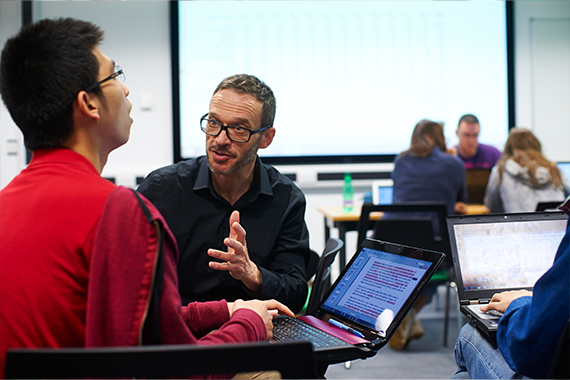
Tutorials are our smallest group teaching sessions and are usually one hour in length. Up to five students join a college tutor who is a specialist in the subject. Tutorials develop a wide range of skills including:

  • problem-solving
  • scientific writing
  • presentation skills

Tutorials help to reinforce topics covered in lectures, and offer an opportunity to discuss aspects of the subject which interest you and ask about any problems encountered in your reading.

Workshops

Up to 25 chemists in the same teaching college are divided into small groups to work through problem sheets, usually over one or two hours. 

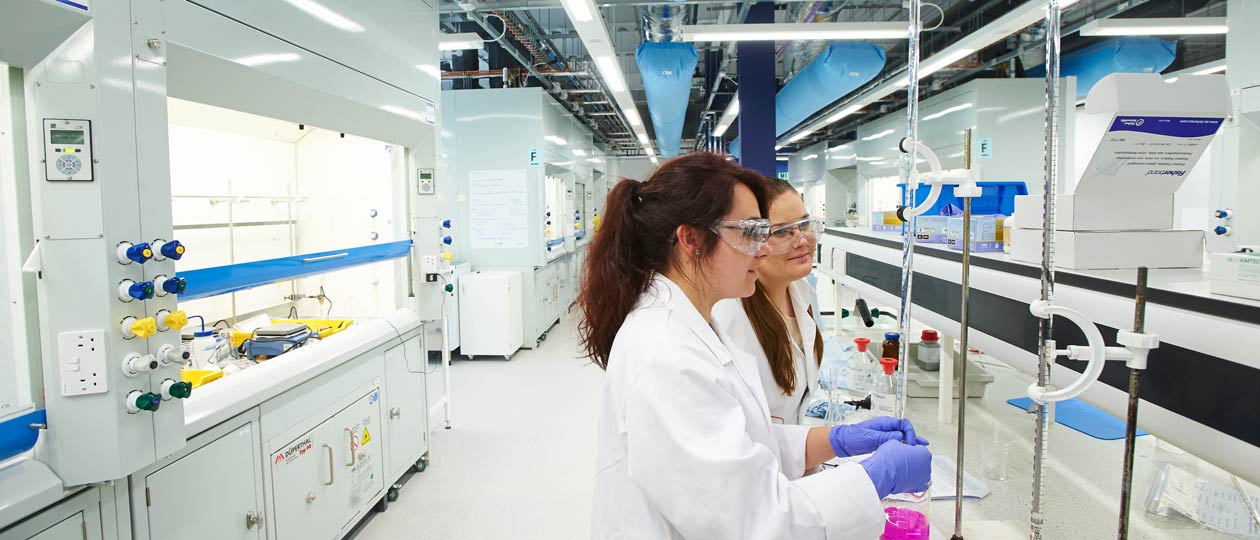
Laboratory work

The chemistry concepts you learn in lectures will help you build practical laboratory and professional skills. Throughout the course, most of your work will be assessed continuously rather than through final exams. You will develop skills that are valuable for careers in chemistry, research, and other jobs that involve data analysis, IT, and problem-solving.

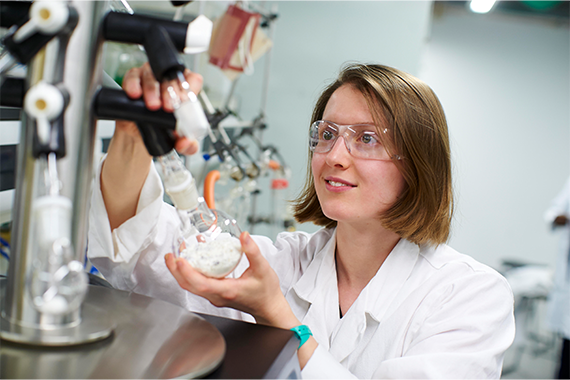
In the laboratory, you will learn how to make and analyse chemical compounds, take accurate measurements, and work safely. You will also attend computer-based sessions where you will learn skills such as carrying out risk assessments, using software to process and analyse data, finding information in chemistry databases, coding, and writing scientific reports.

During the first two years, you will gradually build your laboratory skills, starting with basic techniques and progressing to more advanced research methods. You will also take part in group research projects, where you will use these skills to solve real research problems with guidance from staff.

In the later years of the degree, especially in the final year of a BSc or the final two years of an MChem, you will spend much more time on original research projects. These projects allow you to specialise in areas of chemistry that interest you and match the department's research strengths.

Timetabled activities

In your first year, you can expect:

Lectures 9-10 hours per week
Tutorials 1 hour per week
Workshops 2-3 hours per week
Practicals 6 hours per week

These figures are representative of a typical week. Your contact hours will vary throughout the year due to your module choices, non-compulsory classes, exam periods and changes to scheduled activities.

Outside your timetabled hours, you'll study independently. This may include preparation for classes, follow-up work, wider reading, practice completion of assessment tasks, or revision.

In the UK, full-time students are expected to spend 1,200 hours a year learning. That's about 40 hours of classes and independent study each week during semesters. Everyone learns at a different rate, so the number of hours you spend on independent study will be different to other students on your course.

Teaching location

You will be based in the Department of Chemistry on Campus West. Your teaching will mostly take place in the Department, with some classroom sessions elsewhere on Campus West.

About our campus

Our beautiful green campus offers a student-friendly setting in which to live and study, within easy reach of the action in the city centre. It's easy to get around - everything is within walking or pedalling distance, or you can use the fast and frequent bus service. Take a campus tour.

Assessment and feedback

You'll be assessed in a number of different ways, depending on the modules you study. Forms of assessment include:

  • examinations
  • practical work
  • open book assessments
  • presentations

We pride ourselves on delivering useful written and verbal feedback to all of our students. Whenever you complete an assessment, you will receive feedback on its good and bad points, and guidance on how you can improve further.

You'll also receive feedback on assignments which don't count towards your final grade, helping you to understand your strengths and identify areas for improvement.

Get a taste of university-level study on one of York's free short courses, including our award-winning subject course, 'Exploring everyday chemistry'.

Careers and skills

Although the majority of our graduates progress to become scientists, the analytical and transferable skills which constitute part of our degrees are recognised as suitable training for a wide range of careers.

About 40 graduates per year stay in the Department or join other universities to work for higher degrees. Most are involved in collaborative research projects, many with chemical companies.

Career opportunities

  • Innovative medicines graduate
  • Fuels technology chemist
  • Production chemist engineer
  • Products research scientist
  • Business services graduate
  • Auditor
  • Patent attorney
  • Regulatory officer

Transferable skills

  • Team working
  • Self management
  • Application of IT and numeracy
  • Problem solving
  • Communication and literacy
  • Business and customer awareness

Entry requirements

If you haven't met our English language requirements

You may be eligible for one of our pre-sessional English language courses. These courses will provide you with the level of English needed to meet the conditions of your offer.

The length of course you need to take depends on your current English language test scores and how much you need to improve to reach our English language requirements.

After you've accepted your offer to study at York, we'll confirm which pre-sessional course you should apply to via You@York.

Next steps

Discover York

We offer a range of campus accommodation to suit you and your budget, from economy to premium.
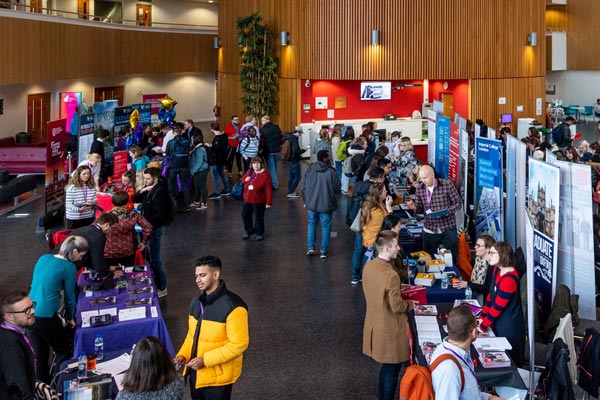
Explore campus and city life and hear what our current students have to say about living here.
Lively, full of culture and beautiful, York is regularly voted one of the best places to live and visit in the UK.
Find out more about York. Chat to staff and students and take the tour, on campus or online.