

MPA Public Administration with Professional Placement
Explore and engage with the services that the international public depends on.
Year of entry: 2027 (September)
Approach key developments in public administration with a critical and creative mind, progressing your practice to the next level.
Why choose Public Administration with a Professional Placement at York?
Explore the critical issues that drive policies in government and on the ground. Enrich your knowledge of international service delivery in government and non-profit organisations. You'll understand how policies support people's everyday needs around the world.
Be supported by internationally-renowned experts from around the world. Our staff regularly contribute to news media and advise governments and institutions across the globe. Their research and expertise will guide your learning, developing your own critical thinking in the process.
Build a nuanced skill set whilst studying for a professional qualification. You'll graduate with the specialist expertise to conduct high quality research in public policy. You'll develop the knowledge desired for a range of careers. This includes policy advising, lobbying, political research, journalism and academia.
Study what you're passionate about. Our wide range of option modules cover a wide range of topics. From the politics of security to the politics of global trade, with both policy-based and theoretical approaches. These option modules allow you to explore your personal interests to a much greater depth.
Apply policy analysis tools to real-word policy making. In your second year, you'll conduct policy analyses and produce policy advice by working on real-world policy cases. This includes an opportunity for a placement placement in national, regional and local government or non-profit agencies.
This programme is exclusively designed for Korean civil servants sponsored by eligible Korean government organisations, including central government departments and local authorities. It is not open to applicants outside this sponsored civil servant cohort. If you do not have sponsorship from a public sector employer please apply to the one-year MPA.

York is fantastic. It has great scenery, superb architecture, and the kindest people in the world. It's been an enriching experience studying Public Administration, which has taught me a lot about strategic planning, critical thinking and leadership skills, and satisfied my strong interests in the third sector, administration and policy implementation.
Course content
In your first year study 180 credits in total. The first year course consists of:
- Four 20-credit core modules
- Two 20-credit option modules
- A 60-credit independent policy report
Taught modules will run throughout Semester 1 and Semester 2, with the policy report being completed during Semester 2.
In your second year, you'll study 40 credits in total. The second year course consists of either:
- Two 20-credit core modules
or
- One 20-credit core module
- One 20-credit professional placement
Taught modules will run throughout Semester 1 and Semester 2. The professional placement option runs in Semester 2.
Modules
Year one
Core modules
- Advanced Policy Analysis (delivered by the School for Business and Society)
- Public Finance: Principles, Politics and Contemporary Issues (delivered by the School for Business and Society)
- Public Management and Delivery
- Leading and Managing Change (delivered by the School for Business and Society)
Option modules
You will study two option modules. Examples can be found below. Some option module combinations may not be possible. The options available to you will be confirmed after you begin your course.
- Challenges to Policy-making in Democratising Countries
- Global Governance
- Introduction to Qualitative Methods & Data Analysis
- Introduction to Quantitative Methods & Data Analysis
- Politics of Migration
- Principles of Policy Advice
- New Security Challenges
- Governing for the Environment
- The Political Economy of Global China
- Critical Theories of International Political Economy
- Comparative Institutions and Public Policy
- Global Development Politics
The options available to you will be confirmed later in the year. For further information, please get in touch.
Year two
In the first semester all students take Comparative Public Administration.
In the second semester, students choose between Principles of Policy Advice or Professional Placement.
Our modules may change to reflect the latest academic thinking and expertise of our staff, and in line with Department/School academic planning.
Dissertation
During the second semester and summer you will consolidate your interests in a policy report on a topic of your choice.
You'll have regular meetings with your assigned policy report advisor, who will help guide you through the process and support you in the exploration of your chosen topic.
Previous policy report titles include:
- What Thailand can learn from the experience of the UK's National Health Service
- Electronic Surveillance Policy in the United States: A Multiple Streams Analysis of the Foreign Intelligence Surveillance Act
- The cutbacks on television entertainment programmes Policy in China: a view on the policy formulation
- Has stronger accountability improved educational achievement of students in K-12 public schools in the US? An evaluation of the impact of No Child Left Behind (2001)
- Rewiring Public Services In The City of York: A Critical Analysis
- A study of food policies for obesity prevention- Applicability of food-related tax to Korea
- Research on the housing co-operative scheme as an alternative for affordable housing: Lessons from the United Kingdom and Sweden
- How to reduce regional disparities in China: Lessons from European regional policies
- A comparative study of underground systems in London and Beijing: What lessons can China learn?
- Disappointment over the quality of England's graduate workforce: employers' fickleness or inherent cultural or systemic problem?
- Evaluation of the third sector policy in Japan
- Influence in a changing climate: INGOs and Network Governance in sub-Saharan Africa
- What is the appropriate role of the federal government in solving America's present educational crisis?
Learning outcomes
Every course at York is built on a distinctive set of learning outcomes. These will give you a clear understanding of what you will be able to accomplish at the end of the course and help you explain what you can offer employers. Our academics identify the knowledge, skills, and experiences you'll need upon graduation and then design the course to get you there.
Learning outcomes for this course
- Identify and understand the critical issues that drive policy-making by looking at how policies are managed, implemented, monitored and evaluated. (Substantive knowledge)
- Use intellectual reasoning and systematic empirical testing to evaluate the strengths and weaknesses of concepts specific to public policy and apply different theoretical perspectives. (Analytical skills and critical thinking)
- Explain and demonstrate to audiences the application of public policy, drawing on an understanding of strategic planning and on appropriate skills and tools. (Communication and strategic skills)
- Construct and clearly present persuasive and critical written reflections that effectively communicate sustained policy analysis to academic and policy-making audiences.
- Undertake independent research on policy related topics by: conceiving and operationalising research questions; building on specialist expertise in public policy; using relevant concepts and tools to gather and interpret policy data; and draw appropriate conclusions and policy recommendations. (Research skills)
- Engage with shared learning across several disciplines and develop an understanding of the values of tolerance, sustainability and inclusivity. (Professional skills).
Fees and funding
Annual tuition fees
| Study mode | UK (home) | International and EU |
|---|---|---|
| Full-time (20 months) | £22,600 | £22,600 |
Fees information
UK (home) or international fees? The level of fee that you will be asked to pay depends on whether you're classed as a UK (home) or international student. Check your fee status.
Find out more information about tuition fees and how to pay them.
Additional costs
Year 2 fees: £11,300 for progression in 2028/29
You may incur some additional expenses for books, but these costs are optional as most of the texts you'll need are available in the University library. If the resources you need aren't available, you can borrow via inter-library loans and order new books to our library for free.
Funding information
Discover your funding options to help with tuition fees and living costs.
We'll confirm more funding opportunities for students joining us in 2027/28 throughout the year.
If you've successfully completed an undergraduate degree at York you could be eligible for a 10% Masters fee discount.
Funding opportunities
Chevening Scholarships
We are pleased to work with Chevening Scholars to offer funding for our Masters programmes. Chevening Scholarships provide one year of fully-funded postgraduate study in the UK for international (including EU) students. The scholarships are open to early and mid-career professionals who have the potential to become future leaders.
Teaching and assessment
You’ll work with world‐leading academics who’ll challenge you to think independently and excel in all that you do. Our approach to teaching will provide you with the knowledge, opportunities, and support you need to grow and succeed in a global workplace.
Teaching format
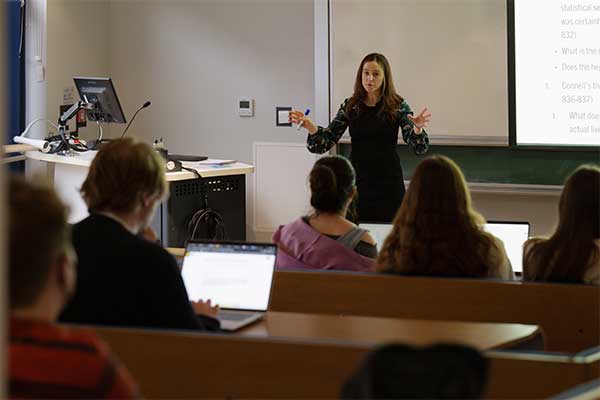
You'll learn through a combination of lectures, seminars and one-to-one supervision. We offer a personal approach to learning with much of our teaching conducted in small groups.
Teaching location
You will be based in the Department of Politics and International Relations in Derwent College on Campus West. Over half of your teaching will be in Derwent College. The rest of your contact hours will be nearby on Campus West.
About our campus
Our beautiful green campus offers a student-friendly setting in which to live and study, within easy reach of the action in the city centre. It's easy to get around campus - everything is within walking or pedalling distance, or you can always use the fast and frequent bus service.
Assessment and feedback
In your first year, you'll submit six essays: three after Semester 1 and three at the end of Semester 2. Your final Policy Report is submitted at the beginning of September.
In your second year, you'll submit one essay after Semester 1 and either a policy memo (for Principles of Policy Advice) or reflective report (or Professional Placement) after Semester 2.


Apart from academics, my favourite aspect of the York experience has been the people. As the IR Student Representative, I have had the privilege of helping to foster a vibrant community of students from many different countries and cultures. I absolutely love learning from my peers. We share our unique backgrounds, debate global issues, and support each other.
Careers and skills
From social and political research to journalism, marketing and HR, a Masters in Public Administration leads to a broad range of career opportunities.
Our students have found work in central or local government, non-governmental organisations, community and voluntary organisations, social enterprise, higher education, accountancy and banking organisations, law firms, media companies and international and global development bodies.
Our students go on to careers in international organisations, the media, law, the civil service, politics, journalism and business.
This course is an excellent pathway to careers in a wide range of private and public sector organisations, and for further academic study in international relations and political science.
Career opportunities
- Diplomatic services officer
- Head of finance
- Senior fundraiser
- Service manager for impact and intelligence
- Chief quality & finance officer for a charity
- Business development officer
Transferable skills
- Reflective independent learning
- The ability to research, source and examine information thoroughly
- The capacity to critically analyse evidence and construct coherent arguments
- Excellent written and oratory skills
- Intellectual independence and autonomy
- Teamworking skills
- A flexible and open-minded approach to work

Accelerate your professional network. We'll connect you with the guidance, industry links and experiences to help you stand out and find your career advantage.
Entry requirements
| Qualification | Typical offer |
|---|---|
| Undergraduate degree | 2.2 or equivalent in any subject. |
| Other international qualifications | Equivalent qualifications from your country |
English language
If English isn't your first language you may need to provide evidence of your English language ability. We accept the following qualifications:
| Qualification | Minimum requirement |
|---|---|
| IELTS (Academic and Indicator) | 6.0, minimum 5.5 in each component |
| Cambridge CEFR | B2 First: 169, with no less than 162 in each component |
| Oxford ELLT | 6, minimum of 5 in each component |
| Oxford Test of English Advanced | 126, minimum 116 in each component |
| Duolingo | 105, minimum 95 in all other components |
| LanguageCert SELT | B2 with 33/50 in each component |
| LanguageCert Academic | 65 with a minimum of 60 in each component |
| Kaplan Test of English Language | 444-477, with 410-443 in all other components |
| Skills for English | B2: Pass with Merit overall, with Pass in each component |
| PTE Academic | 52 with 46 in Listening, 47 in Reading, 53 in Speaking and 50 in Writing |
| TOEFL | 79, minimum of 17 in Listening, 18 in Reading, 20 in Speaking and 17 in Writing |
| Trinity ISE III | Pass in all components |
For more information see our postgraduate English language requirements.
If you haven't met our English language requirements
You may be eligible for one of our pre-sessional English language courses. These courses will provide you with the level of English needed to meet the conditions of your offer.
The length of course you need to take depends on your current English language test scores and how much you need to improve to reach our English language requirements.
After you've accepted your offer to study at York, we'll confirm which pre-sessional course you should apply to via You@York.
Next steps
Contact us
Get in touch if you have any questions

Professor Nicole Lindstrom
Discover York

We offer a range of campus accommodation to suit you and your budget, from economy to premium.

Explore campus and city life and hear what our current students have to say about living here.

Lively, full of culture and beautiful, York is regularly voted one of the best places to live and visit in the UK.

Find out more about York. Chat to staff and students and take the tour, on campus or online.