View semester dates
MPhys (Hons) Theoretical Physics (with a year abroad)
Explore phenomena which experimentation can't easily explain, with a year abroad
Year of entry: 2026/27
View semester dates
On a foundation of advanced physics, you'll build your understanding of theoretical techniques.
You'll use mathematical analysis and an various computational methods to address complex problems. You'll learn key skills of analysis and research and write scientific reports. Working to industry standards, you'll simulate huge physical systems using our supercomputers.
Work with world-renowned physicists. You will learn to use sophisticated supercomputers like York's Viking cluster. With this, you'll be developing parallel code to model complex physical systems.
Gain unique global experiences spending a year at one of our partner universities. Boost your confidence by immersing yourself in a different culture and gain valuable language skills for your CV.
Accreditation
Our Physics courses are accredited by the Institute of Physics, guaranteeing the standard of our teaching and learning. Completing this degree will put you on track to becoming a Chartered Physicist.
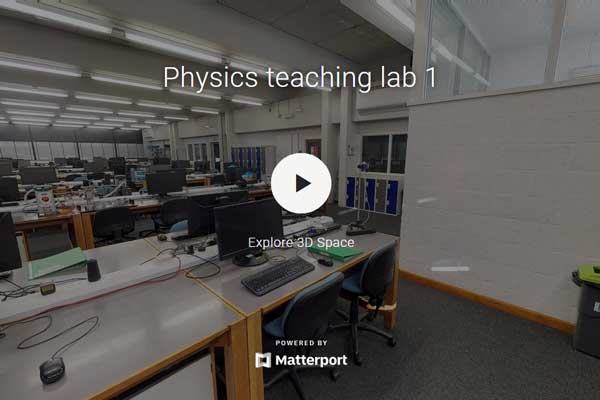
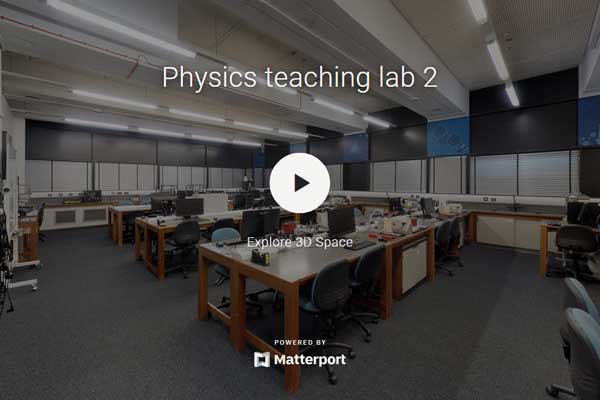
Take a virtual tour of one or our modern, dedicated laboratories showing a typical range of lab equipment and facilities that you'll use.Physics lab virtual tour
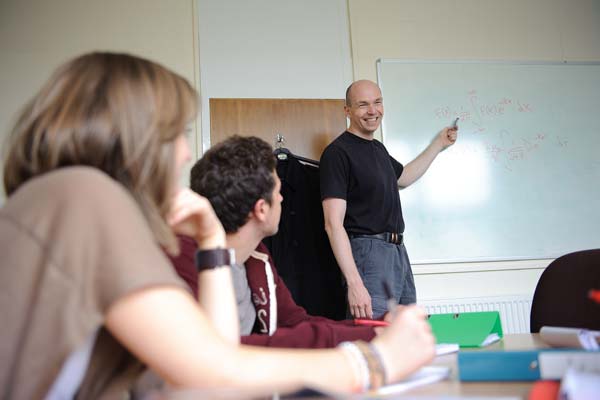
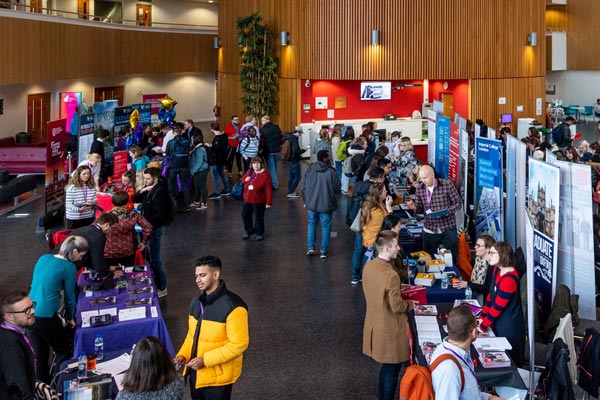
Being a Theoretical Physics student isn’t all work and no play. Throughout the week, there are loads of fun and interesting social events to take part in.
Course content
This course will build on your previous studies to prepare you for advanced research in industry or academia. Our core and optional modules will give you a broad base of knowledge, and opportunities to focus on the specialist subjects which excite your curiosity.
As you progress you'll hone your skills, designing computational studies and solving physical and mathematical problems. You'll spend your fourth year in Europe, experiencing new ways of teaching and learning and gaining valuable language skills.
In your final year you'll design and carry out an original research project. You'll work under guidance from an academic supervisor to bring new knowledge and deeper understanding to an area such as spin chains, nanoparticles or plasmas for fusion energy.
Year 1
Year 1 emphasises core material to consolidate your existing knowledge and prepare you for more advanced study. You'll study a range of key modules, and develop your theoretical and computational skills in the lab throughout the year.
We'll help you prepare for your year abroad with a language module where you'll study a European language to an intermediate or advanced level.
Core modules
- Classical Mechanics and Laboratories
- Classical and Quantum Waves
- Mathematical, Computational and Professional Skills 1
- Electromagnetism and Relativity
- Mathematical, Computational and Professional Skills 2
- Theoretical Skills and Laboratories
Academic integrity module
In addition to the above you will also need to complete our online Academic Integrity module.
Year 2
In Year 2 you'll deepen your understanding of fundamental laws, processes and techniques. You'll learn to approach problems creatively and further develop your programming and analytical skills in our dedicated computational laboratories.
Core modules
Year 3
Your third year introduces some advanced concepts, building on the expertise you've developed. Option modules give you the chance to delve deeper into your favourite topic, or discover a new area of advanced physics.
You'll complete advanced laboratory work which will include preparation for your research project in the final year.
Core modules
Option modules
You will study four option modules. Examples can be found below. Some option module combinations may not be possible. The options available to you will be confirmed after you begin your course.
- Plasma Physics and Fusion
- Quantum Mechanics
- Condensed Matter Physics: Electrons in Solids
- Relativity and Cosmology
- Medical Physics
- Nuclear and Particle
- Quantum Science and Technologies
- Stars and Galaxies
- Astrobiology
- Advanced Sensors and Instrumentation
- Plasma, Physics and Fusion
- Mobile Communications and Internet Protocols
- Introduction to Clinical Engineering and Physiological Systems
Elective modules
You may be able to replace one option module with an elective module, studying a complementary subject, a language or an interdisciplinary topic.
Year 4
You'll spend your penultimate year at one of our prestigious partner institutions. You'll return to York for your final year with a fresh perspective, and new ideas and skills which will be invaluable for your future development.
Our current partner universities.
Elective modules
You may be able to replace one option module with an elective module, studying a complementary subject, a language or an interdisciplinary topic.
Year 5
In your final year, you'll study a number of advanced option modules, providing you with the opportunity to specialise further. You'll apply the core knowledge you've developed over the previous years to topics aligned with our internationally-recognised research groups.
You'll undertake a major research project under the supervision of an academic member of staff with expertise in the area you choose to focus on. You'll conduct original research to reach new conclusions and, at the highest levels, contribute to our understanding of physics.
Core module
Our students widely acknowledge the MPhys project as one of the most satisfying and rewarding parts of the course. You'll undertake independent research to investigate a current problem in the field, or bring new perspectives to a familiar topic. You may need to design and code computer simulations to evaluate complex physical systems.
Some of the recent final year projects addressed by our theory students include the modelling of the complex processes occurring in plasmas for fusion energy, the behaviour of cold atoms in Bose-Einstein condensates, the properties of spin chains, and modelling hyperthermia in a nanoparticle magnetic system.
You'll be supported by a professional skills module to hone your research techniques. You'll undertake a literature survey, write a review essay, develop a project plan and give oral and poster presentations in an end-of-year conference
Option modules
You will study three option modules. Examples can be found below. Some option module combinations may not be possible. The options available to you will be confirmed after you begin your course.
- Scientific Supercomputing
- Biophysics
- Advanced Condensed Matter Physics
- From Subatomic to Nuclear Astrophysics
- Advanced Quantum Mechanics
- Advanced Plasma Physics for Fusion and Applications
- Cosmic Horizons
- Machine Learning and Computational Intelligence
- Research Topics in Nanotechnology: Advanced Data Storage and Spintronic
- Medical Imaging And Physics
- Future Healthcare And Computer Aided Diagnosis
- Practical Skills in Virtual Anatomy and Morphology
- Machine Vision and Human Machine Interaction
- Innovation Management
- Plasma Physics and Fusion
Our modules may change to reflect the latest academic thinking and expertise of our staff, and in line with Department/School academic planning.
Learning outcomes
Every course at York has been designed to provide clear and ambitious learning outcomes. These learning outcomes give you an understanding of what you will be able to do at the end of the course. We develop each course by designing modules that grow your abilities towards the learning outcomes and help you to explain what you can offer to employers. Find out more about our approach to teaching and learning.
Learning outcomes for this course
- Apply independent learning strategies that incorporate core and advanced physics, mathematics and/or computational knowledge, techniques and understanding to synthesise and evaluate physical world problems.
- Plan and execute extended or complex scientific investigation using the principles of physics in investigating a hypothesis, and interpret outcomes.
- Work independently and within a research team and apply group-specific research methodologies, including objective analysis and constructive criticism of research level literature, to extended or complex open-ended problems.
- Communicate succinctly to the general public and professional physicists through accurate and precise scientific record keeping, scientific report writing and presentations.
- Select and apply sophisticated digital tools for in-depth scientific investigation and in wider societal applications.
- Design and successfully code computer simulations based on advanced computational and theoretical models to evaluate complex physical systems, addressing the accuracy, correctness and limitations of the simulation model.
Fees and funding
The fees and funding information here is for students starting in the 2026/27 academic year.
If you take a year abroad or year in industry you'll pay a reduced rate of fees for that year.
Annual tuition fees
| UK (home) | International and EU |
|---|---|
| £9,535 (TBC) | £32,350 |
The UK government has announced its intention to increase tuition fees from £9,535 to £9,790 for the 2026/27 academic year. We expect this to apply to new UK (home) undergraduate students starting their studies in September 2026.
UK (home) or international fees?
The level of fee that you will be asked to pay depends on whether you're classed as a UK (home) or international student. Check your fee status.
Fees for subsequent years
- UK (home) fees may increase within the government fee cap in subsequent academic years. We will notify you of any increase as soon as we can.
- International fees are subject to increase in subsequent years in line with the prevailing Consumer Price Index (CPI) inflation rate (up to a maximum of 10%).
More information
For more information about tuition fees, any reduced fees for study abroad and work placement years, scholarships, tuition fee loans, maintenance loans and living costs see undergraduate fees and funding.
Additional costs
You will need to cover transportation costs to/from any placement during a year in industry as well as living costs while on placement. You should be able to cover the majority of expenses with salary earned during the placement.
You will need to cover transportation costs to/from any placement during a year abroad. You may be eligible for extra loans and/or grants through your student loan provider dependent on your financial background.
Funding
We'll confirm more funding opportunities for students joining us in 2026/27 throughout the year.
- UK government loans
- UK scholarships and bursaries
- International scholarships
- Country-specific funding
- US loans
Masterclass Research Placements
Any student who enters stage 1 of any of our physics degrees having achieved an A* at A level (or equivalent) in Mathematics or Physics and achieves an overall Year Mark of 70 per cent or higher in stage 1 in their first attempt is guaranteed a Masterclass Research Placement.
In addition, a number of Masterclass places will be made available to students who did not qualify based on entry qualification, but who achieve an overall Year Mark of 70 per cent or higher in stage 1 in their first attempt and have demonstrated significant improvement in their abilities during their first year of study.
York, Oxford, Cambridge, Imperial
Just four UK universities are rated Gold for teaching and top ten for research* in the latest national assessment exercises.
* Awarded joint 10th in the Times Higher Education ranking of the Research Excellence Framework 2021.
Teaching and assessment
You’ll study and learn with academics who are active researchers, experts in their field and have a passion for their subjects. Our approach to teaching will provide you with the knowledge, opportunities, and support you need to grow and succeed in a global workplace. Find out more about our approach to teaching and learning.
Teaching format
Much of your teaching will be in the form of lectures based on our cutting-edge research. You will regularly join other students for small group discussions of course material with a tutor. Discussions often range beyond the immediate subject matter to wider implications and issues.
You'll have regular meetings with a personal academic supervisor, who will guide your studies and keep an eye on your academic progress and general welfare.
Timetabled activities
In your first year, you can expect:
| Lectures | 9-12 hours per week |
|---|---|
| Seminars | 2-5 hours per week |
| Practicals | 6-8 hours per week |
These figures are representative of a typical week. Your contact hours will vary throughout the year due to your module choices, non-compulsory classes, exam periods and changes to scheduled activities.
Outside your timetabled hours, you'll study independently. This may include preparation for classes, follow-up work, wider reading, practice completion of assessment tasks, or revision.
In the UK, full-time students are expected to spend 1,200 hours a year learning. That's about 40 hours of classes and independent study each week during semesters. Everyone learns at a different rate, so the number of hours you spend on independent study will be different to other students on your course.
Teaching location
You'll be based in the School of Physics, Engineering and Technology on Campus West. Most of your teaching will take place in the School, with some classes elsewhere on Campus West.
About our campus
Our beautiful green campus offers a student-friendly setting in which to live and study, within easy reach of the action in the city centre. It's easy to get around - everything is within walking or pedalling distance, or you can use the fast and frequent bus service. Take a campus tour.
Assessment and feedback
Throughout your degree you will be assessed through a variety of methods. You'll also be marked on regular problem exercises and laboratory work, coursework and formal report writing.
Your MPhys Project makes up a large proportion of mark for your final year. You'll be assessed on your lab work and dissertation, and face an oral examination: all great preparation for continuing your studies to PhD level.
We balance various types of assessment to develop and test your different strengths:
- Examinations
- Extended assignments
- Weekly practice questions
- Formal reports
- Practical laboratory work
- Presentations
- Practical research methods
You'll get prompt, regular feedback to help you develop your skills. Our open door policy means you can always approach your tutors if you want to discuss your work.
Careers and skills
Our graduates are sought by employers in a huge range of disciplines. The skills you will learn - analysis, mathematics, problem-solving - are relevant in industries from finance to software development. This is supported by a central careers service, but also within the school through our contacts with industry. Alternatively, many of our graduates progress to postgraduate degrees at York and other leading universities.
We're committed to supporting our students' career development and employability - it's embedded in our core teaching. We organise activities from careers fairs to leadership building exercises to ensure you're prepared to enter the jobs market with a competitive edge.
Companies that York physics graduates have gone on to work for include: BAE Systems, E.ON, De Vere, The Home Office, Jaguar Land Rover, John Lewis, the Science and Technology Council, and Virgin Money.
Career opportunities
Our graduates are working as:
- accelerator physicist
- engineer
- scientist
- financial coordinator
- IT analyst and consultant
- teacher
- electrical engineer
- environmental modeller
- accountant
Transferable skills
- Self-management
- Communication skills
- Team working
- Problem solving
- Creativity and innovation
- IT literacy
- Mathematics
I chose York because the Physics course is one of the best in the country, and along with the whole University carries a strong reputation for teaching and research.
Entry requirements
| Qualification | Typical offer |
|---|---|
| A levels | AAA including Physics and Mathematics. |
| European Baccalaureate | 85% overall, with 85% in Physics and Mathematics |
| International Baccalaureate | 36 points overall, including 5 in Higher Level Mathematics (either Analysis and Approaches or Applications and Interpretations) or 6 in Standard Level Mathematics (Analysis and Approaches), plus 5 in Higher Level Physics. |
| T levels | We are currently not accepting T Levels for this course unless additional A Level (or equivalent qualifications) in Mathematics and Physics have been taken. |
| Scottish Highers / Advanced Highers | Advanced Highers - AB in Physics and Mathematics plus Scottish Highers - AB We may also be able to consider three Advanced Highers or a combination of Highers and Advanced Highers, where an applicant does not meet the grade requirement through Highers alone. Please contact us to discuss your qualifications. |
| International foundation programme | Foundation Certificate from our International Pathway College or an appropriate alternative. |
| Other qualifications | All other qualifications, including Scottish Highers and Irish Leaving Certificates, will be considered individually. If you don't have suitable qualifications in Maths and/or Physics, successfully completing a Foundation Year will guarantee a place on any of our undergraduate degrees: Physics (with a foundation year) (BSc) We welcome applications from mature students and students without standard qualifications. Please contact our admissions team to discuss your specific circumstances. |
| Other international qualifications | Equivalent qualifications from your country |
Alternative offers
Meeting the following additional criteria may qualify you for an alternative offer.
| Criteria | Adjustment |
|---|---|
| Widening participation | BBB including Mathematics and Physics This is conditional upon successful completion of the WP programme including the YorJourney module (Black Access Programme, Next Step York) or successful completion of Realising Opportunities More about widening participation. |
| Contextual offer | ABB including Physics and Mathematics. |
| EPQ | If you achieve C or higher in the EPQ, you may be eligible for an alternative offer up to one A level grade (or equivalent) below our typical offer. |
| The York Tutorial Programme | If you successfully complete the York Tutorial Programme, you may be eligible for an alternative offer up to one A level grade (or equivalent) below your offer. |
English language
If English isn't your first language you may need to provide evidence of your English language ability. We accept the following qualifications:
| Qualification | Minimum requirement |
|---|---|
| IELTS (Academic) | 6.5, with a minimum of 6.0 in each component |
| IB English | A score of 4 in English A or 5 in English B (Higher Level or Standard Level) |
| Cambridge CEFR | 176, with a minimum of 169 in each component |
| Oxford ELLT | 7, with a minimum of 6 in each component |
| Oxford Test of English Advanced | 136, with a minimum of 126 in each component |
| Duolingo | Integrated subscores: 120 overall, with a minimum of 105 in each component |
| GCSE/IGCSE/O level English Language (as a first or second language) | Grade C / Grade 4 |
| LanguageCert SELT | B2 with a minimum score of 33/50 in each component |
| LanguageCert Academic | B2 with a minimum score of 33/50 in each component |
| Kaplan Test of English Language | 478 Main Flight score with 444 in each component |
| Skills for English | B2: Merit overall, with Pass with Merit in each component |
| PTE Academic | 61, with a minimum of 55 in each component |
| TOEFL | 87 overall, with a minimum of 21 in each component |
| Trinity ISE III | Merit in all components |
| Other English language qualifications | We also accept other English Language qualifications, including various school-leaving certificates. |
For more information see our undergraduate English language requirements.
If you haven't met our English language requirements
You may be eligible for one of our pre-sessional English language courses. These courses will provide you with the level of English needed to meet the conditions of your offer.
The length of course you need to take depends on your current English language test scores and how much you need to improve to reach our English language requirements.
After you've accepted your offer to study at York, we'll confirm which pre-sessional course you should apply to via You@York.
Next steps
Contact us
Get in touch if you have any questions
Discover York