

MA Cinematography for Film and Television Production
Master the Art of Visual Storytelling: Launch Your Career in Film and Television
Year of entry: 2027 (September)
Bring your creative vision to the screen. Combine artistry with creative and technical precision to explore every dimension of cinematography for single-camera film and television production.
While learning the technical, practical and aesthetic principles of lighting and camerawork, you'll work with industry-standard equipment, in our creative and supportive environment. You’ll gain theoretical and technical experience and will develop and shoot your own project to high professional standards.
Through dynamic workshops, masterclasses, and lectures from leading academics and active industry experts, you won't just study cinematography - you will practice it. Our strong emphasis on collaborative, project-based work ensures you graduate fully prepared for the realities of life on set and on location.
Join a global network of alumni who have secured roles across the British and European film industries, as well as in commercial and TV production spanning from Latin America to the Middle East and the US to China.
Accreditation and Partnerships


This course is industry recognised by ScreenSkills, the industry-led skills body for the UK's screen-based industries, and carries the ScreenSkills Select quality-mark which indicates courses best suited to prepare students for a career in the screen industries. The accreditation means that our students learn professional skills on courses approved and supported by the industry; and it gives access to various schemes, eg internships and traineeships with the BBC, ITV and other broadcasters, as well as independent production companies in British film and television.
The School of Arts and Creative Technologies is part of the BAFTA albert Education Partnership. albert is the leading screen industry organisation for environmental sustainability. Through this partnership students are introduced to the sustainability knowledge they'll need when joining the production workforce.
The School of Arts and Creative Technologies works in partnership with the Mark Milsome Foundation to support the highest standards of safety in film and television production. Through this partnership, all students complete the Mark Milsome Foundation Film and TV Online Safety Passport, ensuring they develop essential health and safety awareness before entering any educational or professional production environment.
Course content
What You'll Study: From Theory to Professional Practice
From mastering lighting design and camera operation to advanced soundstage and location production methods - including grips and electrics - you will build a comprehensive, professional toolkit in cinematography.
You'll explore the practical, creative and commercial realities of production for both film and television. Through critical analysis, you’ll discover the 'why' behind the 'how' - deepening your understanding of composition, visual mood and the creative choices that bring screen stories to life.
Because film- and TV-making is inherently collaborative, you’ll work closely with peers on both factual and fictional productions. Pitching, shooting and managing these group projects hones your communication, problem-solving and resource management skills - the exact qualities required to succeed in industry.
During the summer and vacation period, you'll have the freedom to follow your own creative ambitions through a major individual project. Accounting for a third of your total course credits, this dedicated project allows you to focus deeply on your specific area of interest, refine your unique visual voice and produce a flagship piece for your portfolio and showreel.
Modules
You’ll study 5 core modules, including an extended individual project over the Summer period.
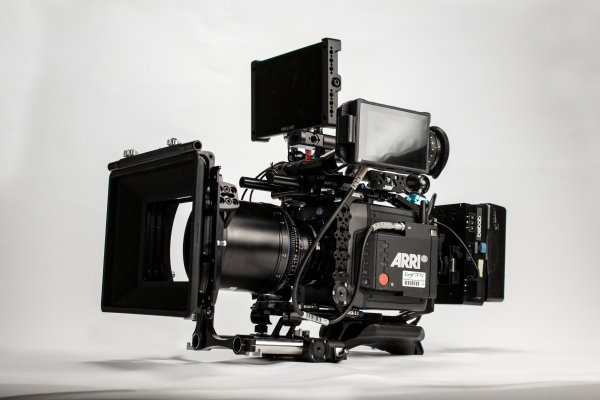
Our modules give you a rigorous technical and aesthetic grounding in visual storytelling for both fiction and documentary. You will master high-end digital workflows using our cutting-edge ARRI, RED and Sony camera systems. Every module stresses the importance of teamwork in the creative process, providing you with constant opportunities to collaborate with like-minded students to develop original content
Core Modules:
- Digital Cinematography I
- Digital Cinematography II
- Grading, Effects & Finishing
- Group Projects
- Individual Project
Option modules:
You will also study one option module each semester. Examples may include:
Semester 1
- Directing for Film and Television I
- Audio Production and Postproduction Workflows
- Editing 1
- Feminism on the Screen
Semester 2
- Business of Production and Postproduction
- Spatial Audio & Surround Sound
- Editing 2
- Exploring Cultural Consumption
- Sound Design with Sound Effects
Some option module combinations may not be possible. The option available to you will be confirmed after you begin your course.
Our modules may change to reflect the latest academic thinking and expertise of our staff, and in line with Department/School academic planning.
Final project
The culmination of your MA is your Individual Project - the most challenging, rewarding and important piece of work you will produce.
Film & Television Production Individual Project
You can choose between two different types of individual project:
- A Production Project: Shoot a short fiction or non-fiction film and write a 4,500-word production report detailing your creative and technical approach as a cinematographer. You can tackle this solo or collaborate with your peers.
- A Research-Led Project: Dive deep into a specific cinematographic specialism through a 6,000-word dissertation or create a hybrid project combining a video/audio artefact with a 4,500-word written analysis.
In all cases you’ll agree your project scope and crew collaborations directly with your academic supervisor before launch to ensure clear, expert guidance from day one of your project all the way through to project delivery.
Learning outcomes
Every course at York is built on a distinctive set of learning outcomes. These will give you a clear understanding of what you will be able to accomplish at the end of the course and help you explain what you can offer employers. Our academics identify the knowledge, skills, and experiences you'll need upon graduation and then design the course to get you there.
Learning outcomes for this course
- Carry out single-camera film and television production to a professional standard by employing an in-depth knowledge of the processes of cinematography to create effective screen-based stories.
- Exercise critical judgement and intellectual rigour in approaching complex creative challenges and opportunities. Be able to communicate clearly and persuasively using appropriate written, oral and visual media.
- Work independently in initiating and developing high quality works by applying a range of creative, technical and practical skills related to cinematography.
- Work collaboratively – as leader or team member – in producing high quality works, in line with current industry practices and standards.
- Deploy confidently a range of industry standard digital technologies to produce creative works initiated by yourself and others.
- Creatively apply the practical and technical components of cinematography – with an understanding of how it relates to and informs different component parts of production (eg directing, sound and editing) – to the art of cinematic fiction and non-fiction storytelling.
- Apply transferrable skills in a range of contexts relevant beyond media production.
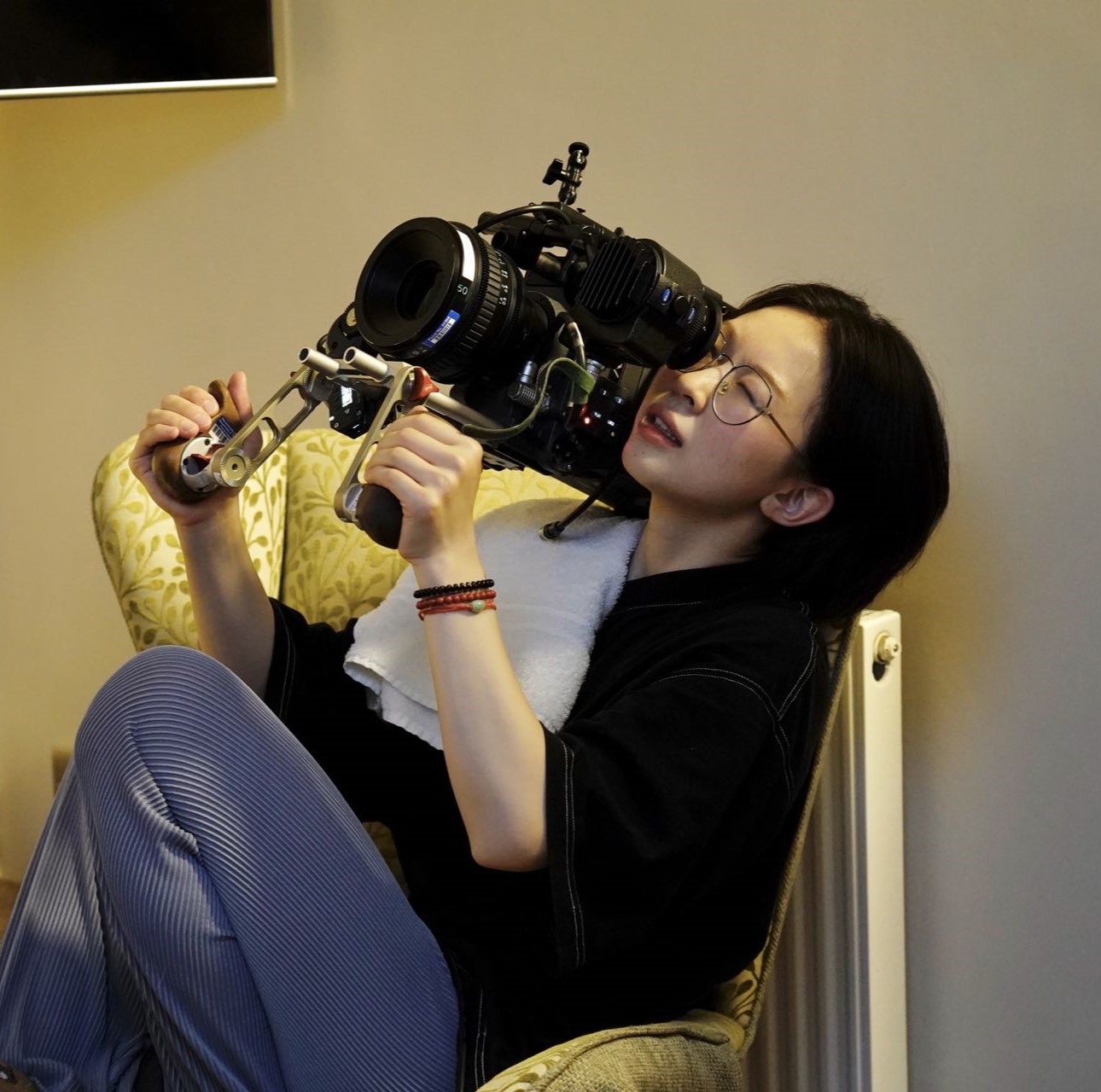
My year at the School offered a wealth of practical opportunities and has created unparalleled memories. We became masters of cinematography, with cameras and lights sculpting the art of light and shadow. Recently, my independent documentary film was officially selected by several film festivals under the guidance of the editing tutor. Gradually I have found my career goal during this year of study.
Yu Wang (Yvonne), MA Film and Television Production with Cinematography
Fees and funding
Annual tuition fees
| Study mode | UK (home) | International and EU |
|---|---|---|
| Full-time (1 year) | £12,940 | £32,900 |
Fees information
UK (home) or international fees? The level of fee that you will be asked to pay depends on whether you're classed as a UK (home) or international student. Check your fee status.
Find out more information about tuition fees and how to pay them.
Funding information
Discover your funding options to help with tuition fees and living costs.
We'll confirm more funding opportunities for students joining us in 2027/28 throughout the year.
If you've successfully completed an undergraduate degree at York you could be eligible for a 10% Masters fee discount.
Funding opportunities
Chevening Scholarships
We are pleased to work with Chevening Scholars to offer funding for our Masters programmes. Chevening Scholarships provide one year of fully-funded postgraduate study in the UK for international (including EU) students. The scholarships are open to early and mid-career professionals who have the potential to become future leaders.
School scholarship information
- Scholarships, awards and bursaries for our students
Teaching and assessment
Learn alongside active practitioners and leading academics who will challenge and support you to excel. You’ll gain the technical confidence and industry insight needed to thrive in a global marketplace.
Teaching format
Practical, hands-on learning: Modules combine weekly lectures and film and TV screenings with practical workshops designed to simulate real industry environments - mastering professional lighting, grips, and camera systems.
You'll also have the opportunity to attend events such as talks, productions and festivals outside of your modules.
You'll be assigned a member of our teaching staff who will act as your personal supervisor for the duration of the course. They are there to give advice on academic matters as well as other areas of University life.
Facilities
Train on professional, production-grade equipment used across the global film and broadcast industry:
- Cameras & Optics: ARRI, RED, and Sony systems with cinema lenses from Angenieux, Zeiss, DZOFilm, Sigma, and Samyang.
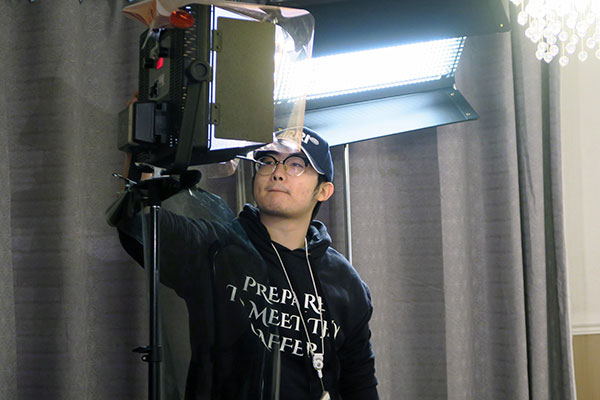
- Lighting, Grips & Sound: Industry-standard kit from ARRI, Kino-Flo, Aputure, Godox, Sachtler, Ronford-Baker, O'Connor, Manfrotto, and Sound Devices.
- Studios & Production Spaces: Fully equipped sound stages, green-screen facilities, TV studios, dressing rooms, and a dedicated props workshop.
- Post-Production: Picture and sound finishing suites (including Dolby Atmos, Foley and ADR), plus 24/7 access to an exclusive postgraduate editing suite.
Teaching location
You will be based at the School of Arts and Creative Technologies on Campus East.
Most of your contact hours will be here, with some additional teaching elsewhere on Campus East.
About our campus
Our beautiful green campus offers a student-friendly setting in which to live and study, within easy reach of the action in the city centre. It's easy to get around campus - everything is within walking or pedalling distance, or you can always use the fast and frequent bus service.
Assessment and feedback
Assessments are continuous and practical, designed to mirror real industry workflows. Low-stake early tasks provide prompt feedback to track your progress to improve final submissions.
Depending on your modules, assessments may include: -
- Practical shoots: Camera blocking, lighting studies, frame analyses, and collaborative short films.
- Industry pitches & presentations: Pitching visual concepts and creative proposals.
- Reflective reports & essays: Critically deconstructing visual choices and technical workflows.
- Final Master’s project: A short film production report or research dissertation (4,500–6,000 words).
Careers and skills
Our graduates forge successful careers across film, television, commercial media, and academia. The high-level project management, technical troubleshooting and team leadership skills you master on our programme are universally valued. You will graduate with a versatile skill set that transfers seamlessly into our creative industries or any modern industry or corporate field.
Career opportunities
- Cinematographer / Director of Photography
- Camera Operator or Assistant
- Lighting Technician / Gaffer
- Director or Producer (including Production Management)
- Editor for film, television, and online media
- Script Developer or Supervisor
Transferable skills
- Collaborative leadership
- Complex problem-solving
- Project ajnd time management
- Technical and critical analysis
- Investigative research and reflection

Accelerate your professional network. We'll connect you with the guidance, industry links and experiences to help you stand out and find your career advantage.
Entry requirements
| Qualification | Typical offer |
|---|---|
| Undergraduate degree | 2:2 or equivalent, and evidence of professional experience or a commitment to film making. |
| International pre-masters programme | Pre-masters from our International Pathway College |
| Other international qualifications | Equivalent qualifications from your country |
Additional requirements
You will need to submit a sample of your creative work with your application. Please see our guidance on submitting creative work.
English language
If English isn't your first language you may need to provide evidence of your English language ability. We accept the following qualifications:
| Qualification | Minimum requirement |
|---|---|
| IELTS (Academic and Indicator) | 6.5, minimum 6.0 in each component |
| Cambridge CEFR | B2 First: 176, with 169 in each component |
| Oxford ELLT | 7, minimum of 6 in each component |
| Oxford Test of English Advanced | 136, minimum 126 in each component |
| Duolingo | 120, minimum 105 in all other components |
| LanguageCert SELT | B2 with 33/50 in each component |
| LanguageCert Academic | 70 with a minimum of 65 in each component |
| Kaplan Test of English Language | 478-509, with 444-477 in all other components |
| Skills for English | B2: Merit overall, with Pass with Merit in each component |
| PTE Academic | 60 with 52 in Listening, 53 in Reading, 65 in Speaking, and 59 in Writing |
| TOEFL | 4.5, with 5 in Listening and 4.5 in each other component |
| Trinity ISE III | Merit in all requirements |
For more information see our postgraduate English language requirements.
If you haven't met our English language requirements
You may be eligible for one of our pre-sessional English language courses. These courses will provide you with the level of English needed to meet the conditions of your offer.
The length of course you need to take depends on your current English language test scores and how much you need to improve to reach our English language requirements.
After you've accepted your offer to study at York, we'll confirm which pre-sessional course you should apply to via You@York.
Next steps
Contact us
Get in touch if you have any questions

Discover York

We offer a range of campus accommodation to suit you and your budget, from economy to premium.

Explore campus and city life and hear what our current students have to say about living here.

Lively, full of culture and beautiful, York is regularly voted one of the best places to live and visit in the UK.
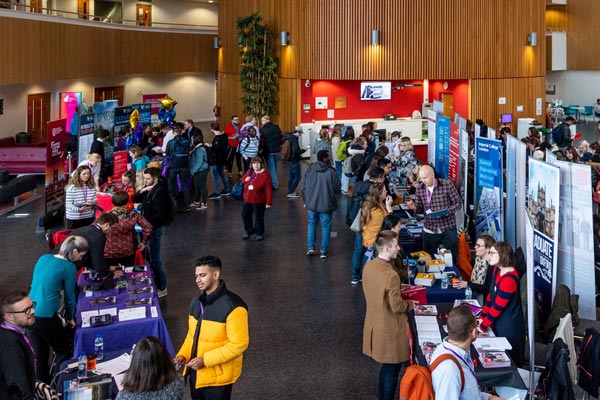
Find out more about York. Chat to staff and students and take the tour, on campus or online.