Our impact
Explore case studies from researchers working with communities around the world towards positive change.

Posted on 16 February 2016
Government figures for the HS2 high speed rail project just don't add up, according to mathematical economist Professor Jacco Thijssen
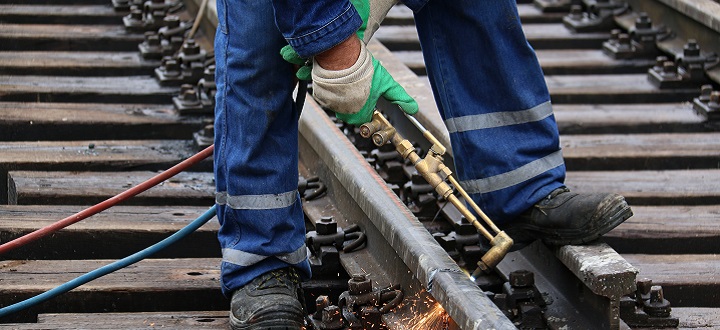
When our model comes up with decision rules, this is not speculation; it is mathematically proven...”
An economist at York has developed a mathematical model to help politicians and policymakers decide whether to go ahead with expensive and time-consuming construction projects.
The model has applications for major infrastructure projects such as the controversial HS2 high speed rail link – and it concludes that the case for the multimillion pound north-south transport link just doesn’t add up.
Professor Jacco Thijssen from our School for Business and Society has crunched government numbers for the first phase of the proposed high speed route between London and Birmingham. He says the economics behind the project are 'questionable'.
“What we are doing at York in terms of mathematical modelling is far more advanced than anything that is currently available to the government or most of the private sector,” he explains.
Professor Thijssen gave a talk on the economics of HS2 at our research showcase YorkTalks 2016
Uncertainties around construction progress and revenues are at the heart of the analysis. All possible future scenarios are taken into account when determining the optimal decision.
“In contrast, most companies or organisations would carry out a rudimentary cost-benefit analysis with, for example, good, medium and bad scenario options,” says Professor Thijssen. “So, when our model comes up with decision rules, this is not speculation; it is mathematically proven that these are optimal in the framework of the model.”
The models developed at York could also inform decisions about flood defence policies, deciding when to stop a clinical trial of a drug or therapy, when to build a nuclear power station or when to merge with another firm. They could shape decisions about how long to engage in a war of attrition with an economic competitor, when to build a wind farm and when to stop paying subsidies to green energy.
“The reality is that decision makers have to take into account all sorts of scenarios that can evolve in different, currently unknown, ways in the future,” says Professor Thijssen.
“You cannot view these in isolation; you have to consider them all together because you have to take into account the likelihood of one scenario evolving, as well as the likelihood of another scenario. All that information together gives you an optimal decision.”
He contrasts this with the approach that the UK government and its advisers have used in making its decision to back the HS2 rail link.
“The standard Benefit-to-Cost Ratio (BCR) economic model used to set out the case for HS2 is incomplete because it does not take into account uncertainties about construction costs and operational revenues. It also uses the same value-for-money thresholds for every project.”
Based even on the limited information that HS2 provided, Professor Thijssen says his computations state quite clearly – don’t do it. More than this, his figures show that the probability that the conditions are going to be right in the next ten years is very, very low.
“The government seems not to have this kind of modelling and that means we are going to be making bad decisions for some considerable time to come - with all the implications this has for value for money in public spending,” he says.
The text of this article is licensed under a Creative Commons Licence. You're free to republish it, as long as you link back to this page and credit us.
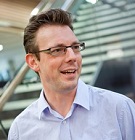
Professor Jacco Thijssen
Research interests in the applications of dynamic, stochastic and game theoretic methods to areas in micro economics and corporate finance.
A model for irreversible investment with construction and revenue uncertainty was published in the Journal of Economic Dynamics and Control
Professor Thijssen's research featured in YorkTalks 2016, the showcase event for some of our most exciting, innovative research. This year we filmed the presentations - watch the films here
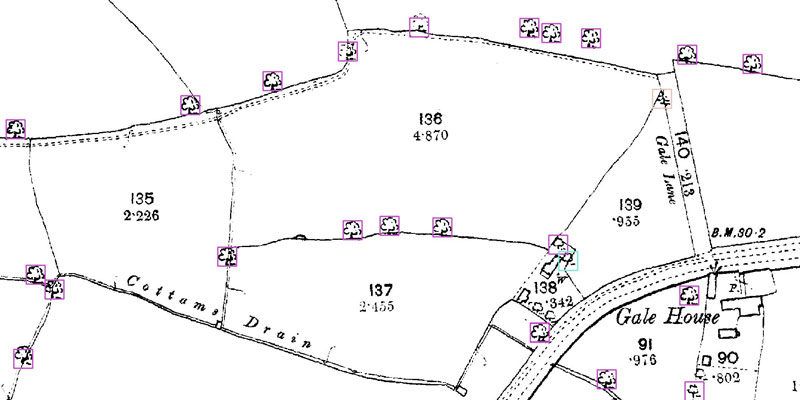
A research project needed to spot trees on historic ordnance survey maps, so colleagues in computer science found a solution.
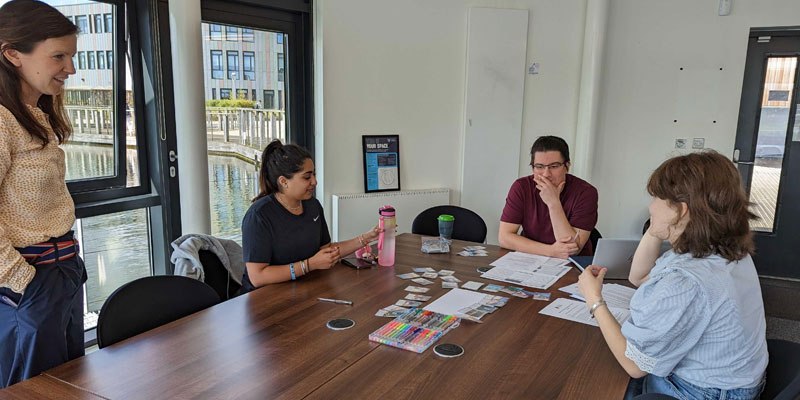
We’re using gaming technology to ensure prospective teachers are fully prepared for their careers.
A low cost, high-accuracy device, could play a large part in the NHS's 'virtual wards'.
Our monthly research newsletter features a curated mix of news, events, and recent discoveries delivered straight to your inbox.