View semester dates
2 years part-time
Apply the law in defence of human rights
Year of entry: 2026 (September)
Socio-legal training for effective and reflexive human rights practice
In response to today’s polycrisis of armed conflicts, socio-economic inequality, climate change, populism and extremism, human rights practice is changing. As activists and scholars, we must focus on the standard-setting and implementation of human rights law at all levels. This includes international treaties, domestic law, states and non-state actors, grassroots movements and international institutions. In doing so, we acknowledge that effective human rights defence requires us to think politically and reflexively.
This distinctive LLM trains you to think about the law in its socio-political context. You'll develop a strong understanding of how to effectively promote human rights and protect human rights defenders. Whether you're a recent graduate or a mid-career professional, you'll gain substantive human rights knowledge, versatile socio-legal skills, and valuable networks.
On the LLM International Human Rights Law and Practice, you will:
work on meaningful human rights projects in partnership with local and international non-governmental organisations, UN mechanisms or governmental bodies.
reflect on positionality and context, undertaking fieldwork in Cape Town, York or online.
benefit from the interdisciplinary expertise of our academic-practitioner staff. This includes the UN Special Rapporteur on Contemporary Forms of Slavery, whose work informs their teaching.
learn from human rights defenders at risk, who find respite and train at the Centre for Applied Human Rights.
Interact with human rights and humanitarian law researchers at the York Law School and the Centre for Applied Human Rights, whose research shapes local and international policy.
This course aims to familiarise you with three sides of human rights practice: law, institutions and advocacy.
Semester 1 introduces you to key concepts in international human rights law. This enables you to critically examine international and regional treaties and the work of monitoring and adjudication bodies. You'll also receive training in socio-legal research methods and data collection through fieldwork. You'll then apply this knowledge whilst working on a human rights placement in partnership with a non/governmental organisation or UN mechanism.
In Semester 2, you can enhance your advocacy skills by participating in clinical legal education or a human rights lab. You'll learn to communicate research in different formats to peers, scholars, professionals or law clinic clients across a range of professional settings. The range of option modules will allow you to deepen your knowledge and skills in a specific human rights field or craft a more interdisciplinary understanding of human rights.
During Semester 2 and the summer, you’ll start work on a dissertation on a topic of your choice.
Our core modules enable you to acquire holistic knowledge and the necessary socio-legal skills needed for a successful career in human rights practice, or progression to PhD study.
As part of legal clinics, you'll develop advocacy campaigns and submissions to international human rights bodies. You'll also undertake a human rights placement with an organisation that works on a topic of interest, and conduct fieldwork in South Africa, the UK or online.
You must choose one of these two modules as a core module and may take the second one as an optional module.
You will also study two option modules. In previous years, options have covered topics such as:
The options available to you will be confirmed after you begin your course. While we are striving to accommodate our students’ preferences, we are not able to guarantee availability of optional modules.
Our modules may change to reflect the latest academic thinking and expertise of our staff, and in line with Department/School academic planning.
During Semester 2 and in summer, you will work on a dissertation of up to 12,000 words on a topic of your choice. You will be guided throughout your dissertation journey by an academic supervisor. The dissertation is due for submission in mid-September.
The dissertation is a substantive piece of academic work and the culmination of your studies. It's often possible to align your dissertation with an organisation you've worked with, ensuring it has immediate relevance and impact. As part of their dissertation research, many of our students choose to undertake fieldwork and collect primary data, drawing on the theoretical knowledge and practical skills which they have developed on the LLM. The dissertation can be the springboard to progressing to PhD studies.
Previous students' dissertations have investigated:
York Law School and CAHR recognise the hard work and celebrate the academic achievements of our students by offering a Best Written Dissertation Award and Best Overall Student Prize.
A distinctive feature of the LLM in International Human Rights Law and Practice is its practice-oriented approach. On the Human Rights Placement, you will have the opportunity to work on a human rights project in partnership with local and international NGOs, UN mechanisms or governmental bodies.
You and your group will forge a relationship with an organisation to develop and deliver a project. The experience mirrors a classic human rights mission, requiring the following elements:
Past projects have included:
Every year, CAHR presents the Sam Pegram Human Rights Placement Award to the group which produced an output that best demonstrates a commitment to reflexive human rights practice and which seeks to centre the needs and voices of those involved in the struggle for human rights.
The fieldwork trips abroad will only run if there are sufficient student numbers.
Every course at York is built on a distinctive set of learning outcomes. These will give you a clear understanding of what you will be able to accomplish at the end of the course and help you explain what you can offer employers. Our academics identify the knowledge, skills, and experiences you'll need upon graduation and then design the course to get you there.
I cannot overestimate the value of the placement; my experiences were immensely rewarding and incredibly interesting. Throughout the entirety of the process, I have continued to expand my understanding of human rights and their practice in a wide variety of contexts.
| Study mode | UK (home) | International and EU |
|---|---|---|
| Full-time (1 year) | £12,500 | £27,250 |
| Part-time (2 years) This is the year 1 fee. Fees for future years are subject to confirmation. |
£6,250 | £13,625 |
Students on a Student Visa are not currently permitted to study part-time at York.
For courses which are longer than one year, the tuition fees quoted are for the first year of study.
UK (home) or international fees? The level of fee that you will be asked to pay depends on whether you're classed as a UK (home) or international student. Check your fee status.
Find out more information about tuition fees and how to pay them.
If you choose to undertake a placement in South Africa you will need to budget around £1,400 to £1,600, over and above tuition fees and living expenses. Placements in York do not incur additional costs, apart from potential limited local travel.
Discover your funding options to help with tuition fees and living costs.
We'll confirm more funding opportunities for students joining us in 2026/27 throughout the year.
If you've successfully completed an undergraduate degree at York you could be eligible for a 10% Masters fee discount.
We are pleased to work with Chevening Scholars to offer funding for our Masters programmes. Chevening Scholarships provide one year of fully-funded postgraduate study in the UK for international (including EU) students. The scholarships are open to early and mid-career professionals who have the potential to become future leaders.
Every year CAHR offers one scholarship for the LLM in International Human Rights Law and Practice. The scholarship is only open to students who qualify for UK (home) fees who have received a conditional or unconditional offer for full-time study.
The Sam Pegram Scholarship provides full tuition fee waiver, travel, accommodation and living costs for a student studying International Human Rights Law and Practice with a specific interest in migration issues.
The LLM for me was an all-round experience, a starting point for a career change but also a big push, and a place to meet like-minded people. I will always be grateful to the wonderful professionals working in the programme, who made me think and think again – and critically. I highly recommend the LLM if you want to either start or push your career forward in human rights.
Gemma, LLM International Human Rights Law and Practice
You’ll work with world‐leading academics who’ll challenge you to think independently and excel in all that you do. Our approach to teaching will provide you with the knowledge, opportunities, and support you need to grow and succeed in a global workplace.
You will be taught by academics and experienced practitioners in a range of innovative and interactive formats, including:
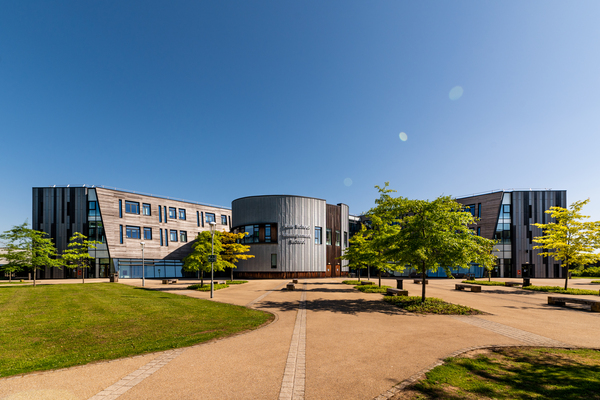
Most of the teaching activities will take place at the Centre for Applied Human Rights and York Law School. The Centre is based in the Research Centre for Social Sciences on Campus West and York Law School is located in the Law and Sociology Building on Campus East. In addition, you will spend two weeks undertaking fieldwork, either in Cape Town (South Africa), online or in and around York (UK).
Our beautiful green campus offers a student-friendly setting in which to live and study, within easy reach of the action in the city centre. It's easy to get around campus - everything is within walking or pedalling distance, or you can always use the fast and frequent bus service.
You'll be assessed on work including essays, moot written submissions, legal advocacy campaigns, reflective diaries, presentations and your dissertation.
We'll be looking for evidence of your ability to interpret international human rights law and use compelling socio-legal arguments to identify and challenge human rights violations. You should be able to speak knowledgeably about unfolding international events to a range of audiences, and collect and interpret qualitative data to support your arguments.
As well as your assessed work you'll be given formative assignments which don't count towards your final grade. The feedback you receive for this work will help you develop your skills and identify areas for improvement.
The LLM has not disappointed – it has provided me with a thorough academic understanding of international human rights through interactive and applied learning. Doing the LLM part-time has allowed me to simultaneously pursue my career, and the faculty has been extremely accommodating and supportive of my sometimes competing priorities. The knowledge and practical skills I developed during the LLM have already resulted in new career opportunities for me and have helped me to progress to more senior levels within government.
Michaela, LLM International Human Rights Law and Practice
We provide hands-on experience in human rights legal and policy work, networking opportunities, career advice, and personalised reference letters to help you on your desired career path.
Our graduates are lawyers, advocates, human rights officers, refugee relocation caseworkers, legal & policy researchers/consultants/analysts/advisors, communications officers, civil servants, diplomats, and scholars.
Find out more about our graduates' careers:
| Qualification | Typical offer |
|---|---|
| Undergraduate degree | 2:2 or equivalent. Some academic study or practical experience of law is desirable, but not required. |
| International pre-masters programme | Pre-masters from our International Pathway College |
| Other international qualifications | Equivalent qualifications from your country |
If English isn't your first language you may need to provide evidence of your English language ability. We accept the following qualifications:
| Qualification | Minimum requirement |
|---|---|
| IELTS (Academic and Indicator) | 6.5, minimum 6.0 in each component |
| Cambridge CEFR | B2 First: 176, with 169 in each component |
| Oxford ELLT | 7, minimum of 6 in each component |
| Oxford Test of English Advanced | 136, minimum 126 in each component |
| Duolingo | 120, minimum 105 in all other components |
| LanguageCert SELT | B2 with 33/50 in each component |
| LanguageCert Academic | 70 with a minimum of 65 in each component |
| Kaplan Test of English Language | 478-509, with 444-477 in all other components |
| Skills for English | B2: Merit overall, with Pass with Merit in each component |
| PTE Academic | 61, minimum 55 in each component |
| TOEFL | 87, minimum of 21 in each component |
| Trinity ISE III | Merit in all requirements |
For more information see our postgraduate English language requirements.
You may be eligible for one of our pre-sessional English language courses. These courses will provide you with the level of English needed to meet the conditions of your offer.
The length of course you need to take depends on your current English language test scores and how much you need to improve to reach our English language requirements.
After you've accepted your offer to study at York, we'll confirm which pre-sessional course you should apply to via You@York.
Get in touch if you have any questions