| UCAS code | Typical offer | Length |
|---|---|---|
| VR11 | AAA (See full entry requirements) | 4 years full-time |
This joint degree combines a broadly based study of history with a specialist concentration on the French language and on French society and culture more generally. Offering a range of options in both subjects, it develops skills of analysis, research, and communication that are highly relevant to a wide variety of career paths.
A degree course in History and French allows you to combine a wide-ranging programme of historical study, offering many different specialist options, with the opportunity to develop advanced French language skills and in-depth knowledge of issues in French culture and society. Within the language side of the programme, there is also the possibility of including linguistics—the scientific study of language in general—or of adding another language.
On the History side, you will study the history of different periods and geographical regions, and will develop the ability to analyse processes of historical change. You will also acquire the research and analytical skills required for interpreting historical sources and constructing historical arguments. You will have the opportunity to deploy these skills at an advanced level in the History Special Subject and also, if you choose, in an independently researched History Dissertation on a topic of your own choosing. Your work in History will help to place your study of French culture and society in a broader context.
At the same time, you will develop a high level of ability and fluency in reading, writing, speaking and understanding the French language, and will use this ability to explore French and other Francophone cultures and societies more fully. You will have plenty of opportunity to apply these skills and to deepen this cultural knowledge during the third year of your degree course, which is spent in France, studying at a French university. As well as enhancing your historical studies, the practical language skills acquired on the degree are highly relevant to a wide variety of career paths.
The Departments of History and of Language and Linguistic Science (the latter of which is responsible for the French side of the degree) both have strong records of teaching and research. The History Department is one of the biggest in the country, with substantial expertise in all historical periods from the fall of the Roman Empire to the present day, and in the histories of Britain, Europe, the Americas, Asia and Africa. Staff include specialists in political, social, economic, intellectual and cultural history. The Department of Language and Linguistic Science is a leading centre for research on language, and one of the few departments in the country to combine teaching language and linguistics at undergraduate level. Both departments have strong traditions of research led teaching which means that curriculum and course development are cutting edge, and that students benefit directly from the variety of interests just indicated.
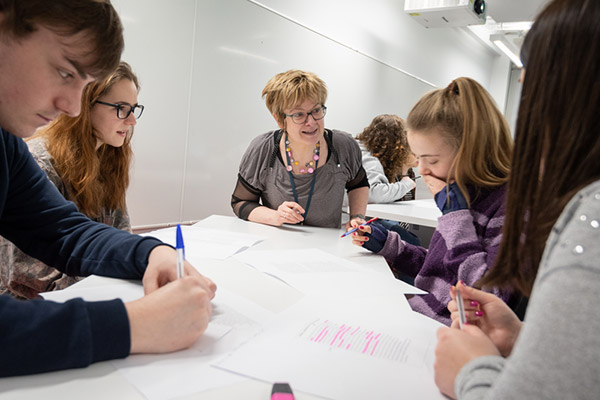
Most teaching takes place in small groups, with a strong emphasis on student participation and tutor-student interaction. Lectures are also used to communicate foundational knowledge.
On the language side of the degree, seminars conducted wholly in French are used to develop language skills. Throughout the programme, we offer ample opportunity for you to practice applying the skills you will need in your assessments, and we provide feedback in a variety of formats. Module tutors are available during weekly ‘student hours’ for one-to-one dialogue with students about their assignments. Every student has a supervisor in either the History or the Language and Linguistic Science Department, to provide pastoral support and monitor academic progress from module to module and year to year.
Students on this degree course take roughly fifty percent of their modules in each department, but have scope to vary these proportions through their choices in Years 3 and 4. They may also, if they wish, take an elective module in a third department. Although part of the degree consists of core modules taken by all students, students have a considerable choice of modules, especially from Year 2 onwards.
As an integral part of their degree, students spend a year taking courses in their two degree subjects at a French university. As well as offering valuable experience of living in a different society and studying in a different academic system, the year abroad further varies the study options available to students. Many students use part of their year abroad to develop particular interests in French history, both through coursework and through research for a dissertation.
These modules develop core skills in the two degree subjects.
Making Histories: This module introduces the core skills required for advanced historical study.
Either From Rome to the Renaissance: The Transformation of Traditional Societies, c. 400-1650 or Citizens, Comrades and Consumers: The Making of the Modern World, 1650-2010.
These lecture-based modules provide an overview of the long chronology of historical time. They give a broad foundation for the history side of your degree.
Thinking Through History I: This lecture module introduces you to themes and issues relating to the study of history across a broad sweep of time and space.
French Language and Society I: This module lays the groundwork for later work in French by developing and consolidating your written and oral skills.
French Grammar: This module lays further groundwork by developing your understanding of the structures of the French language.
Choice of a core linguistics module or a language module from the range offered by Languages for All
Students may also ‘audit’ History Department Year 2 Histories and Contexts modules; that is, attend lectures and access reading but with no assessment.
You will develop more focused and detailed knowledge of particular periods and subjects in history, and will extend your skills in the French language.
Histories and Contexts: This lecture-based module examines either a particular period or region or a particular approach to studying the past. Recent options have included: The Tudor Regime, 1485-1603, The United States, 1775-1877, and the Modern City.
Explorations: This seminar module explores a particular topic or theme over a relatively short period of time. Recent options have included: Chivalry, The European Witch Craze, and Africa and the World since the 1950s.
Using primary material: This module introduces you to the main types of sources used by historians, and develops the skills needed to use primary materials in future courses.
French Language and Society 2: As well as further developing linguistic skills, this module is designed to familiarise you with key aspects of modern French culture and society, through analysis of a variety of authentic oral and aural materials.
Francophonie: This module is designed to increase your awareness of the development and diffusion of French language and culture globally.
Choice of one additional French or linguistics module from among European Cinema, an intermediate core linguistics module, a Languages for All (LFA) module or an elective in another department.
(Restrictions apply, regarding which LFA modules can be studied in Year two and Year four.)
You will spend this year abroad, taking modules in both your degree subjects at a French university. If you choose to do a History Dissertation in your final year, roughly a third of your working time during this year abroad will be reserved for work towards this dissertation.
Your final year is a chance to apply all the advanced skills in research and critical thinking that you've been developing since arriving.
Special Subject: This seminar module allows you to show your expertise as an historian through an in-depth study of an important historical process or problem, involving intensive work with primary sources. Recent options have included: Popular Heresy in the High Middle Ages, Thomas More, The French Revolution, and The Permissive Society in 1960s Britain.
French Language and Society 3: This module is designed to increase your proficiency in the practice of different styles of French, both written and spoken, and to develop techniques of extensive essay writing in French.
In addition to these core modules, students have a range of choice available. The following options are possible:
EITHER: History Dissertation: This is an independently researched 10,000 word piece of historical work on a subject of the student’s own choosing, usually drawn from French history and using French-language sources.
OR: Comparative Histories: This seminar module examines a single theme comparatively across time and place. Recent options have included Beauty, Disease, Food, Heroes, Utopias, and Violence.
Language options: Choose one, two or three French or linguistics modules from a range that includes Translation Methodology and Practice, Phonetics of French, The French language and issues of identity, Introduction to historical-comparative linguistics, Second language syntax, and Child bilingualism.
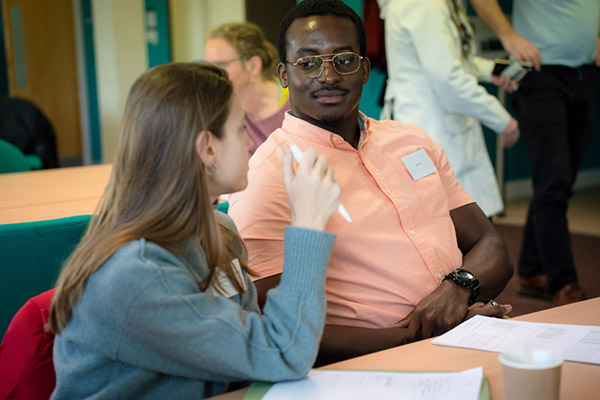
At every stage of the degree, we are committed to delivering the highest quality research-led teaching, which prioritises engagement and intellectual challenge. Teaching on the History side includes lecturers, seminars, discussion groups, and specialist workshops. In seminars and weekly discussion groups that accompany lectures, tutors work closely with groups of 10-16 students: we believe that students learn better when engaging with others to debate or think through a problem.
Our focus at York is on effective communication in French. That is why:
Our communicative and culture-oriented approach to teaching, combined with your application and study, will allow you to develop integrity as a skilled user of advanced French.
All modules in both departments have associated Virtual Learning Environment (VLE) sites where all crucial materials—reading lists linked to the library, handouts, discussion boards—are always accessible via the internet. The French VLE sites often include additional self-study exercises to complement classroom work.
You will have 24-hour access to the Language and Linguistic Science Department’s e-Lab, which you can use for private study when not in use of teaching.
In History, teaching hours vary according to stage of degree and choice of courses: you are likely, however, to have 3-4 hours a week at most stages. In addition to their core commitments, students are encouraged to take advantage of the opportunity to audit additional modules. On the French side, you are likely to have 5–6 hours teaching per week, throughout the degree.
Students use non-contact time to develop as independent critical learners. Most of your time at York will be spent reading for your weekly seminars and discussion groups, researching and writing essays, and preparing for formal assessments. The Library holds a wide range of resources to support this study, giving access to many on-line journals and books as well as an impressive range of digitized primary sources. A VLE tutorial and a workshop will prepare you to use this material, and you can also have one-to-one appointments with subject librarians in your two degree subjects.
Further time will be spent on one-on-one meetings with dissertation advisors, essay feedback sessions, briefings for modules, optional plenary lectures by visiting speakers, webinars, and ‘student hours’ (open office periods when students may drop in for one-to-one discussions with their course tutors).
We continually strive to enhance our students’ experience and do this by critically engaging with student feedback and working closely with student representatives.
In both History and French, you will encounter a range of assessment methods in addition to formal written examinations. These include research essays in some Special Subjects, collaborative projects, essays written specifically for assessment, and 'open' examinations in which you collect the examination paper and have between one day and two weeks to return your answers. Essays range in length from 1,500 to 5,000 words. Students also have the opportunity to do an independently researched 10,000 word History dissertation as part of their final year assessment. In French modules, your assessments will include oral presentations, as well as written assignments, all to be completed in French.
The University recognizes that in Year 1 our students are only beginning to acquire the historical skills and understanding that they will continue to develop over the course of their degree. The assessment of first-year work, therefore, does not contribute towards the final degree, although an overall pass is required to progress into Year 2. From Year 2 onwards formal assessments contribute towards your degree, with the exception of the year abroad, which is assessed on a pass/fail basis only.
For nearly all history modules, you are expected to write a procedural or practice essay. You will receive extensive written feedback on this essay, which will help you in your formal assessment. You can use student hours to discuss this feedback or an essay plan with your tutor. And you can also book appointments with the Royal Literary Fund Fellow, based in the English department, who can help you express your ideas in clear and effective writing.
We can make reasonable adjustments to assessment procedures for students with disabilities. However, please note that, for students with dyslexia, it is not possible to make adjustments in the marking of work written in a closed language exam (French, German or Spanish). This is because accurate spelling is one of the assessment objectives in language exams. Note, though, that closed exams make up only a proportion of the assessment types used for languages; other assessment types such as coursework and oral presentations are also used. Students with dyslexia could apply for extra time in closed exams, if this would be of assistance. See the University's disability support pages for further details relating to all disabilities.
French and History is a degree that equips you for the long term. As well as developing linguistic fluency and familiarity with other cultures, it cultivates independence and discipline, an ability to define problems, shape a response and manage the steps to achieve it. Students on this degree can critically read evidence and analyse complex arguments. They are strong communicators, knowing how to use language and to show clarity of analysis on the page and in presentations. Students gain an informed sense of the forces that underlie change, of other mindsets and cultures, and different languages. Seminars cultivate advanced skills in working with others: responding to different opinions, shepherding conversation and advancing their own ideas. These are skills valued by employers. Responsiveness to new situations and to unexpected opportunities is also a trait that fosters successful, adaptable careers. The language elements in the degree give students the confidence and the ability to deploy these skills internationally, and in a wide range of professional contexts.
Roughly 60% of percent of History graduates are in employment six months after completion of their studies, with another 34% going on to further study. The figures for Language and Linguistics students are about 68% and 23%. Of those not in employment or further study, a significant number are enrolled on internships that will enable them to develop career opportunities, especially in the heritage and media sectors. Graduates from these two Departments go on to build careers in education; law, social work and justice; marketing and communications; publishing, broadcasting and journalism; politics, diplomacy and government; finance, accountancy, banking and fundraising; media; business, commerce and public relations; administrations, management; teaching and academia. To get a sense of how this degree prepares you for a graduate job, read the University Careers Service’s profiles of graduates from these two departments.
York offers an innovative careers and enterprise programme tailored for French and History students. During your degree, you will have access to workshops and individual mentoring in careers, IT and other skills, as well as internships and work experience programmes. Structured opportunities for extracurricular learning such as the York Award are particularly popular with History/French students. The department hosts careers events with alumni and provides opportunities for students to engage with the demands of business, education and heritage.
Find out more about how we can help make you more employable
We welcome applications from students with a wide range of qualifications and educational backgrounds. Applications are received via UCAS.
Entry is competitive and all prospective students are assessed individually on the basis of academic merit and potential, as well as suitability for the teaching and courses offered at York. We are looking for candidates who demonstrate intellectual curiosity, open-mindedness and analytical ability, the potential to analyse the past in a critical manner and the ability to discuss a point of view and make a coherent argument.
For most, we make our assessment based on the evidence presented on your UCAS form. We look closely at your personal statement and your reference, as well as received and predicted achievements. Interviews may be offered to some mature candidates and those with special circumstances or unusual qualifications.
We encourage applications from students with a wide range of backgrounds. The University has an Access scheme to support students who have or are facing unusual challenges. This enables candidates to provide additional information that will be taken into account during the application process and can offer support to students in the weeks before and after arrival.
Those returning to education, or holding unusual qualifications, are encouraged to email the Admissions Tutor for consultation and advice.
We also consider applications for deferred entry and requests, after taking up an offer, to take a gap year.
Number of applications in 2011 for all degrees involving History: 1477
Number of places in 2011 for all degrees involving History: 257
We will endeavour to respond to all applications as soon as possible. In order to give due consideration to all candidates we may not be able to communicate a decision immediately, but we will keep in touch with you about the progress of your application.
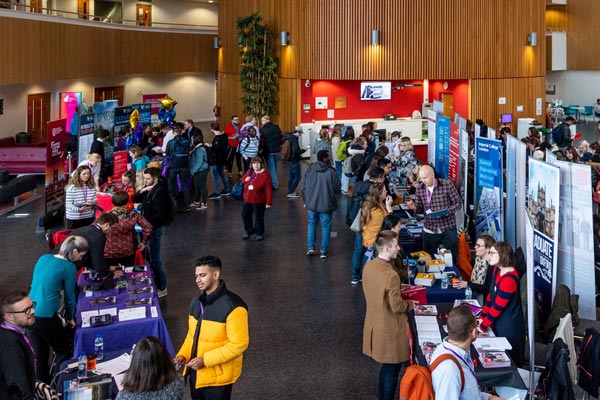
Students who receive offers are encouraged to visit us on our post-offer Visit Days. These take place in February and March and are designed to provide an opportunity for you to discover for yourselves what living and working at York will be like. During your visit you will be able to meet students and staff, learn about the degree (including our range of modules as well as study abroad and language opportunities), attend a sample lecture, and take a tour of the campus that will include the University Library and sample student accommodation.
For a fuller list of qualifications and their typical offers, please see our pages on the UCAS website.
AAA at A level, including an A in either History (any syllabus) or Classical Civilisation and an A in French. An A level in General Studies is typically excluded from any offer.
36 points, with a Grade 6 in History and in French at Higher Level.
AAAAA at Higher level and AA in Advanced Highers including History and French.
AAAAAB including an A1 in History and a minimum of A2 in French.
BTEC qualifications can only be accepted in conjuction with A level or equivalent qualifications in History and French.
80% overall including 85% in History and 75% in French.
Cambridge Pre-U: D3, D3 D3 including History and French . Also, in conjunction with A-levels.
Access to Higher Education: Obtain Access to HE Diploma with 30 credits achieved from units awarded Distinction and 15 awarded Merit or higher. An A level or equivalent qualification is required in French.
Other qualifications are accepted by the University, please contact Undergraduate Admissions
We welcome applications from mature students. As with continuing students, we look for intellectual curiosity, analytical ability as well the capacity to formulate coherent arguments. We take into account any formal qualifications that you may have, but lack of them is not necessarily a barrier to admission. The individual circumstances of all applicants are carefully considered.
We ask that mature students first contact the History Admissions Tutor, outlining your background and experience, any qualifications and reasons for wanting to study history at York. The Tutor will recommend whether you should apply at this stage or first seek some formal preparation (e.g. an A-level at a Further Education College or undertaking an Access to HE qualification) before applying later on.
Applications are made through UCAS. If appropriate, arrange for a recent academic reference which describes your work and potential as fully as possible. Otherwise have an employer, friend or other acquaintance write on your behalf, telling us about your organisational and analytical skills, your motivation and interests.
Applicants may be called for interview. We will ask you to bring recent examples of your writing; if possible, these should be on history. Interviewers will ask about your experience and reasons for wanting to study history and will want to discuss your interests and reading habits, for example, to assess whether you have the motivation to complete three years of intensive reading and writing.
Contact our friendly admissions tutor if you've got any questions:
Undergraduate Admissions Tutor
Catriona Kennedy
history-ug-admissions@york.ac.uk
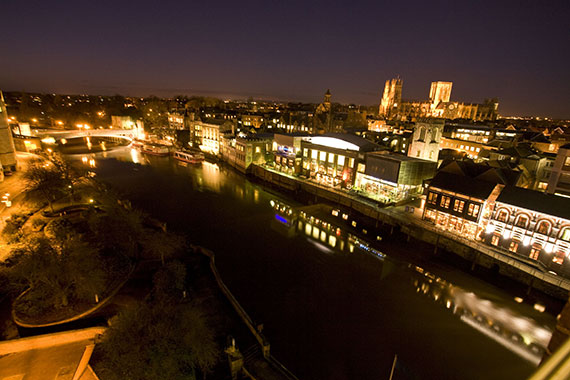
More about York