Start date
September 2026
View semester dates
View semester dates
Length
1 year full-time

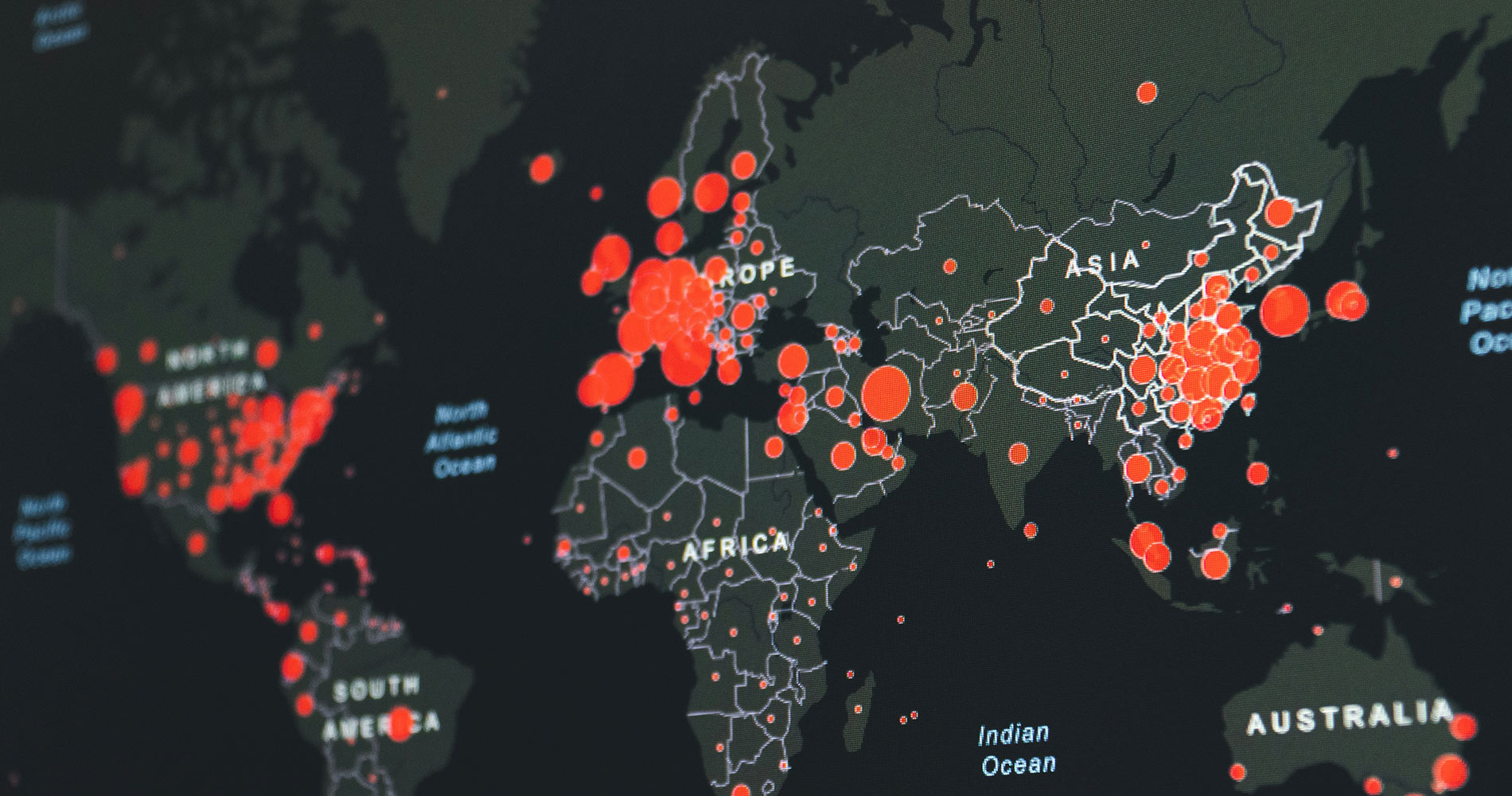
To improve public health, strategies for disease prevention, health protection and health promotion require effective public policy frameworks.
Year of entry: 2026 (September)
To develop policy frameworks, public health leaders need a detailed and multifaceted understanding of policy processes and their complex interactions with economic, social and political contexts.
This Master of Public Policy in Global Public Health Policy will equip you with the skills and knowledge to make a positive difference for global public health in four ways:
Through this knowledge and these skills, you will be able to effectively contribute to policy-making in the public health field, be it as an analyst, advisor, consultant or leader, in the public, private or non-profit sector. The course's learning outcomes include a suite of transferable skills that can be applied in a wide range of problem-solving contexts, such as being able to interpret and critically evaluate complex material and communicate such material in a variety of formats.
You'll study 180 credits in total. The course consists of:
You'll build key professional skills in research, collaboration and communication. And your independent research project at the end the programme provides an opportunity for the in-depth exploration of an applied policy-related topic of your choice. Enabling you to transfer the acquired knowledge, insights and skills to your professional life.
Through this knowledge and these skills, you'll be able to effectively contribute to policy-making in the field of education policy, be it as an analyst, advisor, consultant or leader, in the public, private or non-profit sector.
Our modules may change to reflect the latest academic thinking and expertise of our staff, and in line with Department/School academic planning.
Every course at York is built on a distinctive set of learning outcomes. These will give you a clear understanding of what you will be able to accomplish at the end of the course and help you explain what you can offer employers. Our academics identify the knowledge, skills, and experiences you'll need upon graduation and then design the course to get you there.
| Study mode | UK (home) | International and EU |
|---|---|---|
| Full-time (1 year) | £12,000 | £26,900 |
UK (home) or international fees? The level of fee that you will be asked to pay depends on whether you're classed as a UK (home) or international student. Check your fee status.
Find out more information about tuition fees and how to pay them.
Discover your funding options to help with tuition fees and living costs.
We'll confirm more funding opportunities for students joining us in 2026/27 throughout the year.
If you've successfully completed an undergraduate degree at York you could be eligible for a 10% Masters fee discount.
We are pleased to work with Chevening Scholars to offer funding for our Masters programmes. Chevening Scholarships provide one year of fully-funded postgraduate study in the UK for international (including EU) students. The scholarships are open to early and mid-career professionals who have the potential to become future leaders.
You’ll work with world‐leading academics who’ll challenge you to think independently and excel in all that you do. Our approach to teaching will provide you with the knowledge, opportunities, and support you need to grow and succeed in a global workplace.
The modules for this course have been specifically developed for postgraduate study. You'll be taught through a combination of hands-on workshops, lectures and seminars. You'll find that small group working and establishing your own perspective on social issues will become a core part of your studying process.
You'll also be able to attend the School's lectures and University lectures from visiting speakers from across the world.
You'll be based in the School for Business and Society in the Church Lane Building on Campus West. Teaching will take place in Church Lane Building and Alcuin College and other locations across Campus West.
Our beautiful green campus offers a student-friendly setting in which to live and study, within easy reach of the action in the city centre. It's easy to get around campus - everything is within walking or pedalling distance, or you can always use the fast and frequent bus service.
Your assessment will be continuous and based mainly on essays and reports. You'll receive written feedback on all assessed work.
You'll complete a 8,000 word dissertation as part of your own specialist research project.


You'll develop a rounded awareness of, and sensitivity to, a range of perspectives and interests that will be essential for employability in the public policy field and more widely. You'll develop independent and team-working skills, including planning, collaboration and time-management, culminating in your Independent Study Project.
Modules are applied in nature, equipping you with the knowledge and skills you need to succeed in the workplace. For example, the module ‘Investigating Contemporary Policy Problems’ enables you to simulate policy design and implementation and therefore reflect on how your theoretical knowledge can apply practically in real-world contexts.
The programme’s substantive focus on public policy will enhance the employability of graduates in both UK and non-UK settings, including employment in international, national and local organisations dedicated to public policy research and analysis (including public, private and non-for-profit organisations that are involved in the designing, consultation and delivery of public policy).
See our graduates' careers in roles around the world

Turn ambition into achievement with our expert guidance and connections. From your first day here to life after graduation, we'll help you find your career advantage.
| Qualification | Typical offer |
|---|---|
| Undergraduate degree | 2:2 or equivalent. |
| Other international qualifications | Equivalent qualifications from your country |
If English isn't your first language you may need to provide evidence of your English language ability. We accept the following qualifications:
| Qualification | Minimum requirement |
|---|---|
| IELTS (Academic and Indicator) | 6.5, minimum 6.0 in each component |
| Cambridge CEFR | B2 First: 176, with 169 in each component |
| Oxford ELLT | 7, minimum of 6 in each component |
| Oxford Test of English Advanced | 136, minimum 126 in each component |
| Duolingo | 120, minimum 105 in all other components |
| LanguageCert SELT | B2 with 33/50 in each component |
| LanguageCert Academic | 70 with a minimum of 65 in each component |
| Kaplan Test of English Language | 478-509, with 444-477 in all other components |
| Skills for English | B2: Merit overall, with Pass with Merit in each component |
| PTE Academic | 61, minimum 55 in each component |
| TOEFL | 87, minimum of 21 in each component |
| Trinity ISE III | Merit in all requirements |
For more information see our postgraduate English language requirements.
You may be eligible for one of our pre-sessional English language courses. These courses will provide you with the level of English needed to meet the conditions of your offer.
The length of course you need to take depends on your current English language test scores and how much you need to improve to reach our English language requirements.
After you've accepted your offer to study at York, we'll confirm which pre-sessional course you should apply to via You@York.
Get in touch if you have any questions