View semester dates
2 years part-time
Get to grips with key legal principles
Year of entry: 2026 (September)
Graduates of law in the 21st century need more than a thorough knowledge of legal rules.
Study theoretical and economic contexts of law and gain the solid foundation you need to further your career. This LLM gives you the freedom to choose from a wide selection of option modules. These modules cover a range of legal specialisms. This includes corporate, commercial, human rights, international, constitutional and criminal law, as well as legal theory and philosophy. This means that you're able to tailor your learning to the areas of the law that you're passionate about.
Develop a practical legal skill set through problem-based learning (PBL). We are the only law school in the UK to use PBL as the basis of our teaching. Under the guidance of expert tutors, you'll work in small student law firms to tackle complex legal scenarios. This modern, hands-on method allows you to develop the key legal skills that lawyers use every day.
Learn from highly approachable tutors with varied legal backgrounds. You'll engage with the expertise of qualified legal practitioners with years of experience working in law firms. Their knoweldge has shaped the design and delivery of key aspects across all our courses and modules.
Build your legal network through career-focused events and opportunities. During your studies, you'll have access to York Law School's Careers and Development Programme. This programme offers a range of employability-focused events and support throughout the year. This includes various networking events with law firms and York Law School alumni.
You'll study 180 credits in total. The course consists of:
Through our combination of core and option modules, you'll develop a solid knowledge base in legal theory and practice while also tailoring the course to focus on what interests you most.
All of our modules are informed by research, including areas such as corporate and commercial law and international human rights law.
You will also study five option modules. Examples can be found below. Some option module combinations may not be possible. The options available to you will be confirmed after you begin your course.
Our modules may change to reflect the latest academic thinking and expertise of our staff, and in line with Department/School academic planning.
You'll complete a 12,000-word dissertation on a topic of your choice, under the supervision of a member of staff from the York Law School. You'll prepare your dissertation proposal during the Legal Systems and Research Methods module.
There is wide flexibility in choosing your topic.
Every course at York is built on a distinctive set of learning outcomes. These will give you a clear understanding of what you will be able to accomplish at the end of the course and help you explain what you can offer employers. Our academics identify the knowledge, skills, and experiences you'll need upon graduation and then design the course to get you there.
The staff are the best part of studying at the University of York, their expertise and style elegantly guided me through each subject area. The student body is actively invited to work alongside staff for the betterment of the students, courses and university as a whole.
| Study mode | UK (home) | International and EU |
|---|---|---|
| Full-time (1 year) | £12,500 | £27,250 |
| Part-time (2 years) This is the year 1 fee. Fees for future years are subject to confirmation. |
£6,250 | £13,625 |
Students on a Student Visa are not currently permitted to study part-time at York.
For courses which are longer than one year, the tuition fees quoted are for the first year of study.
UK (home) or international fees? The level of fee that you will be asked to pay depends on whether you're classed as a UK (home) or international student. Check your fee status.
Find out more information about tuition fees and how to pay them.
Discover your funding options to help with tuition fees and living costs.
We'll confirm more funding opportunities for students joining us in 2026/27 throughout the year.
If you've successfully completed an undergraduate degree at York you could be eligible for a 10% Masters fee discount.
We are pleased to work with Chevening Scholars to offer funding for our Masters programmes. Chevening Scholarships provide one year of fully-funded postgraduate study in the UK for international (including EU) students. The scholarships are open to early and mid-career professionals who have the potential to become future leaders.
You’ll work with world‐leading academics who’ll challenge you to think independently and excel in all that you do. Our approach to teaching will provide you with the knowledge, opportunities, and support you need to grow and succeed in a global workplace.
You'll receive innovative, practical and relevant teaching. Dependent on your option module choices, teaching methods will include problem-based learning, simulations and student law firms. You'll also attend masterclasses from legal practitioners and academics.
A core teaching method employed in some of our modules is problem-based learning (PBL). This will involve you working in a “student law firm” in which you will work on simulated, real-life corporate and commercial law problems brought to you by virtual clients. You will learn to identify the relevant legal principles, and unravel the legal and contextual issues that lie at the heart of the problem. As in real life, the problems are messy, and typically involve several legal topics interacting and overlapping.
You will also learn through a range of other resources including seminars, written subject guides, and a variety of relevant material in our virtual learning environment.
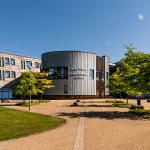
York Law School is located on Campus East. Nearly all of your teaching will take place within the Law and Sociology building or nearby on Campus East.
Our beautiful green campus offers a student-friendly setting in which to live and study, within easy reach of the action in the city centre. It's easy to get around campus - everything is within walking or pedalling distance, or you can always use the fast and frequent bus service.
We use a variety of assessment methods to help you develop different transferable skills. These include presentations, posters, participation in seminars, client advice, coursework and your dissertation. For certain modules, you will be assessed through a reflective portfolio.
I think law school is about learning how to “study the law” rather than trying to learn “all the laws”. The PBL system teaches you just that: how to take a case/ area of law, break it down, understand what is being asked of you and translate it into manageable research questions.
Deepshikha, LLM Law
Throughout your time at York, you will receive active support in careers and development planning from the York Law School employability tutor.
We encourage you to get involved with our Careers and Development Programme. The programme includes several employers, providing an insight into the legal profession and the relevant recruitment processes.
There is also help available for those of you who are thinking about non-legal employers or academic routes following your LLM.
This degree meets requirements that can enable you to progress to the next stages of professional qualification as a barrister or solicitor in England and Wales. It is also recognised in some international jurisdictions. For more information on how to become a lawyer in the UK or overseas and guidance on what route is right for you, check out our guide:
| Qualification | Typical offer |
|---|---|
| Undergraduate degree | 2:2 or equivalent in Law, or a closely related degree |
| International pre-masters programme | Pre-masters from our International Pathway College |
| Other international qualifications | Equivalent qualifications from your country |
If English isn't your first language you may need to provide evidence of your English language ability. We accept the following qualifications:
| Qualification | Minimum requirement |
|---|---|
| IELTS (Academic and Indicator) | 6.5, minimum 6.0 in each component |
| Cambridge CEFR | B2 First: 176, with 169 in each component |
| Oxford ELLT | 7, minimum of 6 in each component |
| Oxford Test of English Advanced | 136, minimum 126 in each component |
| Duolingo | 120, minimum 105 in all other components |
| LanguageCert SELT | B2 with 33/50 in each component |
| LanguageCert Academic | 70 with a minimum of 65 in each component |
| Kaplan Test of English Language | 478-509, with 444-477 in all other components |
| Skills for English | B2: Merit overall, with Pass with Merit in each component |
| PTE Academic | 61, minimum 55 in each component |
| TOEFL | 87, minimum of 21 in each component |
| Trinity ISE III | Merit in all requirements |
For more information see our postgraduate English language requirements.
You may be eligible for one of our pre-sessional English language courses. These courses will provide you with the level of English needed to meet the conditions of your offer.
The length of course you need to take depends on your current English language test scores and how much you need to improve to reach our English language requirements.
After you've accepted your offer to study at York, we'll confirm which pre-sessional course you should apply to via You@York.
Get in touch if you have any questions