
Solar farms and nature
Posted on Thursday 18 June 2026
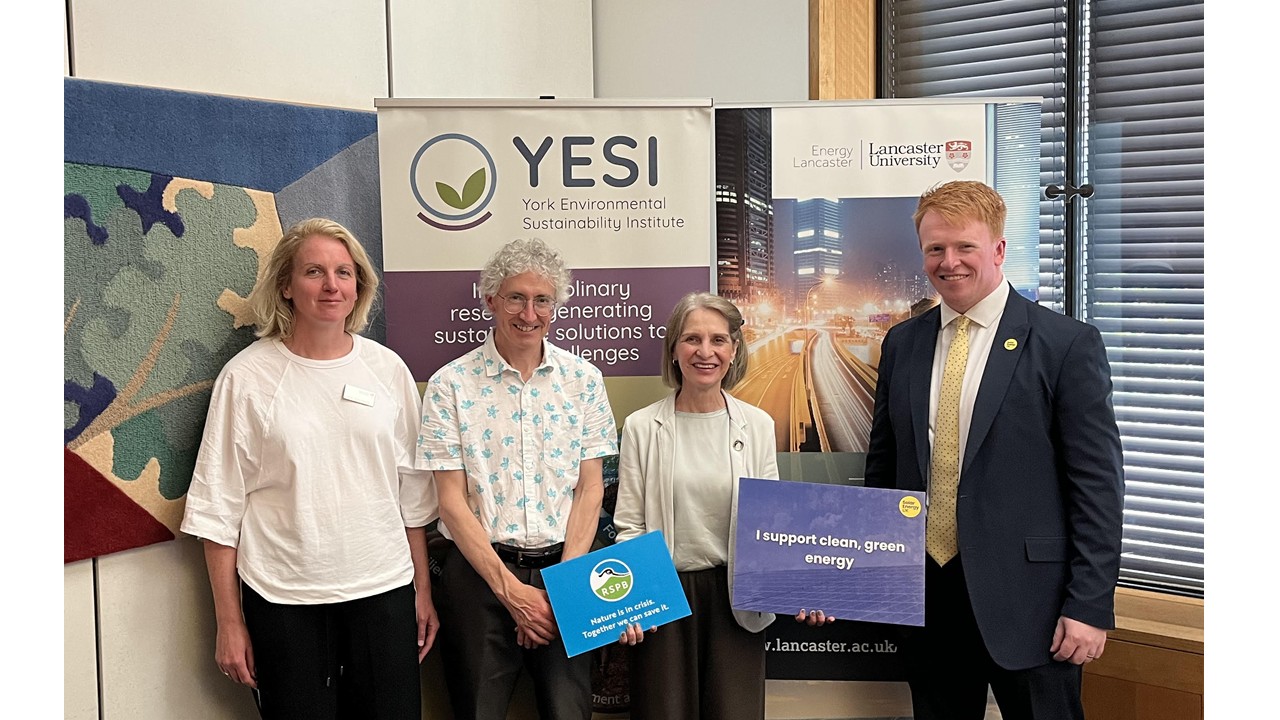
Piran White, from the Department of Environment and Geography and York Environmental Sustainability Institute at the University of York, joined the RSPB, Solar Energy UK, researchers from Lancaster University and ecologists from Clarkson and Woods and Wychwood Biodiversity ecological consultancies at the presentation of two reports to MPs and civil servants at Portcullis House, in
Westminster.
The ‘Nature positive solar farms: policy guidelines for a bright future’, which was jointly produced by Lancaster University, the RSPB, and the University of York, was launched alongside ‘Solar habitat 2026’, the fourth edition of Solar Energy UK’s analysis of ecological monitoring data on solar farms.
The Nature positive solar farms report identifies knowledge gaps and policy recommendations to support the creation of nature positive solar farms. Among these recommendations are increasing the biodiversity gains associated with new solar developments, enhancing the nature positive evidence base through a network of research-intensive solar farms, setting aside land within solar farms to experiment with concurrent land uses, such as food production, and integrating the potential nature benefits from solar farms into wider landscape initiatives for nature recovery.
Piran White commented: “We need to decarbonise our energy systems to mitigate climate change, and increasing evidence shows how we can do this in ways that also benefit nature. Our report demonstrates that well-managed solar farms can provide multiple benefits for biodiversity and highlights how policy could support solutions to address the climate and ecological crises together."