
Societal readiness for biotechnology
Posted on Thursday 23 July 2026
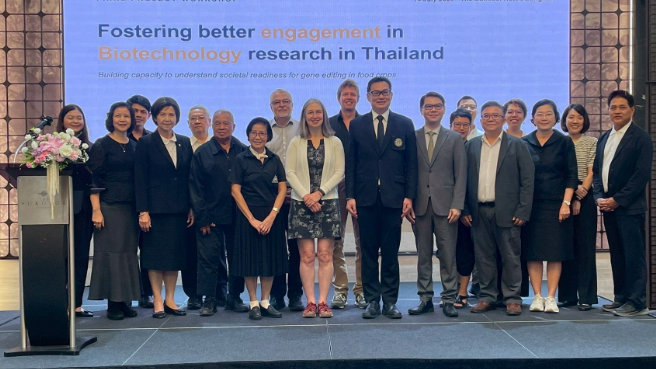
The York Environmental Sustainability Institute (YESI), Centre for Novel Agricultural Products (CNAP) and Kasetsart University, Thailand recently marked a major milestone in their ongoing British Council funded international research collaboration with successful completion of the final multistakeholder dissemination workshop for the project “Fostering better engagement in biotechnology research in Thailand.”
The event in Bangkok brought together a diverse group of academics, policymakers and other stakeholders to showcase the project’s findings and discuss perceptions, perceived risks, and the future development of biotechnology in the region.
The workshop commenced with a formal opening session that underscored the importance of international and cross-sector collaboration. The session featured introductions from Dr Chatchawan Jantasuriyarat and Dr Wanchai Pluempanupat, Dean of the Faculty of Science, Kasetsart University, followed by a photo session to celebrate the partnerships that made this research possible.
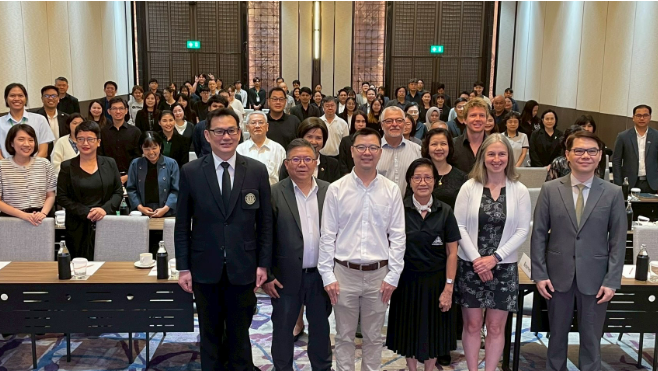
Professor Lindsay Stringer, YESI Director, then gave an overview of the general concept of "societal readiness". She argued that many technologies fail at the deployment stage because we focus only on assessing their technical maturity, not how they sit within the broader fabric of society. Societal readiness starts from a socio-technical foundation, considering not just whether a technology is scientifically viable, but whether society is sufficiently prepared to adopt, regulate, and engage with it safely and equitably.
After a comprehensive introduction to the project’s overarching goals, speakers from York (Dr Thomas Timberlake) and KU (Dr Passorn Wonnapinij) presented the core findings from assessment of societal readiness for gene edited food crops in Thailand. A central focus was on the project's use of a two-phase Q-methodology to map stakeholder viewpoints and understand stakeholder’s perceived risks and questions. Following presentation of phase 1 findings, two videos co-developed with project partner The Institute for the Promotion of Teaching Science and Technology (IPST) were played that effectively addressed the primary questions and perceived risks raised by participants during the Phase 1 Q-sort interviews. The videos are available here: YouTube video 1 and YouTube video 2. Phase 2 Q-sort results were then shared, illustrating how stakeholder perspectives changed after watching the videos.
The workshop concluded with a robust and interactive Question and Answer session with panel members Dr Leonardo Gomez (York) and Dr Chatchawan Jantasuriyarat, Dr Piya Kittipadakul, Dr Anongpat Suttangkakul and Dr Supachai Vuttipongchaikij (KU). The panel was moderated by Dr Pasajee Kongsil. This provided an invaluable opportunity for the audience to interrogate the findings, discuss regulatory and ethical implications, and explore how these insights might inform future policy frameworks and public engagement strategies in Thailand and beyond. Workshop participants were also invited to sign up to a new network on gene editing of food crops in Thailand in order to continue the dialogue around this important issue.
The workshop was officially closed by Dr. Witsanu Attavanich, Vice President for Research, Kasetsart University, who delivered the closing remarks. He emphasized the importance of continued international collaboration, interdisciplinary research, and meaningful public engagement in advancing responsible biotechnology research and innovation for the benefit of society.
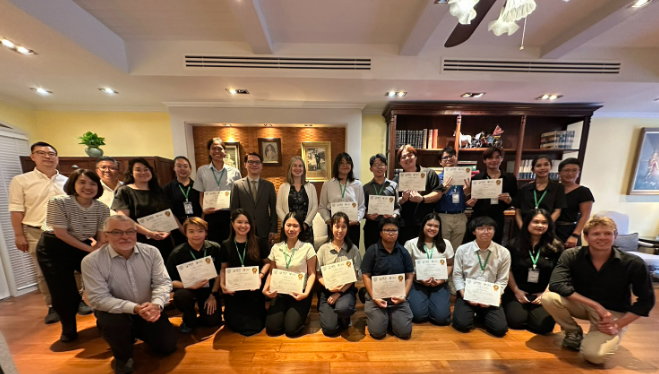
After lunch, all the KU masters and PhD students who had engaged in the Q-methodology capacity building activities received their certificates and were thanked for their vital role in collecting the data used in the project.
The next steps for the project team are to finalise all the outputs and submit the overall project report to the British Council, as well as identify further funding to continue the collaboration.
For more information on this project and other interdisciplinary research initiatives, visit the YESI website.