View semester dates
2 years part-time,
3 years part-time
Push the boundaries of science and technology in the quest for limitless clean energy.
Year of entry: 2026 (September)
Around the world, massive new fusion experiments are racing to turn scientific theory into a source of power. If successful, fusion could provide humanity with a virtually limitless supply of clean, safe energy, transforming how we power our world for generations to come. The act of harvesting the energy that powers the stars on Earth may well soon be an everyday reality.
Teams of physicists, engineers, data scientists, and project leaders are building the next generation of fusion facilities. These ambitious projects rely on cutting-edge tools designed to push this technology beyond today’s limits. Together, they’re driving a global effort to unlock fusion energy’s promise to power the next chapter of human progress.
This fusion revolution is gathering momentum. To meet the growing demands of the UK’s fusion sector, the government is calling for thousands of skilled individuals to join the workforce with a particular focus on the next five years. With the race to bring fusion power to the grid accelerating, the industry is searching for talented minds from every background to help fill this quota and shape the future of clean energy. This MSc opens the door to a career at the heart of this rapidly growing industry.
Under the guidance of experts at the York Plasma Institute and School of Physics, Engineering and Technology, you’ll develop your area of interest whilst gaining understanding of the other skill sets needed to collaborate effectively and deliver successful projects. By studying with us, you'll have unrivalled opportunities to interact with world-class international fusion experts, who will help you build the perspective, knowledge and skills needed to tackle the last challenges on the way to functional fusion power
We are the proud holders of an Athena SWAN Silver Award and an IOP Juno Champion award, recognising of our commitment to gender equality, and women in STEM.


Sign up for email updates to keep up with all our latest news about the MSc Fusion Energy Science & Technologies.
Studying under many of the UK's top fusion scientists, as well as eating lunch and chatting freely with them, was exceptionally beneficial for my knowledge. The lectures were incredible, with each course designed to provide you with the most up-to-date fusion physics and engineering, including a particular emphasis on data analysis and computational modelling.
As part of Semester 2, you will engage in two intensive one-week courses, delivered by visiting expert speakers, covering the engineering and science technologies and frontiers of fusion research.
You'll complete the MSc with a team research project. Under the supervision of world-leading experts at the York Plasma Institute and the School of Physics, Engineering and Technology, you will develop deep knowledge in a specific aspect of fusion or a related area of plasma science or technology. Team Projects are based at York Plasma Institute with some opportunities to visit and study in collaboration with industry partners and national laboratories.
You will study one option module from the following:
Our modules may change to reflect the latest academic thinking and expertise of our staff, and in line with Department/School academic planning.
A Team Project may consist of several sections addressing important scientific, engineering, technological and management questions. You will lead one section and contribute to the whole team via briefings, and addressing broader questions raised by this collective effort.
Each Team Project is supported by a specific member of staff as supervisor who will give advice and assistance as needed. Available Team Projects, and sections within each Project, may vary from year to year, to reflect the interests of our staff and developments in fusion. Some examples of the kind of team projects that might be available are:
Team Projects are based at York Plasma Institute with some opportunities to visit and study in collaboration with industry partners and national laboratories.
There is also potential for students to propose their own customised section within a Team Project, this will require careful liaison with the MSc leader and administrative support.
Every course at York is built on a distinctive set of learning outcomes. These will give you a clear understanding of what you will be able to accomplish at the end of the course and help you explain what you can offer employers. Our academics identify the knowledge, skills, and experiences you'll need upon graduation and then design the course to get you there.
Communicating to stakeholders: Communicate complex ideas associated with fusion science and technology in clear, precise, and accessible terms to a variety of audiences. Articulate how current research and development in fusion energy science and technology may impact societal issues, and evaluate innovative solutions.
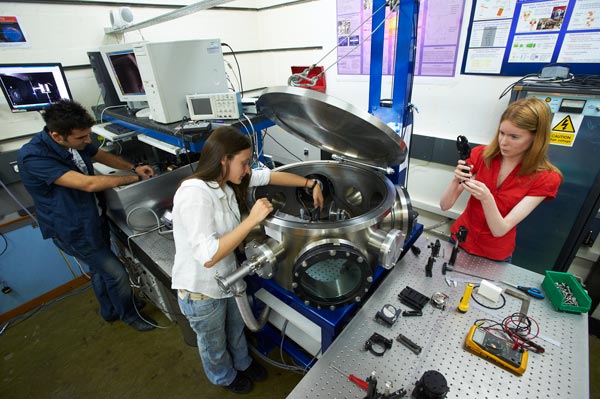
What attracted me most to my particular project was the opportunity to do some real hands-on science - that, and actually being able to generate a visible plasma!
| Study mode | UK (home) | International and EU |
|---|---|---|
| Full-time (1 year) | £13,900 | £32,900 |
| Part-time (2 years) This is the year 1 fee. Fees for future years are subject to confirmation. |
£6,950 | £16,450 |
Students on a Student Visa are not currently permitted to study part-time at York.
For courses which are longer than one year, the tuition fees quoted are for the first year of study.
UK (home) or international fees? The level of fee that you will be asked to pay depends on whether you're classed as a UK (home) or international student. Check your fee status.
Find out more information about tuition fees and how to pay them.
Discover your funding options to help with tuition fees and living costs.
We'll confirm more funding opportunities for students joining us in 2026/27 throughout the year.
If you've successfully completed an undergraduate degree at York you could be eligible for a 10% Masters fee discount.
We are pleased to work with Chevening Scholars to offer funding for our Masters programmes. Chevening Scholarships provide one year of fully-funded postgraduate study in the UK for international (including EU) students. The scholarships are open to early and mid-career professionals who have the potential to become future leaders.
You’ll work with world‐leading academics who’ll challenge you to think independently and excel in all that you do. Our approach to teaching will provide you with the knowledge, opportunities, and support you need to grow and succeed in a global workplace.
Our active learning culture uses a wide range of teaching methods to suit different learning styles. As you develop a deep understanding of fusion energy we provide opportunities to grow in independence, build knowledge, skills and competencies for you to succeed in technologically advanced settings.
You'll learn through a range of teaching formats by interacting with:
The York Plasma Institute and School are an inclusive, friendly, supportive and intellectually stimulating environment in which to study.
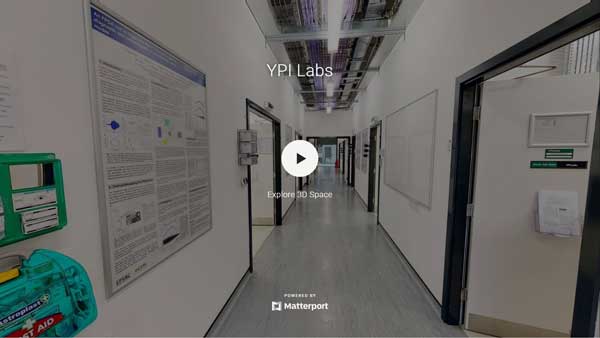
Most of your teaching will take place in the School of Physics & Engineering Technology and York Plasma Institute on Campus West. The majority of departments, colleges and facilities are based nearby.
Team Projects are based at York Plasma Institute with some opportunities to visit and study in collaboration with industry partners and national laboratories.
Our beautiful green campus offers a student-friendly setting in which to live and study, within easy reach of the action in the city centre. It's easy to get around campus - everything is within walking or pedalling distance, or you can always use the fast and frequent bus service.
You will be assessed with a mixture of closed- and open-book exams, essays and oral presentations.
The grade for your project is based on your project notebook, final report and viva.
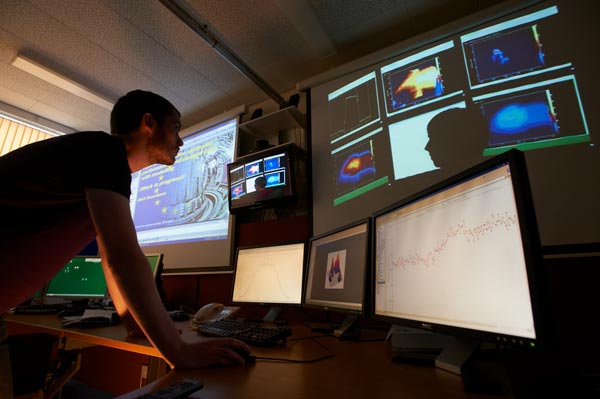
York Plasma Institute has great facilities, and offers very high-quality teaching and a greatly interactive environment where MSc students can discuss with PhD students and the academic staff.
This course will start you off on a career in various fields within the growing plasma and fusion energy sector. You will develop strong foundations in plasma and fusion concepts with the skill sets needed for seeking solutions to challenging and often complex problems. The transferable skills unlock diverse career opportunities, including as a research, engineering or scientific specialist in fusion. You'll have the opportunity to foster invaluable industry connections and play a role in advancing fusion and plasma technologies for the benefit of society.
Many of our students are offered PhD positions in both fusion energy and other subject areas. Other students go straight into industry, both within fusion, and in a wide array of areas outside of fusion.
| Qualification | Typical offer |
|---|---|
| Undergraduate degree | 2:2 or equivalent in a broad range of STEM subjects including engineering, mathematics, physics, computer science, environmental science, and related disciplines |
| Other international qualifications | Equivalent qualifications from your country |
If English isn't your first language you may need to provide evidence of your English language ability. We accept the following qualifications:
| Qualification | Minimum requirement |
|---|---|
| IELTS (Academic and Indicator) | 6.0, minimum 5.5 in each component |
| Cambridge CEFR | B2 First: 169, with no less than 162 in each component |
| Oxford ELLT | 6, minimum of 5 in each component |
| Oxford Test of English Advanced | 136, minimum 126 in each component |
| Duolingo | 105, minimum 95 in all other components |
| LanguageCert SELT | B2 with 33/50 in each component |
| LanguageCert Academic | 65 with a minimum of 60 in each component |
| Kaplan Test of English Language | 444-477, with 410-443 in all other components |
| Skills for English | B2: Pass with Merit overall, with Pass in each component |
| PTE Academic | 55, minimum 51 in each component |
| TOEFL | 79, minimum of 17 in Listening, 18 in Reading, 20 in Speaking and 17 in Writing |
| Trinity ISE III | Pass in all components |
For more information see our postgraduate English language requirements.
You may be eligible for one of our pre-sessional English language courses. These courses will provide you with the level of English needed to meet the conditions of your offer.
The length of course you need to take depends on your current English language test scores and how much you need to improve to reach our English language requirements.
After you've accepted your offer to study at York, we'll confirm which pre-sessional course you should apply to via You@York.
Get in touch if you have any questions