
.jpg)
MA Visual Effects for Film and Television
Learn the craft of visual effects and prepare for a career in the industry.
Year of entry: 2026 (September)
Shape the future of visual storytelling with advanced skills in VFX.
Blend technical expertise with creative practice as you master the craft of visual effects (VFX). You’ll build a foundation in VFX techniques and discover the creative, theoretical and historical contexts of screen-based storytelling.
Explore your passion with VFX for film and television with our range of option modules. Learn, compositing, colour-grading and 3D asset creation and integration. Study next generation developments in immersive and AI-driven techniques, and refine your creative output on self-directed and collaborative projects.
Enhance your learning in industry-standard facilities. You’ll work in media labs, postproduction and picture finishing suites. We have fully-equipped TV studios, motion capture studios with green screen stages, sound stages and more. Our facilities have been used for projects for the BBC and other major companies.
You’ll be taught by staff with extensive industry experience. They’ve worked as documentary and feature film-makers, broadcasters, scriptwriters, technicians, media historians and theorists.
Gain industry connections and prepare for your career. Work placement modules are built into our course. You'll work with industry professionals at companies such as Viridian FX, a York-based VFX studio with credits including House of the Dragon (HBO) and numerous other international Film and Television productions. You’ll have access to careers support from our in-house employability team. The BBC, ITV and a range of independent production companies all have bases in Yorkshire, so there’s never been a better time to study at York.
Accreditation

This course shares teaching with our other MA/MSc Film and TV Production courses, which are recognised by ScreenSkills, the industry-led skills body for the UK's screen-based industries, and carry the ScreenSkills Select quality-mark, which indicates courses best suited to prepare students for a career in the screen industries. As with all our programmes, students on the MA in VFX will learn professional skills on approved courses supported by the industry; and student will gain access awareness of various schemes, eg internships and traineeships with the BBC, ITV and other broadcasters and independent production companies in British film and television.
The School of Arts and Creative Technologies is part of the BAFTA albert Education Partnership. albert is the leading screen industry organisation for environmental sustainability. Through this partnership students are introduced to the sustainability knowledge they'll need when joining the production workforce.
We work in partnership with the Mark Milsome Foundation to support the highest standards of safety in film and television production. Through this partnership, all students complete the Mark Milsome Foundation Film and TV Online Safety Passport, ensuring they develop essential health and safety awareness before entering any educational or professional production environment.
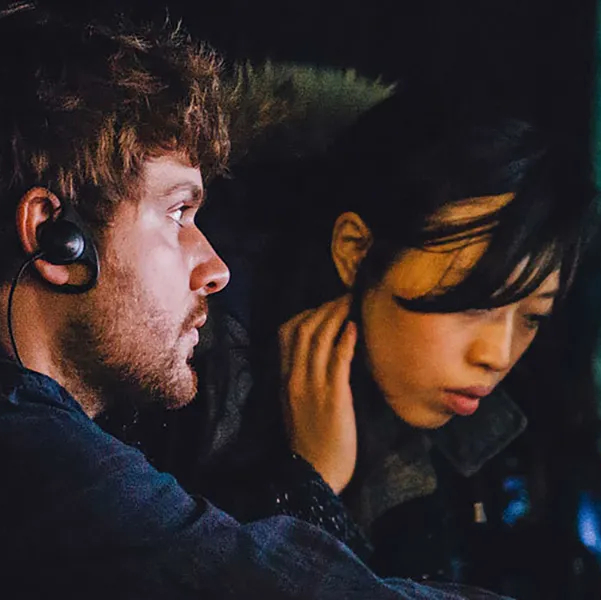
The skills we learnt by being thrown into making a film at the end of the Masters, and having to figure out how to make a very experimental film prepared us well for the world of work. The Masters helped in what we were essentially doing, which was starting a company from scratch. We developed as programmers, but got the business angle, too.
Course content
- Semester 1 - two core modules, including Work Placement I, plus one option module
- Semester 2 - three core modules, including Work Placement II
- Summer Semester - 60 credit individual project
Modules
Core modules
- Visual Effects I
- Visual Effects II
- Work Placement I
- Work Placement II
- Group Projects
- Individual Project
Option modules
You'll also study one option module in Semester 1. Examples can be found below. Some option module combinations may not be possible. The options available to you will be confirmed after you begin your course.
- Digital Cinematography I
- Editing I
- Grading, Effects and Finishing
- Introduction to AI Techniques in Creative Practice
Our modules may change to reflect the latest academic thinking and expertise of our staff, and in line with Department/School academic planning.
Dissertation
You may choose from two different types of individual project:
- A production project that involves creating a short film or pilot television episode – either fiction or nonfiction – along with a written 4,500 reflect essay.
- An individual production or research-based 6,000-word dissertation project focusing on a specific area related directly to your chosen specialism.
In all cases, the precise nature of the project undertaken, including the involvement of any group members or other collaborators, will be agreed with your academic supervisor prior to the start of the project.
Learning outcomes
Every course at York is built on a distinctive set of learning outcomes. These will give you a clear understanding of what you will be able to accomplish at the end of the course and help you explain what you can offer employers. Our academics identify the knowledge, skills, and experiences you'll need upon graduation and then design the course to get you there.
Learning outcomes for this course
- Carry out film and television postproduction to a professional standard by employing their in-depth understanding of the theoretical basis, underlying technologies and practical skills central to picture postproduction and visual effects.
- Work collaboratively and to good effect with others - as leader or team member - in the production and delivery of creative projects that conform to current industry practices and standards.
- Analyse, critically evaluate and reflect upon their practice, using a developed understanding of professional production values and aesthetics.
- Organise themselves to deliver creative work that meets commercial objectives by exercising self-discipline and a capacity to work independently to challenging deadlines.
- Solve problems creatively and with intellectual rigour through applying formal investigative research skills and an ability to exercise critical judgement.
- Communicate clearly and persuasively to professional, academic and lay audiences using appropriate written, oral and other media.
- Devise and execute original technical projects in a range of picture postproduction domains.
Fees and funding
Annual tuition fees for 2026/27
| Study mode | UK (home) | International and EU |
|---|---|---|
| Full-time (1 year) | £13,900 | £32,900 |
Fees information
UK (home) or international fees? The level of fee that you will be asked to pay depends on whether you're classed as a UK (home) or international student. Check your fee status.
Find out more information about tuition fees and how to pay them.
Funding information
Discover your funding options to help with tuition fees and living costs.
We'll confirm more funding opportunities for students joining us in 2026/27 throughout the year.
If you've successfully completed an undergraduate degree at York you could be eligible for a 10% Masters fee discount.
Funding opportunities
Chevening Scholarships
We are pleased to work with Chevening Scholars to offer funding for our Masters programmes. Chevening Scholarships provide one year of fully-funded postgraduate study in the UK for international (including EU) students. The scholarships are open to early and mid-career professionals who have the potential to become future leaders.
School scholarship information
- Scholarships, awards and bursaries for our students
Teaching and assessment
You'll work with world-leading practitioners and academics who'll challenge you to think independently and excel in all that you do. Our approach to teaching will provide you with the knowledge, opportunities and support you need to grow and succeed in a global workplace.
Teaching format
This course involves a range of teaching styles and methods. Detailed theoretical exploration is underpinned by extensive practical work and real-world problem-based experiences. These practical sessions involve both guided workshops and student-led projects, including working directly with industry professionals. The practical work will involve lab sessions where you can become familiar with industry techniques and equipment.
You'll also have the opportunity to attend events with our teaching staff such as talks, productions and festivals.
You'll be assigned a personal supervisor to give advice on academic matters as well as other areas of University life. Students will take Work Placement I and II modules across each semester, which will give them the opportunity to spend time around their other teaching commitments working closely with industry practitioners.
Facilities
The equipment and facilities available are the highest quality found in professional film and television.
You'll have access to various camera systems from ARRI, RED and Sony, and industry-standard lighting, grips and sound equipment from the likes of ARRI, Kino-Flo, Sachtler, Ronford-Baker, O'Connor, Manfrotto, Sound Devices, AKG, etc.; as well as fully equipped sound stages, rehearsal rooms, TV studios, green screen stages, dressing rooms, props store and workshop, and picture and sound finishing suites (including Foley and ADR, AVID, Adobe Creative Suite and DaVinci Resolve packages).
You'll also have 24/7 access to a postproduction suite exclusively available for our postgraduate students.
Teaching location
You will be based in the School of Arts & Creative Technologies on Campus East.
Most of your contact hours will be in the School, with some additional teaching elsewhere on Campus East.
About our campus
Our beautiful green campus offers a student-friendly setting in which to live and study, within easy reach of the action in the city centre. It's easy to get around campus - everything is within walking or pedalling distance, or you can always use the fast and frequent bus service.
Assessment and feedback
You'll be assessed throughout your course. Some modules have an early assessment that contributes a small amount to your final mark, offering an opportunity to check your progress.
Types of assessment vary depending on the module and include the following:
- In-class tests
- In-class pitch sessions
- Presentations
- Essays and reflective reports
- Business plans or grant applications
- Group project working with others across the Department
- 4,500-6,000 word project dissertation that could include practical work and/or creation of a short film focussed on your VFX work.
 (1).jpg)
.jpg)
Careers and skills
The film and television industry is highly competitive and there is a constant demand for visual effects specialists with skills in compositing, colour grading, and 3D asset creation and integration.
While many of our students choose a career in film or television, our course is also designed to offer you a range of transferable skills that are relevant to the media, the wider world of work or to further academic study.
Career opportunities
Graduates from this MA in Visual Effects can move into a wide range of creative and technical roles across industries, including:
- VFX Artist (for Film, TV, Animation or Games)
- Compositor (integrating live-action and digital elements)
- Lighting and Rendering Artist
- 3D Modeller or Texture Artist
- Motion Graphics Designer
- AR/VR Content Developer
- Post-Production Supervisor or Producer Architectural Visualiser
- Creative Content Producer
- Projection Mapping Artist
Transferable skills
- Collaborative working
- Problem solving
- Investigative research
- Time management and organisation
- Technical analysis
- Critical evaluation
- Reflective learning

Turn ambition into achievement with our expert guidance and connections. From your first day here to life after graduation, we'll help you find your career advantage.
Entry requirements
| Qualification | Typical offer |
|---|---|
| Undergraduate degree | 2:2 or equivalent, and evidence of professional experience or a commitment to film making. Applicants may also be required to attend an interview to assess their suitability for this course. |
| Other international qualifications | Equivalent qualifications from your country |
Additional requirements
You will need to submit a sample of your creative work with your application. Please see our guidance on submitting creative work.
English language
If English isn't your first language you may need to provide evidence of your English language ability. We accept the following qualifications:
| Qualification | Minimum requirement |
|---|---|
| IELTS (Academic and Indicator) | 6.5, minimum 6.0 in each component |
| Cambridge CEFR | B2 First: 176, with 169 in each component |
| Oxford ELLT | 7, minimum of 6 in each component |
| Oxford Test of English Advanced | 136, minimum 126 in each component |
| Duolingo | 120, minimum 105 in all other components |
| LanguageCert SELT | B2 with 33/50 in each component |
| LanguageCert Academic | 70 with a minimum of 65 in each component |
| Kaplan Test of English Language | 478-509, with 444-477 in all other components |
| Skills for English | B2: Merit overall, with Pass with Merit in each component |
| PTE Academic | 61, minimum 55 in each component |
| TOEFL | 87, minimum of 21 in each component |
| Trinity ISE III | Merit in all requirements |
For more information see our postgraduate English language requirements.
If you haven't met our English language requirements
You may be eligible for one of our pre-sessional English language courses. These courses will provide you with the level of English needed to meet the conditions of your offer.
The length of course you need to take depends on your current English language test scores and how much you need to improve to reach our English language requirements.
After you've accepted your offer to study at York, we'll confirm which pre-sessional course you should apply to via You@York.
This course operates multiple recruitment rounds:
- Applications for Round 1 will be received from 22 September 2025 to 16 December 2025. If you apply in Round 1 you should receive a decision no later than 20 January 2026.
- Applications for Round 2 will be received from 17 December 2025 to 12 March 2026 . If you apply in Round 2 you should receive a decision no later than 2 April 2026.
- Applications for Round 3 will be received from 13 March 2026 to 6 June 2026. If you apply in Round 3 you should receive a decision no later than 4 July 2026.
- Applications for Round 4 will be received from 7 June 2026 to 14 August 2026. If you apply in Round 4 you should receive a decision no later than 4 September 2026.
Next steps
Contact us
Get in touch if you have any questions

Matt Brannan Programme Leader
Discover York

We offer a range of campus accommodation to suit you and your budget, from economy to premium.

Explore campus and city life and hear what our current students have to say about living here.

Lively, full of culture and beautiful, York is regularly voted one of the best places to live and visit in the UK.
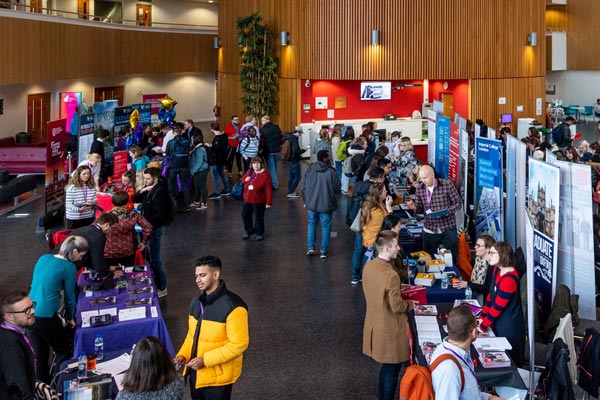
Find out more about York. Chat to staff and students and take the tour, on campus or online.