

MA Social Media and Social Research
Study at the forefront of an exciting new field
Year of entry: 2026 (September)
Social media and other emerging communication technologies are becoming a key aspect of social research practice.
Why choose Social Media and Social Research at York?
Critically investigate the impact of social media across societies. Social media and digital technologies don't exist in a vacuum. They must be understood within the specific social worlds they are embedded in. You'll learn how to view social media as a social researcher does. You'll research the different social, cultural and political impacts and effects of social media. By employing a range of sociological research methodologies, you'll investigate the ethics of emerging technologies and the power they have over our contemporary society.
Learn how to analyse and draw insights from social media data. The data generated from social media contains insight into how entire populations communicate, behave and interact with each other. You'll understand how social media data is produced and how to evaluate and interpret this data. You'll develop a foundation in traditional social science research skills. You'll also explore new methods of analysis for both large- and small-scale data.
Develop a practical skill set valued by employers across a range of industries. Social media is a new and emerging field. By studying how social media works and how it's used, you'll develop highly sought after skills in an in-demand area. You'll also develop highly transferable skills relevant to various career paths.
Immerse yourself in teaching led by the latest research. We're highly ranked for the quality of our research into digital technologies. We're researching new approaches and techniques for studying these technologies and their political, economic and cultural contexts. You'll work directly with people who are developing these techniques.
Course content
You'll study 180 credits in total. The course consists of:
- Six 20-credit core modules
- A 60-credit independent research dissertation
Modules
Core Modules
- Understanding Social Media
- Introduction to Qualitative Methods and Data Analysis
- Introduction to Quantitative Methods and Data Analysis
- Social Media, Data and Society
- Researching Digital Life
- Advanced Methods in Social Research
Our modules may change to reflect the latest academic thinking and expertise of our staff, and in line with Department/School academic planning.
Dissertation
You will develop, design, implement and manage your own original research project, supervised by a member of staff. You will analyse the data and produce a 10,000-word dissertation.
Examples of dissertation titles with social media topics include:
- The role of new media in politics.
- Application of digital by-product data: Using online ratings and reviews to analyse the market preferences of cultural products.
- “That’s entertainment”: A comparative analysis of culture and the current situation of TV entertainment programmes in the UK and China.
- The spread of celebrity gossip in the circumstances of new media.
Learning outcomes
Every course at York is built on a distinctive set of learning outcomes. These will give you a clear understanding of what you will be able to accomplish at the end of the course and help you explain what you can offer employers. Our academics identify the knowledge, skills, and experiences you'll need upon graduation and then design the course to get you there.
Learning outcomes for this course
- Exercise specialised knowledge and understanding of social media and their importance for social, cultural and global processes and how it applies to a range of areas including everyday interactional practices, cultural production and circulation, and political and institutional engagement.
- Critically interpret, analyse, and evaluate social theories, concepts, methodologies and arguments in order to articulate a clear understanding of the sociological study of social media, culture and globalization.
- Develop informed and advanced research strategies based upon critical consideration of the advantages and disadvantages of different methods, in order to identify the epistemological approaches in social scientific research.
- Critically select and use a range of social scientific research methods, both quantitative and qualitative, which are appropriate to meet the requirements in industry, national and local government and public services.
- Develop arguments to support the use of emerging forms of social and behavioural data (both large, and small-scale) in order to understand the relationship between social media and contemporary sociological research.
- Draw upon concepts, theories and methods in order to advance and utilise social research practices in the contemporary context.
- Utilize extended social research expertise to critically evaluate social research, and to design research appropriate for the investigation of cultural, social, and global aspects of social media and emerging communication technologies.
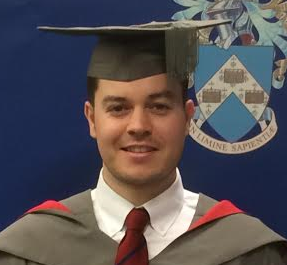
Two-months after completing my Masters degree, I secured a job as an SEO and Social Media Analyst at the Telegraph Media Group.
Fees and funding
Annual tuition fees for 2026/27
| Study mode | UK (home) | International and EU |
|---|---|---|
| Full-time (1 year) | £12,500 | £28,600 |
Fees information
UK (home) or international fees? The level of fee that you will be asked to pay depends on whether you're classed as a UK (home) or international student. Check your fee status.
Find out more information about tuition fees and how to pay them.
Funding information
Discover your funding options to help with tuition fees and living costs.
We'll confirm more funding opportunities for students joining us in 2026/27 throughout the year.
If you've successfully completed an undergraduate degree at York you could be eligible for a 10% Masters fee discount.
Funding opportunities
Chevening Scholarships
We are pleased to work with Chevening Scholars to offer funding for our Masters programmes. Chevening Scholarships provide one year of fully-funded postgraduate study in the UK for international (including EU) students. The scholarships are open to early and mid-career professionals who have the potential to become future leaders.
Department scholarship information
Teaching and assessment
You’ll work with world‐leading academics who’ll challenge you to think independently and excel in all that you do. Our approach to teaching will provide you with the knowledge, opportunities, and support you need to grow and succeed in a global workplace.
Teaching format
You'll spend time working on your own, reading assigned texts and researching supporting materials, as well as working with others in seminars to discuss readings in a group and present your work. A member of the teaching staff will act as your supervisor throughout the degree, to help guide your studies and monitor progress. You'll be taught using a variety of methods in a range of formats including:
- lectures
- seminars
- directed reading
- workshops
- independent study
Teaching location
You will be based in the Department of Sociology on Campus East. Most of your contact hours will be on Campus East.
About our campus
Our beautiful green campus offers a student-friendly setting in which to live and study, within easy reach of the action in the city centre. It's easy to get around campus - everything is within walking or pedalling distance, or you can always use the fast and frequent bus service.
Assessment and feedback
You will be assessed in a number of different ways, depending on the module you study.
Forms of assessment include portfolio work, essays and reflections. You will also complete a 10,000 word dissertation on a subject of your choice that relates to your programme.
You will also receive feedback on work that does not count towards your final grade such as group and individual presentations, helping you to understand your strengths and identify areas for improvement.
.jpg)
.jpg)
Careers and skills
You'll develop the skills and knowledge needed to play a leading role in the design and evaluation of interactive technologies in industry, commerce, academia and public service. This social media degree also provides an ideal basis to progress to further study at PhD level.
Career opportunities
- Social media analyst
- Social media manager
- Social media and content strategist
- Digital marketing executive
- Digital communications officer
- Content editor
Transferable skills
- Data analysis
- Critical reasoning
- Social media
- Social research

Turn ambition into achievement with our expert guidance and connections. From your first day here to life after graduation, we'll help you find your career advantage.
Entry requirements
| Qualification | Typical offer |
|---|---|
| Undergraduate degree | 2:2 or equivalent in Sociology or a relevant discipline, or equivalent suitable experience |
| International pre-masters programme | Pre-masters from our International Pathway College |
| Other international qualifications | Equivalent qualifications from your country |
English language
If English isn't your first language you may need to provide evidence of your English language ability. We accept the following qualifications:
| Qualification | Minimum requirement |
|---|---|
| IELTS (Academic and Indicator) | 6.5, minimum 6.0 in each component |
| Cambridge CEFR | B2 First: 176, with 169 in each component |
| Oxford ELLT | 7, minimum of 6 in each component |
| Oxford Test of English Advanced | 136, minimum 126 in each component |
| Duolingo | 120, minimum 105 in all other components |
| LanguageCert SELT | B2 with 33/50 in each component |
| LanguageCert Academic | 70 with a minimum of 65 in each component |
| Kaplan Test of English Language | 478-509, with 444-477 in all other components |
| Skills for English | B2: Merit overall, with Pass with Merit in each component |
| PTE Academic | 61, minimum 55 in each component |
| TOEFL | 87, minimum of 21 in each component |
| Trinity ISE III | Merit in all requirements |
For more information see our postgraduate English language requirements.
If you haven't met our English language requirements
You may be eligible for one of our pre-sessional English language courses. These courses will provide you with the level of English needed to meet the conditions of your offer.
The length of course you need to take depends on your current English language test scores and how much you need to improve to reach our English language requirements.
After you've accepted your offer to study at York, we'll confirm which pre-sessional course you should apply to via You@York.
Next steps
Contact us
Get in touch if you have any questions

Department
Related courses
Discover York

We offer a range of campus accommodation to suit you and your budget, from economy to premium.

Explore campus and city life and hear what our current students have to say about living here.

Lively, full of culture and beautiful, York is regularly voted one of the best places to live and visit in the UK.

Find out more about York. Chat to staff and students and take the tour, on campus or online.