
_April 2025 - Alex Holland-259 (1).jpg)
MA Producing for Film and Television
Learn the business of film and television production, and meet the challenges of a changing industry
Year of entry: 2026 (September)
Learn the business, creative, technical and logistical perspectives of producing for film and television with our practical course.
You will study all aspects of producing and managing projects — from identifying and developing story ideas, to packaging and pitching projects, to planning and managing shoots, as well as distribution and marketing strategies — through a mix of lectures, workshops, screenings and masterclasses with leading academics and industry professionals.
You'll complete innovative professional-calibre work, while using our industry-standard equipment in a creative and supportive environment. You'll work collaboratively to realise your creative vision for single-camera film and television projects. When you’ve finished, you’ll have essential expertise for a career in film and television as well as key skills that also transfer to other industries.
Our graduates work in production roles across the globe from the UK and Europe, to North and Latin America, to China and the Middle East.
Accreditation and partnerships


This course is industry recognised by ScreenSkills, the industry-led skills body for the UK's screen-based industries, and carries the ScreenSkills Select quality-mark which indicates courses best suited to prepare students for a career in the screen industries. The accreditation means that our students learn professional skills on courses approved and supported by the industry; and it gives access to various schemes, eg internships and traineeships with the BBC, ITV and other broadcasters, as well as independent production companies.
We are part of the BAFTA albert Education Partnership. albert is the leading screen industry organisation for environmental sustainability. Through this partnership students are introduced to the sustainability knowledge they'll need when joining the production workforce.
We work in partnership with the Mark Milsome Foundation to support the highest standards of safety in film and television production. Through this partnership, all students complete the Mark Milsome Foundation Film and TV Online Safety Passport, ensuring they develop health and safety awareness before entering any educational or professional production environment.
Course content
Our course is highly practical yet underpinned by theory. There is an emphasis on working in a group environment that mimics current industry practice. You’ll gain a rich understanding of the creative, business and management aspects of producing as well as essential knowledge of the tools typically used in single-camera production and postproduction.
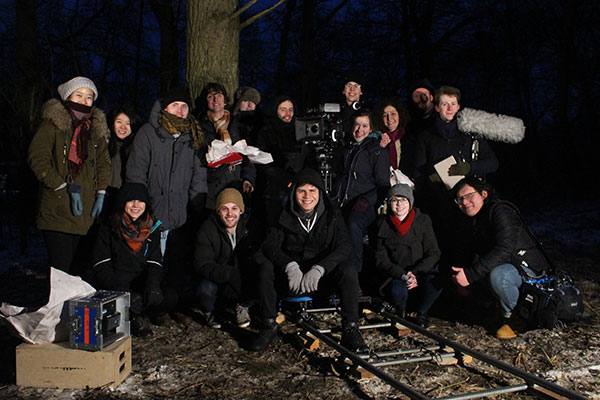
You will gain core producing skills and then apply these in the creation of short fiction films, collaborating with students from the other MA disciplines. These works will expand your understanding of producing methods and use them to create more complex work that may, for example, involve visual effects and spatialised sound. You will also have the opportunity to produce a single camera film or TV project with full control as producer through an extended project throughout the summer term and vacation period.
You’ll also develop transferable skills applicable beyond the world of media, such as marketing, project planning and budgeting, resource management and communication.
Modules
You'll study taught modules and an extended project, where you produce a short dramatic or documentary film and write an accompanying report.
You’ll advance your knowledge of various areas of script development, from pitching and story creation, to narrative structure and character development, to balancing creative and logistical needs. In the Group Project modules, you’ll work with other film and television production students to create films to briefs similar to those from industry.
We’ll provide you with insights into the current film and television business landscape, and you’ll learn about creating proposals, client relationship techniques, legal issues, marketing, scheduling and resource management.
Core Modules:
- Group Projects
- Producing for Film & TV I
- Producing for Film & TV II
- Screenwriting
- Individual Project
Option modules:
You will also study one option module each semester. Examples may include:
Semester 1
Semester 2
Some option module combinations may not be possible. The options available to you will be confirmed after you begin your course.
Our modules may change to reflect the latest academic thinking and expertise of our staff, and in line with Department/School academic planning.
Final project
You will have the opportunity to either produce a film with full control as producer or explore a particular aspect related to producing through an extended project worth half of the credits for this course.
You may choose from two different types of individual project:
1) A production project that involves creating a short film or pilot television episode – either fiction or nonfiction – along with a written 7,000-8,000 word production report describing your approach to making the project in your role as a producer. You can work either individually or collaboratively with other students on this type of project.
2) An individual research project focusing on a specific area related directly to your chosen specialism. This could take the form of a traditional written dissertation of 8,000 words or a hybrid involving the creation of some sort of artefact such as video, audio or written elements based on your research, along with a 7,000 word written dissertation describing the project.
In all cases, the precise nature of the project undertaken, including the involvement of any group members or other collaborators, will be agreed with your academic supervisor prior to the start of the project.
Learning outcomes
Every course at York is built on a distinctive set of learning outcomes. These will give you a clear understanding of what you will be able to accomplish at the end of the course and help you explain what you can offer employers. Our academics identify the knowledge, skills, and experiences you'll need upon graduation and then design the course to get you there.
Learning outcomes for this course
- Carry out single-camera film and television production to a professional standard by employing an in-depth knowledge of the producing process to create effective screen-based stories.
- Exercise critical judgement and intellectual rigour in approaching complex creative challenges and opportunities. Be able to communicate clearly and persuasively using appropriate written, oral and visual media.
- Work independently in initiating and developing high quality works by applying a range of creative, technical and practical skills – including treatment, script and project development.
- Work collaboratively – as leader or team member – in producing high quality works, in line with current industry practices and standards.
- Deploy confidently a range of industry standard digital technologies to produce creative works initiated by yourself and others.
- Creatively apply the practical and technical components of producing – with an understanding of how it relates to and informs different component parts of production (eg writing and directing) – to the art of cinematic fiction and non-fiction storytelling.
- Apply transferrable skills in a range of contexts relevant beyond media production.
Fees and funding
Annual tuition fees for 2026/27
| Study mode | UK (home) | International and EU |
|---|---|---|
| Full-time (1 year) | £13,900 | £32,900 |
Fees information
UK (home) or international fees? The level of fee that you will be asked to pay depends on whether you're classed as a UK (home) or international student. Check your fee status.
Find out more information about tuition fees and how to pay them.
Funding information
Discover your funding options to help with tuition fees and living costs.
We'll confirm more funding opportunities for students joining us in 2026/27 throughout the year.
If you've successfully completed an undergraduate degree at York you could be eligible for a 10% Masters fee discount.
Funding opportunities
Chevening Scholarships
We are pleased to work with Chevening Scholars to offer funding for our Masters programmes. Chevening Scholarships provide one year of fully-funded postgraduate study in the UK for international (including EU) students. The scholarships are open to early and mid-career professionals who have the potential to become future leaders.
School scholarship information
- Scholarships, awards and bursaries for our students
Teaching and assessment
You’ll work with world‐leading academics who’ll challenge you to think independently and excel in all that you do. Our approach to teaching will provide you with the knowledge, opportunities, and support you need to grow and succeed in a global workplace.
Teaching format
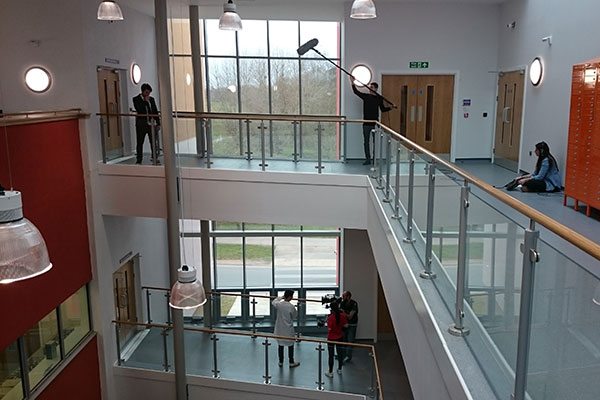
The course involves a range of different teaching styles. Most modules will include lectures to give you a fundamental understanding of the subject and then lead on to practical work. The practical work will primarily involve workshops where you can become familiar with industry techniques and equipment, including lighting, grips and cameras. You may also attend film screenings.
You'll also have the opportunity to attend events such as talks, productions and festivals.
You'll be assigned a personal supervisor for the duration of the course. They are there to give advice on academic matters as well as other areas of University life.
Facilities
Our equipment is among the highest quality used for professional film-making.
You'll have access to ARRI, RED and Sony digital cinema cameras with Angenieux, Zeiss, RED, Sony, Sigma and Samyang lenses, industry-standard lighting, grips and sound production kit, dedicated picture finishing and audio postproduction suites (including Foley and ADR) that have been used on many commercial projects, as well as fully equipped sound stages (including green screen), TV studios, rehearsal rooms, dressing rooms, a props store and workshop.
You'll also have 24/7 access to a postproduction lab exclusively for postgraduate students.
Discover our facilities
Teaching location
You will be based in the School of Arts & Creative Technologies on Campus East.
Most of your contact hours will be here, with some additional teaching elsewhere on Campus East.
About our campus
Our beautiful green campus offers a student-friendly setting in which to live and study, within easy reach of the action in the city centre. It's easy to get around campus - everything is within walking or pedalling distance, or you can always use the fast and frequent bus service.
Assessment and feedback
You'll be assessed throughout your course and receive detailed feedback regularly. Some modules spread assessments across the term to give you an opportunity to check your progress.
Types of assessment vary depending on the module and include the following:
- Practical production work including finished films
- Presentations and pitches
- Written work including development documents, draft scripts, production plans and production paperwork as well as reflective and technical reports (including a 7,000-8,000 word project dissertation that could include practical work and/or creation of a short film)
- In-class tests
Careers and skills
A large number of our graduates have made striking progress in their careers since completing their course. There’s a wide variety of possible career paths open to you after completing this MA, both across industry and academia. While you train to be a professional in television and film you'll also develop skills that are useful in any industry.
Career opportunities
- Production manager
- Commercial distribution executive
- Editor for television and online distribution
- Events manager
- Lighting and camera technician
- Arts administrator
Transferable skills
- Collaborative working
- Problem-solving
- Investigative research
- Time management and organisation
- Technical analysis
- Critical evaluation
- Reflective learning

Turn ambition into achievement with our expert guidance and connections. From your first day here to life after graduation, we'll help you find your career advantage.
Entry requirements
| Qualification | Typical offer |
|---|---|
| Undergraduate degree | 2:2 or equivalent, and evidence of professional experience or a commitment to film making. |
| International pre-masters programme | Pre-masters from our International Pathway College |
| Other international qualifications | Equivalent qualifications from your country |
Additional requirements
You will need to submit a sample of your creative work with your application. Please see our guidance on submitting creative work.
English language
If English isn't your first language you may need to provide evidence of your English language ability. We accept the following qualifications:
| Qualification | Minimum requirement |
|---|---|
| IELTS (Academic and Indicator) | 6.5, minimum 6.0 in each component |
| Cambridge CEFR | B2 First: 176, with 169 in each component |
| Oxford ELLT | 7, minimum of 6 in each component |
| Oxford Test of English Advanced | 136, minimum 126 in each component |
| Duolingo | 120, minimum 105 in all other components |
| LanguageCert SELT | B2 with 33/50 in each component |
| LanguageCert Academic | 70 with a minimum of 65 in each component |
| Kaplan Test of English Language | 478-509, with 444-477 in all other components |
| Skills for English | B2: Merit overall, with Pass with Merit in each component |
| PTE Academic | 61, minimum 55 in each component |
| TOEFL | 87, minimum of 21 in each component |
| Trinity ISE III | Merit in all requirements |
For more information see our postgraduate English language requirements.
If you haven't met our English language requirements
You may be eligible for one of our pre-sessional English language courses. These courses will provide you with the level of English needed to meet the conditions of your offer.
The length of course you need to take depends on your current English language test scores and how much you need to improve to reach our English language requirements.
After you've accepted your offer to study at York, we'll confirm which pre-sessional course you should apply to via You@York.
Next steps
Contact us
Get in touch if you have any questions

Discover York

We offer a range of campus accommodation to suit you and your budget, from economy to premium.

Explore campus and city life and hear what our current students have to say about living here.

Lively, full of culture and beautiful, York is regularly voted one of the best places to live and visit in the UK.
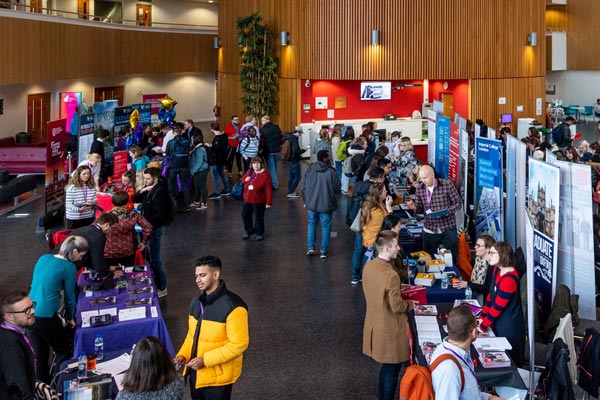
Find out more about York. Chat to staff and students and take the tour, on campus or online.