Our impact
Explore case studies from researchers working with communities around the world towards positive change.

Posted on 6 January 2015
Vital clues about the diet, health and wellbeing of our early ancestors have been uncovered in the teeth of skeletons by an international team of researchers, including scientists from York.
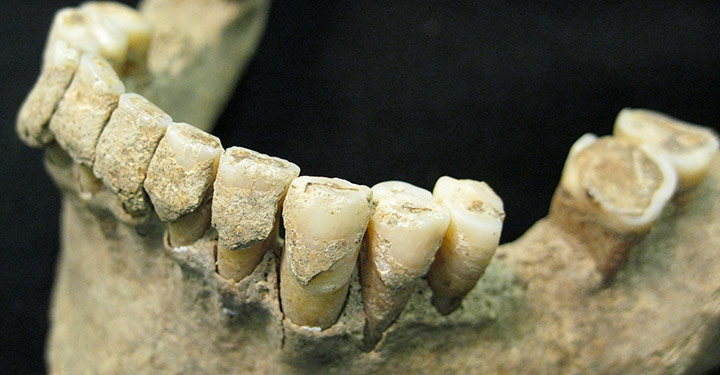
The level of preservation of biomolecules is remarkable ... it represents a microbial Pompeii.”
The key to the discovery is the dental calculus, or plaque, which preserves bacteria and microscopic particles of food on the surfaces of teeth, effectively creating a mineral tomb, or ‘microbial Pompeii’ for microbiomes.
The research, published in Nature Genetics reveals that unlike bone which rapidly loses much of its molecular information when buried, calculus grows slowly in the mouth and enters the soil in a much more stable state helping to preserve biomolecules.
As well as health information, the scientists recovered dietary DNA from ancient dental calculus, allowing the identification of dietary components such as vegetables that normally leave few traces for archaeological investigation.
Led by the University of Zurich, the University of Copenhagen and the University of York, the pioneering work involved the contributions of 32 scientists at 12 institutions and seven countries. The research was carried out on skeletons around 1,000 years old.
Professor Matthew Collins of the BioArCh research centre in the Department of Archaeology at York said: “We knew that calculus preserved microscopic particles of food and other debris but the level of preservation of biomolecules is remarkable. It represents a microbiome entombed and preserved in a mineral matrix, a microbial Pompeii.
“As we learn more about the evolution of this microbiome in response to migration and changes in diet, health and medicine,I can imagine a future in which most archaeologists regard calculus as more interesting than the teeth themselves.”
The research was part-funded by the Wellcome Trust through the University’s Centre for Chronic Diseases and Disorders (C2D2).
The text of this article is licensed under a Creative Commons Licence. You're free to republish it, as long as you link back to this page and credit us.
Matthew Collins
Research Title: Professor in the Department of Archaeology
Research focuses understanding the pathways of decay in archaeological materials such as on old proteins.
Find out more in the York Research Database
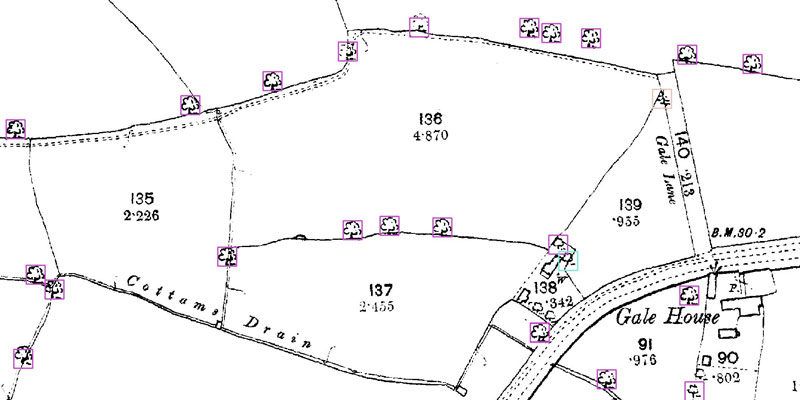
A research project needed to spot trees on historic ordnance survey maps, so colleagues in computer science found a solution.
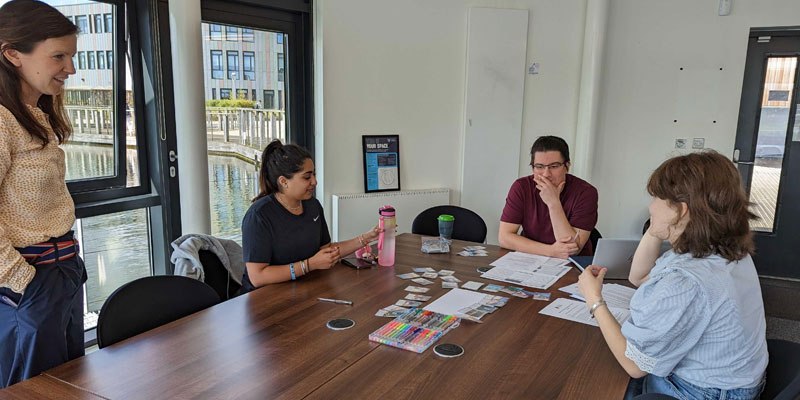
We’re using gaming technology to ensure prospective teachers are fully prepared for their careers.
A low cost, high-accuracy device, could play a large part in the NHS's 'virtual wards'.