Our impact
Explore case studies from researchers working with communities around the world towards positive change.

Posted on 6 January 2015
We’ve discovered why teenagers and young adults are particularly vulnerable to meningitis and septicaemia.
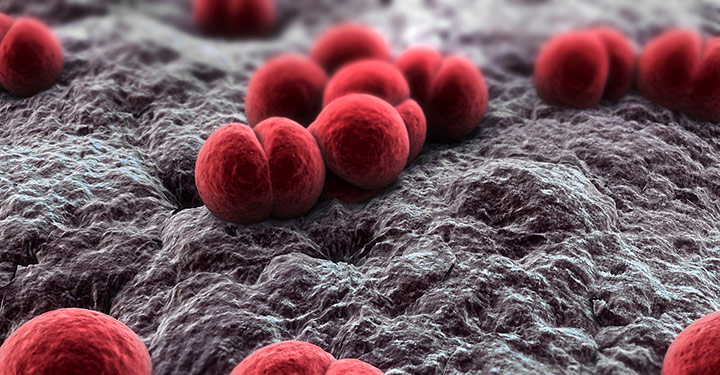
We've found that N. meningitidis can supplement its growth via metabolism of the small fatty acid propionic acid generated by a bacteria that is more prevalent in adolescents.”
A team from our Department of Biology has found a novel metabolic pathway in the bacterium Neisseria meningitidis that may explain why this age group is particularly at risk of infection.
N. meningitidis is a major cause of meningitis and septicaemia, and a leading cause of infectious disease among teenagers and young adults.
While it is well known that these bacteria are found in large numbers in the upper respiratory tract among adolescents, the reasons for this are unknown.
Lead author Dr James Moir, from our Department of Biology, said: “We have found that N. meningitidis can supplement its growth via metabolism of the small fatty acid propionic acid. The propionic acid is generated by other, strictly anaerobic bacteria (bacteria that do not need oxygen to live) that become more prevalent in adolescents.”
Dr Moir added: “Through our research, we identify the metabolic pathway responsible and show that there is a correlation between N. meningitidis and propionic acid generating anaerobic bacteria Porphyromonas andFusobacterium. The anaerobes are acquired gradually with age, peaking in adolescence.”
Dr Maria-Chiara Catenazzi, also from our Department of Biology, said: “The capacity of N. meningitidis to colonise adolescents/young adults is important for its transmission and disease epidemiology.
“This increase in carriage in young adulthood is frequently attributed to increased social interaction and contact in this age group. While this is no doubt true, here we present for the first time a mechanistic explanation for why N. meningitidis carriage varies with age, based on the genetic properties of N. meningitidis and co-colonising microbes in the human host.”
The results of the research, which was supported by our Centre for Chronic Diseases and Disorders (C2D2), were reported in the journal Molecular Microbiology.
The text of this article is licensed under a Creative Commons Licence. You're free to republish it, as long as you link back to this page and credit us.

Dr James Moir
Research Title: Reader in the Department of Biology
A leading authority on the deadly bacterium, Neisseria meningitides, which can grow in the bloodstream and kill within hours.
Find out more in the York Research Database

A research project needed to spot trees on historic ordnance survey maps, so colleagues in computer science found a solution.

We’re using gaming technology to ensure prospective teachers are fully prepared for their careers.

A low cost, high-accuracy device, could play a large part in the NHS's 'virtual wards'.