Our impact
Explore case studies from researchers working with communities around the world towards positive change.

Posted on 6 January 2015
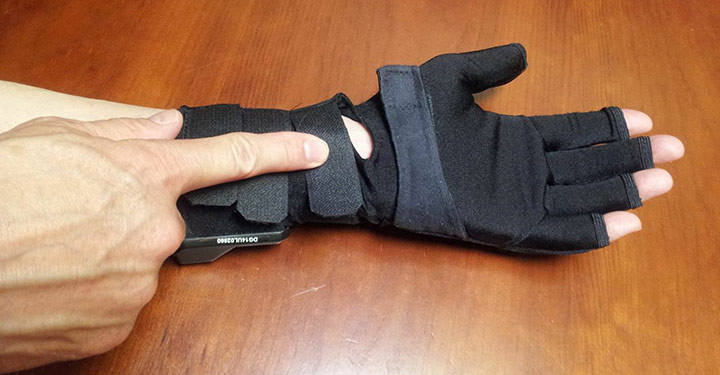
Movement-sensitive electronic gloves, often used by the film and gaming industries, are contributing to major improvements in the monitoring and diagnosis of neurodegenerative conditions like Parkinson’s disease.
The introduction of this technology enables nurses to monitor patients at home with results instantly relayed to consultants.”
The gloves, adapted by electronics experts at York, detect microscopic movements, such as hesitations and tremors, often invisible to the human eye, but characteristic of Parkinson’s.
The new technology is based on evolutionary algorithms, computer programs, inspired by biology and Darwinian evolution. These can differentiate between the movements of Parkinson’s patients and age-matched controls. Studies have shown the algorithms are more than 90 per cent accurate, a considerable improvement on existing clinical practice.
“Current clinical tests are largely subjective – they rely on judgements by clinicians observing a patient’s movements and rating these against a pre-determined scale,” explained Dr Stephen Smith from the Department of Electronics who developed the new technology.
“Our biologically-inspired algorithms differentiate between neurodegenerative conditions with a higher degree of accuracy than conventional clinical tests and observations. This means the tests are based on objective measurements, rather than subjective observations.”
The movement detecting gloves help to differentiate Parkinson’s disease from other neurodegenerative conditions, such as Alzheimer’s disease, at a stage when symptoms are often confused.
As well as the gloves, the algorithm-based technology has been adapted to provide a more accurate digital measurement of patients performing a finger tapping test, a conventional diagnostic test for Parkinson’s disease.
A further adaptation monitors patients in their own homes. The system uses small matchbox-sized sensors worn on each limb attached by a Velcro strap, while patients go about their normal daily lives. Linked via Bluetooth to a smart phone, the sensors detect involuntary movements known as dyskinesia which can be a side effect of Parkinson’s medication. The system measures dyskinesia, allowing clinicians to adjust drug levels without the need for hospital visits.
A final adaptation uses similar algorithms to assess a patient’s visuo-spatial ability in a drawing test – an activity often used to diagnose Alzheimer’s disease and other dementia conditions.
A new company, ClearSky Medical Diagnostics, has been formed to market the new products which are attracting worldwide interest from health centres and hospitals across the UK, USA, Singapore, Australia and UAE.
As well as improving the accuracy of diagnostic tests, the technology allows patients to be monitored remotely in their own homes via mobile phone and digital links.
Dr Smith explained: “Parkinson’s UK has estimated savings of £270,000 per year for each specialist nurse employed to oversee home care for patients. The introduction of this technology enables nurses to monitor patients at home with results instantly relayed to consultants. This reduces the need for specialist consultations and unplanned hospital admissions.”
Dr Smith's close collaborators in this research are Consultant Neurologists Dr Stuart Jamieson and Dr Jane Alty from Leeds General infirmary.
The text of this article is licensed under a Creative Commons Licence. You're free to republish it, as long as you link back to this page and credit us.

Dr Stephen Smith
Research Title: Reader and Deputy Head of the Department of Electronics
His research interests include developing novel representations for evolutionary algorithms, particularly with application to problems in medicine.
Find out more in the York Research Database
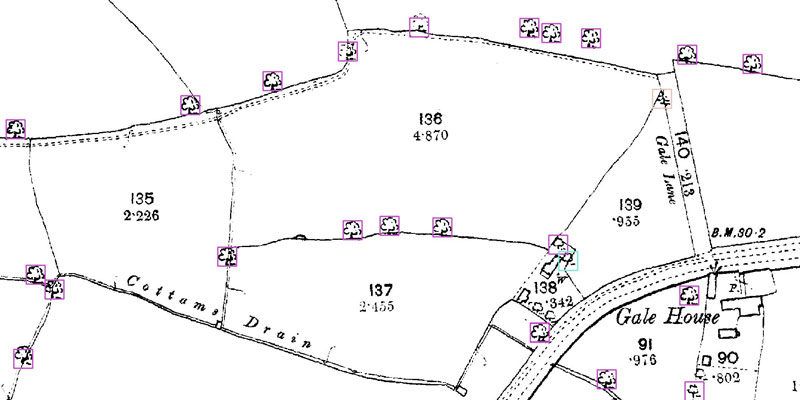
A research project needed to spot trees on historic ordnance survey maps, so colleagues in computer science found a solution.
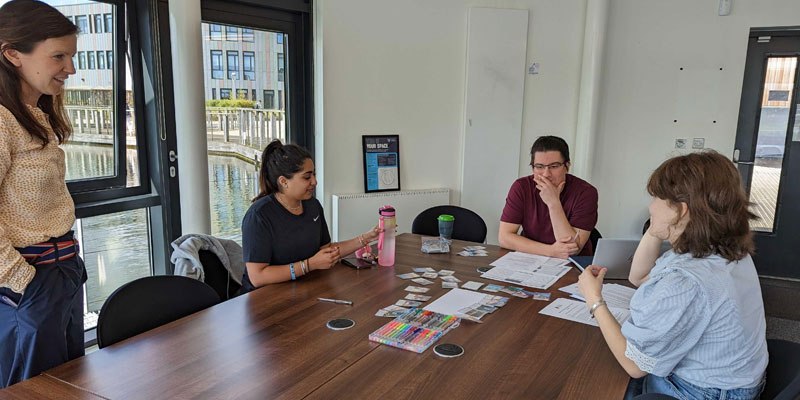
We’re using gaming technology to ensure prospective teachers are fully prepared for their careers.
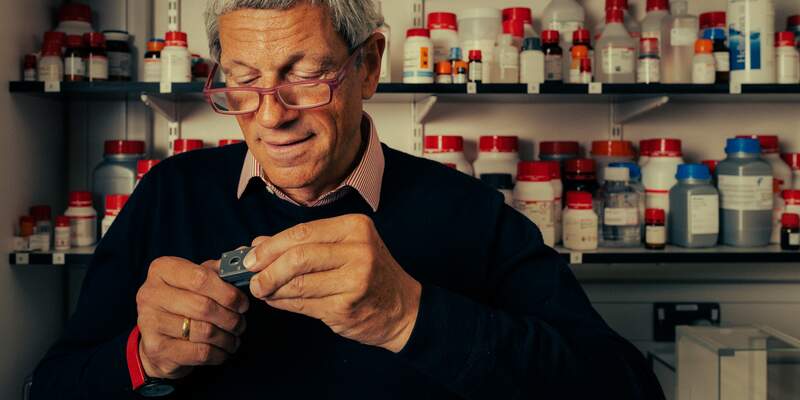
A low cost, high-accuracy device, could play a large part in the NHS's 'virtual wards'.