Our impact
Explore case studies from researchers working with communities around the world towards positive change.

Posted on 6 January 2015
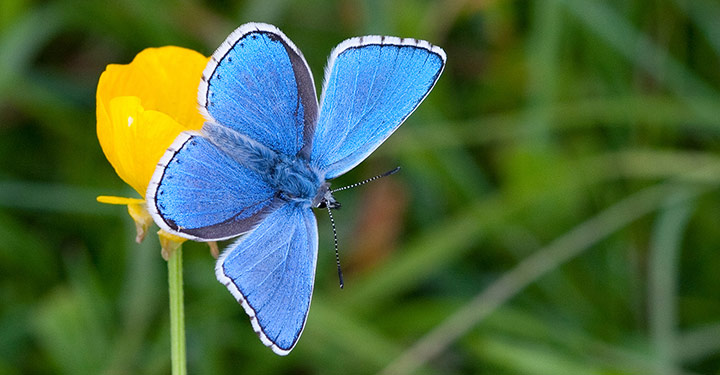
Many British butterfly species are moving north in response to climate change. But research by our biologists shows this shift is only possible if populations are either stable or expanding.
These latest research findings have important implications for our work to conserve threatened butterflies.”
The availability of suitable habitat is also important – the more habitat that is available, the faster a species can expand its distribution area.
The findings help us understand why the extent of distribution changes varies greatly among species with some showing rapid expansion and others showing none at all. It also helps to shape conservation management measures.
Louise Mair, a PhD student in Ecology at York, now a researcher at the Swedish University of Agricultural Sciences said: “My previous research revealed huge variation among butterflies in relation to their range expansion rates. It’s now clear from our new research that much of this variation can be accounted for once species’ population trends are known.”
https://www.youtube.com/watch?v=jfCt_iYVKcA
The study was based on butterfly distributions and abundances collected by members of the public since the 1970s in a ‘citizen science’ scheme. The data revealed that species previously restricted to southern England are colonising northern England and Scotland. Butterflies have extended their distributions in this way because warmer climates have made northern regions increasingly more hospitable for these temperature-constrained insects.
Population trends can be affected by many things, including local environment conditions, and in recent decades most British butterflies have undergone population declines. More effort is needed to boost abundances within species’ current ranges in order to protect wildlife as the climate and landscape changes.
Professor Jane Hill said: “Increasing habitat availability in the landscape has been suggested as a way to help species respond to climate change, but our research shows this will only be effective for species whose abundances are stable or increasing.”
Dr Richard Fox at Butterfly Conservation said: “We are grateful to the thousands of volunteer recorders who have collected these butterfly data over the past years. Their efforts and the information they have gathered are proving crucial to our understanding of the impacts of climate change on British butterflies. These latest research findings have important implications for our work to conserve threatened butterflies.”
The study was carried out by researchers in our Department of Biology, Butterfly Conservation and the Natural Environment Research Council (NERC) Centre for Ecology and Hydrology.
The text of this article is licensed under a Creative Commons Licence. You're free to republish it, as long as you link back to this page and credit us.

Jane Hill
Research Title: Professor in the Department of Biology
Examines the effects of habitat degradation and climate change on biodiversity, with particular emphasis on temperate and tropical insects.
Find out more in the York Research Database
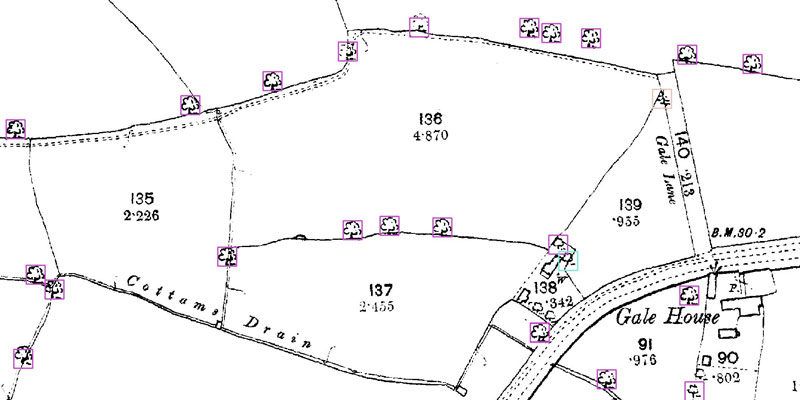
A research project needed to spot trees on historic ordnance survey maps, so colleagues in computer science found a solution.

We’re using gaming technology to ensure prospective teachers are fully prepared for their careers.

A low cost, high-accuracy device, could play a large part in the NHS's 'virtual wards'.
Our monthly research newsletter features a curated mix of news, events, and recent discoveries delivered straight to your inbox.