BA History

UCAS code Typical offer Length
V100 AAA (See full entry requirements) 3 years full-time
Apply now

Received an offer?

Log in to You@York to track your application
Copyright http://www.ianmartindale.co.uk

95% students achieved a 1 or 2:1 degree in 2012.

Copyright http://www.ianmartindale.co.uk

Commitment to small group teaching and an international outlook

Copyright http://www.ianmartindale.co.uk

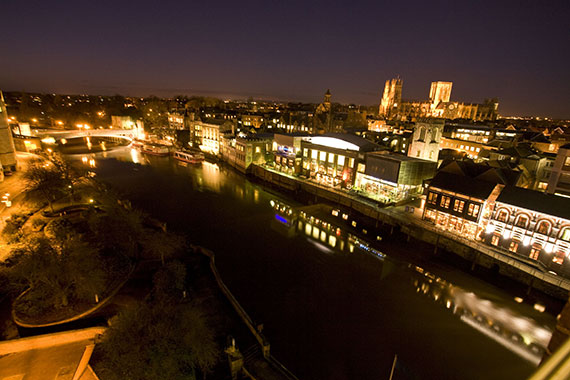
Live and study in a city with a long and varied history

Develop an understanding of the nature of historical change and the ability to read evidence critically, while cultivating skills valued by employers.

  • Over 40 staff with expertise covering the period 400 to 2012, Britain, Europe, Asia, the Americas and Africa
  • You can specialize in a period (medieval, early modern or modern), approach (e.g. economic, political or social) or theme (empire, power, wealth and religion)
  • Study abroad and learn a new language

Why study history?  

A history degree enhances your understanding of forces that act to propel, contain or mould changes in economies, societies, cultures, power and faith. 

History brings you into the world. Studying medieval, early modern and modern societies also enhances your understanding of different cultures. Confronting the pasts of Iran, Britain, America or China reveals the forces that shape today’s global environment.

And a study of the past further prepares you for the future. Historians are critical readers of evidence. They understand how knowledge is constructed and manipulated, are quick to recognise interpretation, and adept at engaging argument and proposing alternative solutions.  They are also expected to communicate clearly, challenge propositions and articulate their own ideas, all skills highly valued by employers.

"The way history is taught at York, mainly through group seminars, lends itself to an informal, sociable atmosphere. Tutors are always keen to provide a quick response to any question you may have and supervisor meetings one-on-one give you all the support you need."

- Penny, History student.

Why study at York?

One of the most exciting aspects of studying at York is living and learning in a city with such a long and varied history. As a student at York you will be surrounded by evidence of the city’s rich heritage stretching from the Romans, through the Vikings to the Georgians, a heritage that we actively draw on in our teaching. At the same time, the degree at York brings you into the world.

With over 40 staff, we offer an unusually chronologically and geographically diverse history degree, ranging from the fall of the Roman Empire to today and covering the globe: Britain, Europe, the Americas, Asia and Africa. You can study abroad (Europe, North America and Australasia) in your second year and learn a new language, either in addition to degree modules or as part of your degree

The degree progresses from broad to specialised topics. Core modules in year 1 introduce you to the broad sweep of history across time and place and historical problems. This is developed in the following years through modules which explore the very nature of historical enquiry and cultivate expertise in using primary materials, culminating in a 10,000 word dissertation. At any one time the department offers over 100 modules to choose from. Students are actively encouraged to develop their own personalised pathway through the degree, pursuing their particular interests and aptitudes with the advice and support of a personal supervisor.

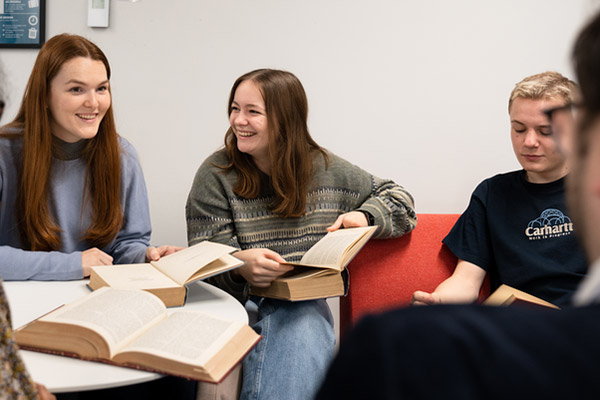
We are committed to small group and research-led teaching. Most modules are shaped by the tutors’ research interests and taught by them in seminars with 10-16 students.

What you'll study

Year one

These modules develop core research and writing skills and offer an introduction to the history of the world from 400 to today.

Making Histories. This module introduces you to the core skills required for advanced historical study.  As a way of welcoming you to the city in which you will spend the next three years, you will develop these skills from case studies taken from the long and varied history of York.

Period Topic: Choosing from a range of options, this seminar module provides an introduction to a specialist area of research based on staff expertise. Recent options have included Goths and Romans, Shakespeare’s world, and The end of the cold war.

From Rome to the Renaissance: The Transformation of Traditional Societies, c.400-1650, Citizens, Comrades and Consumers: The Making of the Modern World, 1650-2010. These lecture-based modules provide an overview of the long chronology of historical time. They give a broad foundation for your degree and opportunities to explore new topics that you may later wish to study in greater depth.

Thinking Through History I and II: These short modules focus on themes and methods in historical study. You can substitute these courses for a Languages for All module. Choosing from one of eleven different languages, these courses offer a chance to learn a new language or develop the skills you already have. This can enrich your historical study and enhance your CV.

You can also ‘audit’ the year 2 Histories and Contexts modules; that is, attend lectures and access reading but with no assessment.  

View all 'Year one' modules. 

Year two

In this year, you will develop more focused and detailed knowledge of particular periods and subjects and begin preparations for writing your dissertation.

Histories and Contexts (2x): These lecture-based modules examine either a particular period or region or a way in which historians have approached studying the past. Recent options have included: The Tudor Regime, 1485-1603, The United States, 1775-1877, and the Modern City.

Explorations (2x): These seminar modules concentrate on a particular topic or theme over a relatively short period of time, and are a step towards the special subject that you take in your final year. Recent options have included: The European Witch Craze, and Africa since the 1950s. 

Dissertation Skills and Using Primary Materials: These modules introduce you to the research skills you will need for your dissertation. By the end of the module and in consultation with your dissertation supervisor, you will have prepared a formal proposal for your dissertation, which you will begin working on during the summer break.

 View all 'Year two' modules.

Year three

Your final year is a chance to apply all the advanced skills in research and critical thinking that you've been developing since arriving. In your Special Subject, Comparative Special and Dissertation, you'll be able to study historical topics with a rigour and depth that is only exceeded by professional historians. 

Special Subject: This seminar module is considered to be the pinnacle of our undergraduate degree. It is an in-depth study of an important historical process or problem, relying heavily on primary sources. Recent options have included: Popular Heresy in the High Middle Ages, Thomas More, The French Revolution, and The Permissive Society in 1960s Britain.

Debating Historical Practice: This lecture-based module focuses closely and critically on key debates and developments in the practice and understanding of how historians investigate and interpret the past. Topics include history and science; history and anthropology; history and material culture; and history and language.  

Comparative Histories: This seminar module examines a single theme across time and place. Recent options have included Beauty, Disease, Food, Heroes, Utopias, and Violence. Comparative Histories are amongst York’s most innovative modules. They help you to be able to rapidly apply difficult concepts to new and unfamiliar subjects: a skill highly valued by employers.

Dissertation: Throughout your final year, you will write up your dissertation research. The dissertation is a chance for you to pursue any research direction you choose, and is therefore the ultimate expression of your individuality as a historian. For many of our students it is the crowning achievement of their academic career.

View all 'Year three' modules.

How you'll be taught

At every stage of the degree, we are committed to delivering the highest quality research-led teaching, which prioritises engagement and intellectual challenge. Our teaching includes lecturers, seminars, discussion groups, specialist workshops, and field trips. In seminars and weekly discussion groups that accompany lectures, tutors work closely with groups of 10-16 students. Small group teaching remains at the core of our degree, accounting for half of our first year teaching and rising to over 80% in Year 3. We believe that students learn better – and learn to think better – when engaging others to think through a problem and develop their own ideas. All of our modules have a Virtual Learning Environment (VLE) component, which includes a reading list linked to the library catalogue.

 
‘I like teaching courses that are based on my own research, such as the explorations modules in Year 2 and the special subject in Year 3, which make me consider my research topics in a new light'

- Henrice Altink 

‎‎Example undergraduate timetable

Teaching hours vary by week, stage of degree and student preference. Students are encouraged to take advantage of additional opportunities, adding languages (2 hrs per week each) or auditing extra modules (2-4 hrs per week). Since this is, in fact, what most of our students do, historians may have up to 12 or 13 hrs in Year 1 and 2.

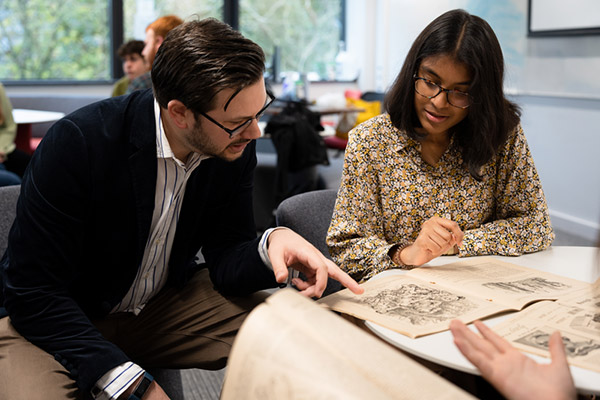
The core requirement is to attend 5-8 hours per week in Year 1, 5-6 in Year 2 and 4-6 in Year 3. This gives you the necessary time to develop as an independent critical learner. Most of your time at York will be spent reading for your weekly seminars and discussion groups, researching and writing your procedural essays, and preparing for your formal assessment.  The library holds a wide range of resources to help you prepare for your classes and assessment, including many online journals and books as well as an impressive range of digitized primary sources. A VLE tutorial and a workshop will prepare you to use this material. You can also have one-to-one appointments with the history librarian to make the most effective use of the library’s resources.

Much of your time at York will also be taken up with one-on-one meetings with dissertation advisors, essay feedback sessions, briefings for modules, optional plenary lectures by visiting speakers, webinars, and ‘student hours’ (all staff hold 2 hours weekly for students to drop in and discuss questions).  

We continually strive to enhance our students’ experience and do this by critically engaging with student feedback and working closely with student representatives.  In the last year, for instance, we have made it possible for Year 2 students to audit Histories and Context modules  and offer the same to Year 1 students this academic year. 

How you'll be assessed

We use a wide range of assessment methods in addition to formal written examinations. These include a 10,000 word dissertation, research essays in some Special Subjects, collaborative projects, essays written specifically for assessment, and 'open' examinations in which you collect the examination paper and have between one day and two weeks to return your answers.

We recognize that in Year 1 our students are only beginning to acquire the historical skills and understanding that they will continue to develop over the course of their degree. The assessment of first-year work, therefore, does not contribute towards the final degree, although an overall pass is required to progress into Year 2. From Year 2 onwards formal assessments contribute towards your degree.

For nearly all modules, you are expected to write a procedural or practice essay. You will receive extensive written feedback on this essay, which will help you in your formal assessment.  You can use student hours to discuss this feedback or an essay plan with your tutor. And you can also book appointments with the Royal Literary Fund Fellow, based in the English department, who can help you express your ideas in clear and effective writing.

We make adjustments for students who are dyslexic or have other special needs, including extra time in closed and open examinations. 

The modules taken by students at universities abroad in Year 2 will count towards their final degree classification.   

Careers and employability

History is a degree that equips you for the long term. It cultivates independence and discipline, an ability to define problems, shape a response and manage the steps to achieve it. Historians can critically read evidence and analyse complex arguments. They are strong communicators, knowing how to use language and clarity of analysis on the page and in presentations. 

From their studies they gain an informed sense of the forces that underlie change, of other mindsets and cultures, and different languages. Seminars cultivate advanced skills in working with others: responding to different opinions, shepherding conversation and advancing their own ideas. These are skills valued by employers. Responsiveness to new situations and to unexpected opportunities is also a trait that fosters successful, adaptable careers.

Some 60 percent of our graduates are in employment six months after completion of their studies. Our graduates go on to build careers in education; law, social work and justice; politics, diplomacy and government; finance, accountancy, banking and fundraising; media; business, commerce and public relations; administrations, management; teaching and academia. To get a sense of how a history degree prepares you for a graduate job, read these profiles of history graduates.

Of the 28 per cent of our students who are listed as being in non-graduate employment six months after graduation, there are many enrolled on internships that will enable them to advance their employment opportunities, especially in the heritage sector, the media and creative industries.  And many of our students (some 34%) also progress to postgraduate study in Britain and abroad.

York offers an innovative careers and enterprise programme tailored exclusively for history students. During your degree, you will have access to workshops and individual mentoring in careers, IT and other skills, as well as internships and work experience programmes. Structured opportunities for extracurricular learning such as the York Award and Languages for All are particularly popular with history students. The department hosts careers events with alumni and provides opportunities for students to engage with the demands of business, education and heritage.

Find out more about how we can help make you more employable

How to apply

We welcome applications from students with a wide range of qualifications and educational backgrounds. Applications are received via UCAS.

Entry is competitive and all prospective students are assessed individually on the basis of academic merit and potential, as well as suitability for the teaching and courses offered at York. We are looking for candidates who demonstrate intellectual curiosity, open-mindedness and analytical ability, the potential to analyse the past in a critical manner and the ability to discuss a point of view and make a coherent argument.

For most, we make our assessment based on the evidence presented on your UCAS form. We look closely at your personal statement and your reference, as well as received and predicted achievements. Interviews may be offered to some mature candidates and those with special circumstances or unusual qualifications.

We encourage applications from students with a wide range of backgrounds. The University has an Access scheme to support students who have or are facing unusual challenges. This enables candidates to provide additional information that will be taken into account during the application process and can offer support to students in the weeks before and after arrival.

The department does not require applicants to hold any qualification in a foreign language nor to learn a language as part of their degree. Undergraduates will not be required to read a foreign language for any module. Nevertheless language proficiency can be an advantage in third-year modules or the  dissertation and so we do encourage all undergraduates to study a language through the University's Languages for All programme.

Those returning to education, or holding unusual qualifications, are encouraged to email the Admissions Tutor for consultation and advice.

We also consider applications for deferred entry and requests, after taking up an offer, to take a gap year.

Number of applications in 2011:1477
Number of places in 2011: 257

We will endeavour to respond to all applications as soon as possible. In order to give due consideration to all candidates we may not be able to communicate a decision immediately, but we will keep in touch with you about the progress of your application.

Students who receive offers are encouraged to visit us on our post-offer Visit Days.  These take place in February and March and are designed to provide an opportunity for you to discover for yourselves what living and working at York will be like. During your visit you will be able to meet students and staff, learn about the degree (including our range of modules as well as study abroad and language opportunities), attend a sample lecture, and take a tour of the campus that will include the University Library and sample student accommodation.

Entry requirements

A levels

AAA at A level, including an A in either History (any syllabus) or Classical Civilisation. An A level in General Studies is typically excluded from conditional offers.

International Baccalaureate

36 points, including Grade 6 in History at Higher Level.

Scottish Highers / Advanced Highers

AAAAA at Higher level and AA at Advanced Higher level including History.

Irish Leaving Certificate

AAAAAB including A1 in History

European Baccalaureate

80% overall including 85% in History

Other qualifications

Cambridge Pre-U: D3, D3 D3 including History. Also, in conjunction with A-levels.

Access to Higher Education: Obtain Access to HE Diploma with 30 credits achieved from units awarded Distinction and 15 awarded Merit or higher. Distinctions will be expected in History-related units.

Other qualifications are accepted by the University, please contact Undergraduate Admissions

English Language Requirements

  • IELTS: 6.5 with a minimum of 5.5 in all units
  • TOEFL: 87 overall with 17 in Listening, 18 in Speaking, 20 in Reading and 17 in Writing
  • Pearson PTE Academic: 61 overall with 51 in all parts
  • Cambridge Advanced English (CAE): grade A
  • Cambridge Certificate of Proficiency in English (CPE): grade C
  • GCSE/IGCSE/O level English Language (as a first language): grade C

Mature students

We welcome applications from mature students. As with continuing students, we look for intellectual curiosity, analytical ability as well the capacity to formulate coherent arguments.  We take into account any formal qualifications that you may have, but lack of them is not necessarily a barrier to admission. The individual circumstances of all applicants are carefully considered.

We ask that mature students first contact the History Admissions Tutor, outlining your background and experience, any qualifications and reasons for wanting to study history at York. The Tutor will recommend whether you should apply at this stage or first seek some formal preparation (e.g. an A-level at a Further Education College or undertaking an Access to HE qualification) before applying later on.

Applications are made through UCAS. If appropriate, arrange for a recent academic reference which describes your work and potential as fully as possible. Otherwise have an employer, friend or other acquaintance write on your behalf, telling us about your organisational and analytical skills, your motivation and interests.

Applicants may be called for interview. We will ask you to bring recent examples of your writing; if possible, these should be on history. Interviewers will ask about your experience and reasons for wanting to study history and will want to discuss your interests and reading habits, for example, to assess whether you have the motivation to complete three years of intensive reading and writing.

Any questions?

Contact our friendly admissions tutor if you've got any questions:

Undergraduate Admissions Tutor

Catriona Kennedy

history-ug-admissions@york.ac.uk

Understanding the KIS

More about York