Skip to content Accessibility statement

BSc (Hons) Immunology and Infectious Disease

Study at the frontline of global health, exploring how pathogens spread, how our bodies defend us, and how we develop life-saving treatments.

Year of entry: 2026/27

UCAS code
C550
Institution code
Y50
Start date
September 2026
View semester dates
Length
3 years full-time
Typical offer

Apply for this course

Infectious diseases continue to shape lives across the world, and understanding how they spread, how our immune system responds, and how we can intervene is one of today’s most pressing scientific challenges. 

Our BSc Immunology and Infectious Disease, taught jointly by the Department of Biology and Hull York Medical School, gives you direct access to York’s world-leading research in areas such as neglected tropical diseases, antibiotic-resistant bacteria, skin and immune disorders, and cancer. Through lectures, workshops and hands-on practicals, you’ll build strong foundations in immunology, microbiology, human physiology and mechanisms of disease, before tailoring your studies.

As you progress, you’ll dive deeper into advanced topics and undertake an extended research project guided by our biomedical science experts. Throughout the degree, you’ll gain the skills that define a modern scientist, from data analysis and experimental design to report writing and communication. This research-led training prepares you for a wide range of futures. Whether you want to combat global health challenges or shape the future of medical science, this programme gives you the knowledge and experience to make a real impact.

Accreditation

All long standing undergraduate courses in the Department of Biology have received accreditation (BSc) or advanced accreditation (integrated Masters) from the Royal Society of Biology. We are looking to receive accreditation from the Royal Society of Biology for our Immunology and Infectious Disease programmes.

among universities included in the National Student Survey 2024 for molecular biology, biophysics and biochemistry
Complete University Guide 2025
Biological Sciences is ranked in the top 10 overall in the UK according to the Times Higher Education’s ranking of the latest REF results (2021).
The Department of Biology provides excellent facilities, and having access to such high-quality resources truly enhances my learning. From modern teaching labs to dedicated study spaces and the impressive Technology Facility, I was in awe of what we had access to during research projects along our university experience.
Débora, BSc Biochemistry . Read Débora's blog post.

Course content

This is a flexible and modular course which offers you choices in what you can study. There is the option to spend an additional year in industry or a year abroad as part of this course. If you do not go away for a year, you will continue to progress through your studies within the University.

Year 1

All Year 1 modules are core modules.

Academic integrity module

In addition to the above you will also need to complete our online Academic Integrity module.

This module covers some of the essential skills and knowledge which will help you to study independently and produce work of a high academic standard which is vital for success at York.

This module will:

  • define academic integrity and academic misconduct
  • explain why and when you should reference source material and other people's work
  • provide interactive exercises to help you to assess whether you've understood the concepts
  • provide answers to FAQs and links to useful resources.

Year 2

Core modules

Option modules

You will study two option modules. Examples can be found below. Some option module combinations may not be possible. The options available to you will be confirmed after you begin your course.

Year 3

Core modules

You will study four option modules. A minimum of two of these four should be from the optional core group.                    

Optional core modules                                                          

Option modules

Our modules may change to reflect the latest academic thinking and expertise of our staff, and in line with Department/School academic planning.

Learning outcomes

Every course at York has been designed to provide clear and ambitious learning outcomes. These learning outcomes give you an understanding of what you will be able to do at the end of the course. We develop each course by designing modules that grow your abilities towards the learning outcomes and help you to explain what you can offer to employers. Find out more about our approach to teaching and learning.

Learning outcomes for this course
  • Knowledge and understanding. Provide explanations that demonstrate a thorough understanding of the role of the immune system and pathogen biology in the development of disease in the host, at the molecular, cellular, and organismal level.
  • Experimental design and execution. Formulate hypotheses, design and conduct scientifically rigorous and ethically sound studies for the collection, analysis, and presentation of biomedical data, ranging from the molecular to the population level.
  • Research process. Thoroughly evaluate and understand the application of experimental, analytical, epidemiological and quantitative techniques and methodologies, by engaging with practical experience and scientific training.
  • Problem solving. Work effectively as an individual and in groups, applying logical reasoning and lateral thinking to develop creative and innovative solutions to immunological and infectious disease problems. 
  • Communication. Communicate and interpret complex scientific information effectively, using a variety of formats for expert, professional, business, industrial and lay audiences.
  • Transferable skills. Demonstrate independence, originality, creativity and an understanding of cutting-edge scientific practice and technology, and apply numerical, quantitative, and computer-based skills to a range of working environments, which might include laboratories, education, industry, business, health services, policy, government, and media.
Get a taste of university-level study on one of York's free short courses, including our subject course, 'Bugs, brains and beasts'.

Fees and funding

The fees and funding information here is for students starting in the 2026/27 academic year.

If you take a year abroad or year in industry you'll pay a reduced rate of fees for that year.

The UK government has announced its intention to increase tuition fees from £9,535 to £9,790 for the 2026/27 academic year. We expect this to apply to new UK (home) undergraduate students starting their studies in September 2026.

UK (home) or international fees?

The level of fee that you will be asked to pay depends on whether you're classed as a UK (home) or international student. Check your fee status.

Fees for subsequent years

  • UK (home) fees may increase within the government fee cap in subsequent academic years. We will notify you of any increase as soon as we can.
  • International fees are subject to increase in subsequent years in line with the prevailing Consumer Price Index (CPI) inflation rate (up to a maximum of 10%).

More information

For more information about tuition fees, any reduced fees for study abroad and work placement years, scholarships, tuition fee loans, maintenance loans and living costs see undergraduate fees and funding.

Additional costs

Textbooks and course books are all available in the library or online. We do recommend books you might find useful, reading lists are provided to you when you start your modules, but it is not compulsory for you to buy the books. You will have access to a course ebook at no additional cost.

Costs for students going abroad or into industry will vary depending on what sort of placement it is and what sort of financial assistance is available.

Funding

We'll confirm more funding opportunities for students joining us in 2026/27 throughout the year.

York, Oxford, Cambridge, Imperial

Just four UK universities are rated Gold for teaching and top ten for research* in the latest national assessment exercises.

* Awarded joint 10th in the Times Higher Education ranking of the Research Excellence Framework 2021.

Teaching and assessment

You’ll study and learn with academics who are active researchers, experts in their field and have a passion for their subjects. Our approach to teaching will provide you with the knowledge, opportunities, and support you need to grow and succeed in a global workplace. Find out more about our approach to teaching and learning.

Teaching format

Teaching is delivered by academic scientists with additional contributions from clinical researchers. Throughout your course there will be strong links between your studies, scientific research and clinical applications. Our approach to teaching will provide you with the knowledge, opportunities, and support you need to grow and succeed in a global workplace. You may be taught by the following methods:

Small-group teaching

Cutting-edge research informs all our teaching activities and our friendly, approachable, and accessible staff are experts in their respective fields. Small-group teaching is an important part of our course, in tutorials, skills-based and research project modules and in taught modules with group work elements. This approach helps develop your scientific writing, problem solving and communication skills, as well as being a great opportunity to have informal scientific discussions with members of staff about topical issues.

Lectures

You will attend lectures where we will deliver stimulating and thought-provoking perspectives on the major global challenges in biosciences of the 21st century.

Practicals

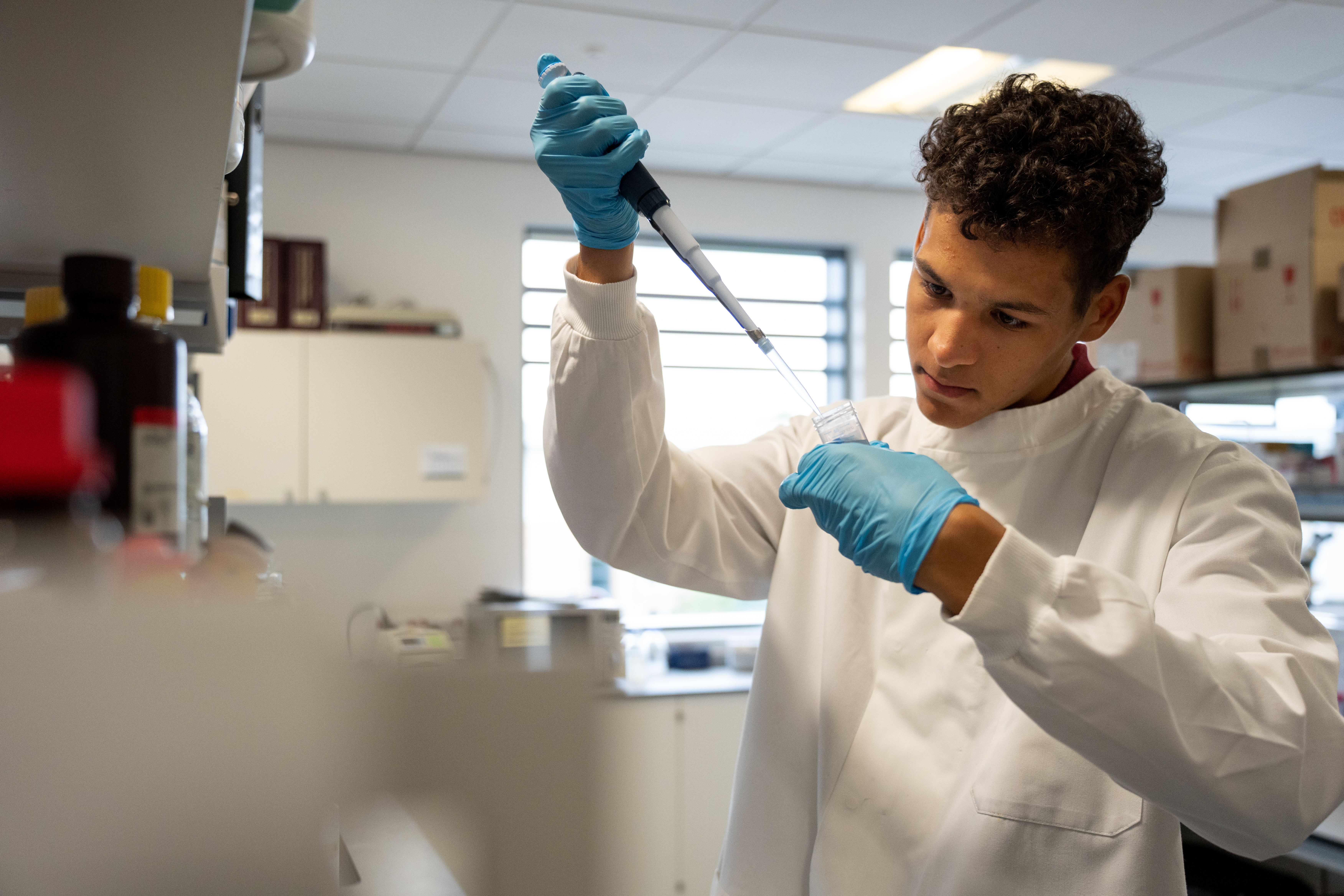
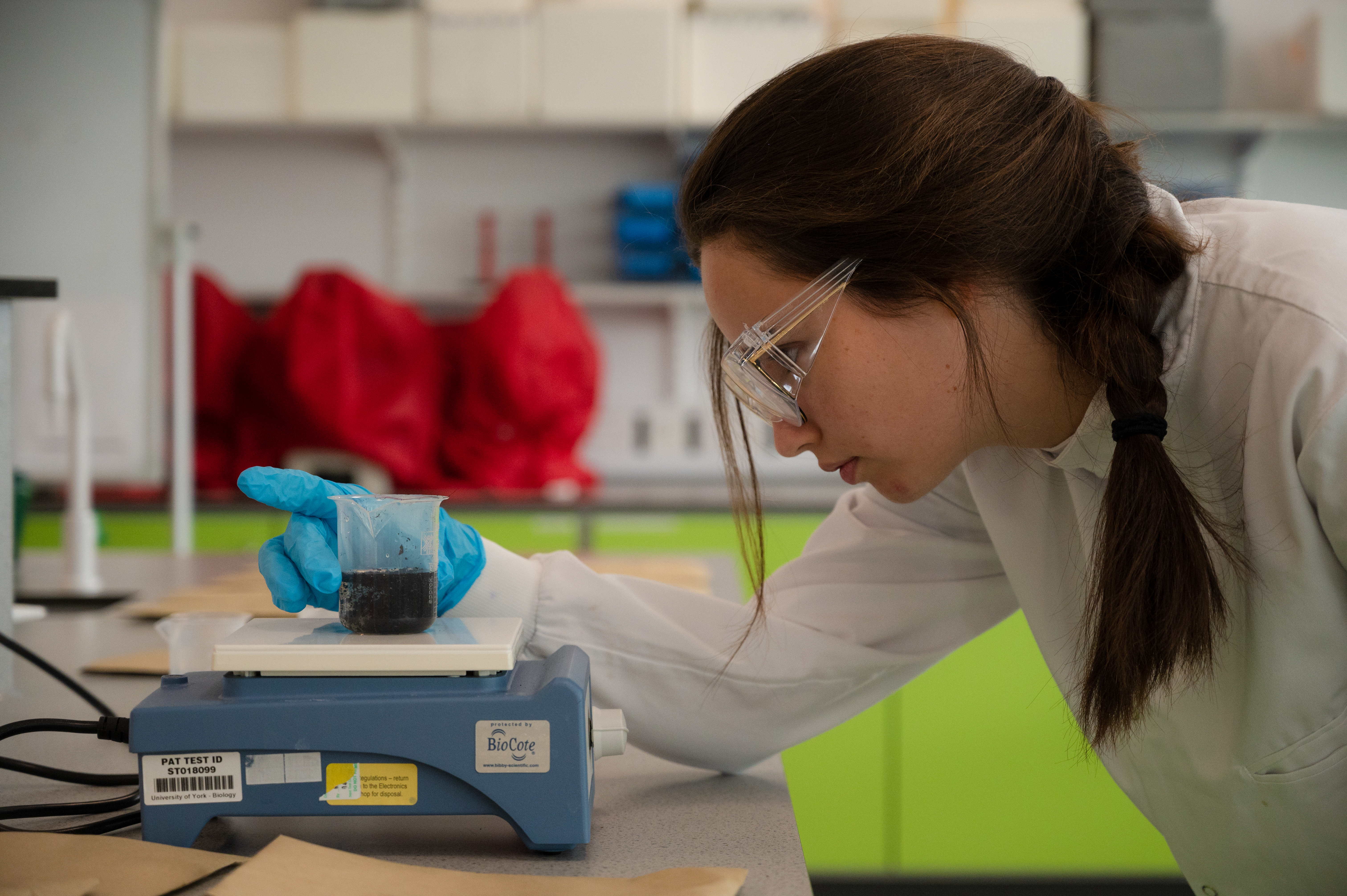
Practicals are designed to help you to develop laboratory skills and to become familiar with a wide range of practical techniques, training you to use methods precisely and encouraging you to objectively assess the reliability of your results. 

Workshops

Workshops are also an important feature of our programme, and they provide an additional dimension to most modules. You will often collaborate in small groups in problem solving and other learning activities in our flexible learning workshops. You will design your own experiments and work together on the findings from the latest research papers, or investigate the application of new technologies to the global challenges in the biosciences.

Skills and group work

Each semester during the first two years, students take modules designed to develop more generic scientific and transferable skills. Some modules focus on specific scientific techniques, while others develop skills in problem solving, experimental design and data analysis. 

We encourage you to develop important communication skills, including working in groups to plan and carry out experiments that investigate a scientific problem, and you will present your work as an oral presentation or poster.

Timetabled activities

In your first year, you can expect:

Lectures 2-4 hours per week
Workshops 3-5 hours per week
Practicals 3-6 hours per week
Small-group teaching 5 hours per semester

These figures are representative of a typical week. Your contact hours will vary throughout the year due to your module choices, non-compulsory classes, exam periods and changes to scheduled activities.

Outside your timetabled hours, you'll study independently. This may include preparation for classes, follow-up work, wider reading, practice completion of assessment tasks, or revision.

In the UK, full-time students are expected to spend 1,200 hours a year learning. That's about 40 hours of classes and independent study each week during semesters. Everyone learns at a different rate, so the number of hours you spend on independent study will be different to other students on your course.

In the UK, full-time students are expected to spend 1,200 hours a year learning. That's about 40 hours of classes and independent study each week during semesters. Everyone learns at a different rate, so the number of hours you spend on independent study will be different to other students on your course.

Facilities

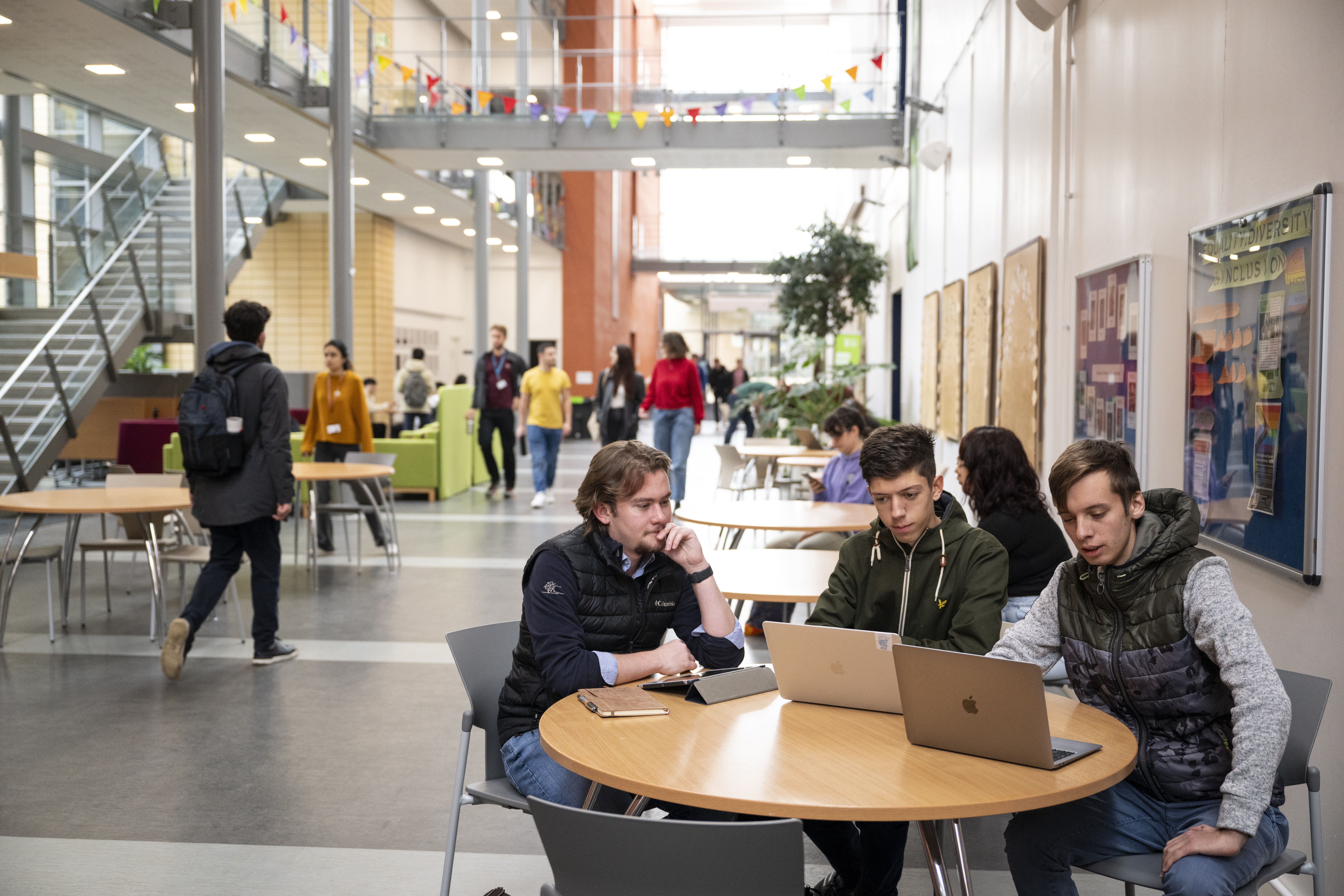
Teaching and learning in the Department of Biology is based in a £23m state-of-the-art facility, which is equipped with laboratories, a flexible workshop and creative learning lounge, computer rooms, specialist tissue culture and fluorescence microscopy suites.

Our teaching labs are equipped with a range of biological techniques that you could engage with while studying your degree including polymerase chain reaction, gel electrophoresis, immunofluorescence microscopy, cell culture and flow cytometry.

Teaching location

This course is based in the Department of Biology which is on Campus West. The majority of teaching takes place within Biology, with some additional teaching taking place at other locations on Campus West.

About our campus

Our beautiful green campus offers a student-friendly setting in which to live and study, within easy reach of the action in the city centre. It's easy to get around - everything is within walking or pedalling distance, or you can use the fast and frequent bus service. Take a campus tour.

Assessment and feedback

You will be assessed via a mixture of closed exams, online open exams, and continuous assessment. Although you must perform to a satisfactory level, Stage 1 (which is your first year) does not count towards the final degree, which is determined by work in Stage 2 (40%) and Stage 3 (60%). If you undertake a year abroad or in industry this is marked by pass/fail.

Throughout your course we will provide you with feedback on your work and assignments, which will give you an indication of the progress you are making in your studies.

Careers and skills

A degree in Immunology and Infectious Diseases provides an excellent basis for science or health related careers from and for a wide range of other occupations and professions from management and consultation, to teaching and communications.

Studying Immunology and Infectious Diseases will develop your critical thinking and research skills, and prepare you to be competitive for entry into relevant postgraduate degree programmes.

Employment opportunities are diverse, ranging from biological and biomedical research and development, to careers in science communication, the health service, public health policy, education and pharmaceuticals.

Career opportunities

  • Public Health Practitioner
  • Medical Writer
  • Science Communications Officer
  • Public Health Analyst
  • Clinical Researcher
  • Pharmaceutical development
  • Policy Officer
  • Project Manager
  • Consulting roles
  • Data Scientist
  • Postgraduate study
  • PhD 

Transferable skills

  • ​Problem solving
  • Communication skills
  • Teamworking skills
  • Critical and analytical thinking
  • Data interpretation and presentation
  • Independent study skills
  • Logical and critical thinking
  • Creativity and innovation
  • IT literacy

Entry requirements

Qualification Typical offer
A levels

AAB including Biology and either Chemistry, Mathematics, Physical Education, Physics or Psychology.

Access to Higher Education Diploma 36 credits at Distinction and 9 credits at Merit or higher. Must include Level 3 modules in Biology and a second science. Please contact us for information on the units we accept.
BTEC National Extended Diploma BTEC National Extended Diploma DDD. We consider BTEC Level 3 Extended Diploma in Applied Science (2016 syllabus) with all 7 mandatory units plus at least 2 units from 8,9,10,11,12,17,20. We consider BTEC Level 3 Extended Diploma in Applied Science (2010 syllabus), please contact us for information on the units we accept.
European Baccalaureate 80% overall including 8.5 and 8 in Biology and either Chemistry, Mathematics, Physics or Psychology.
International Baccalaureate 35 points including 5 in Higher Level Biology plus either 5 in another Higher Level science or mathematics subject, or 5 in two Standard Level science or mathematics subjects.
We accept the following IB subjects as a second science: Chemistry, Mathematics (A&A or A&I), Physics, Psychology, Sports, exercise and health science
T levels We are currently not accepting T Levels for this course unless additional A Levels (or equivalent qualifications) in Biology and a second science or mathematics subject have been taken.
Scottish Highers / Advanced Highers Advanced Highers - BB in Biology and a second Science/Mathematics plus Scottish Highers - BB

We may also be able to consider three Advanced Highers or a combination of Highers and Advanced Highers, where an applicant does not meet the grade requirement through Highers alone. Please contact us to discuss your qualifications.
International foundation programme Foundation Certificate from our International Pathway College or an appropriate alternative.
Other qualifications To secure a place as a mature student on this course you will need recent qualifications in Biology and a second science (Chemistry, Mathematics, Physics, Psychology or Physical Education) at a sufficiently advanced level to cope with the course, together with evidence of some of the key skills needed for studying at degree level.
Other international qualifications Equivalent qualifications from your country

Alternative offers

Meeting the following additional criteria may qualify you for an alternative offer.

Criteria Adjustment
Widening participation BBC including B in Biology and a second science.
This is conditional upon successful completion of the WP programme including the YorJourney module (Black Access Programme, Next Step York) or successful completion of Realising Opportunities More about widening participation.
Contextual offer BBB including Biology and either Chemistry, Mathematics, Physical Education, Physics or Psychology.
EPQ If you achieve B or higher in the EPQ, you may be eligible for an alternative offer up to one A level grade (or equivalent) below our typical offer.
Core Maths If you achieve B or higher in Core Maths, you may be eligible for an alternative offer up to one A level grade (or equivalent) below our typical offer.
MOOCs If you successfully complete our online course Bugs, brains and beasts, you may be eligible for an alternative offer up to one A level grade (or equivalent) below our typical offer. Details about how to evidence completion of the MOOC will be sent in your offer letter. Please note: you do not need to pay for the certificate. More about MOOCs.

English language

If English isn't your first language you may need to provide evidence of your English language ability. We accept the following qualifications:

Qualification Minimum requirement
IELTS (Academic) 6.5, with a minimum of 6.0 in each component
IB English A score of 4 in English A or 5 in English B (Higher Level or Standard Level)
Cambridge CEFR 176, with a minimum of 169 in each component
Oxford ELLT 7, with a minimum of 6 in each component
Oxford Test of English Advanced 136, with a minimum of 126 in each component
Duolingo Integrated subscores: 120 overall, with a minimum of 105 in each component
GCSE/IGCSE/O level English Language (as a first or second language) Grade C / Grade 4
LanguageCert SELT B2 with a minimum score of 33/50 in each component
LanguageCert Academic B2 with a minimum score of 33/50 in each component
Kaplan Test of English Language 478 Main Flight score with 444 in each component
Skills for English B2: Merit overall, with Pass with Merit in each component
PTE Academic 61, with a minimum of 55 in each component
TOEFL 87 overall, with a minimum of 21 in each component (taken before January 2026)
4.5 with 5 in Listening and 4.5 in each other component (taken after January 2026)
Trinity ISE III Merit in all components
Other English language qualifications We also accept other English Language qualifications, including various school-leaving certificates.

For more information see our undergraduate English language requirements.

If you haven't met our English language requirements

You may be eligible for one of our pre-sessional English language courses. These courses will provide you with the level of English needed to meet the conditions of your offer.

The length of course you need to take depends on your current English language test scores and how much you need to improve to reach our English language requirements.

After you've accepted your offer to study at York, we'll confirm which pre-sessional course you should apply to via You@York.

Discover York

We offer a range of campus accommodation to suit you and your budget, from economy to premium.
Explore campus and city life and hear what our current students have to say about living here.
Lively, full of culture and beautiful, York is regularly voted one of the best places to live and visit in the UK.
Find out more about York. Chat to staff and students and take the tour, on campus or online.