
MSc Biomedical Engineering
Advance healthcare through pioneering research—master Biomedical Engineering at York and help shape the future of medical technology.
Year of entry: 2026 (September)
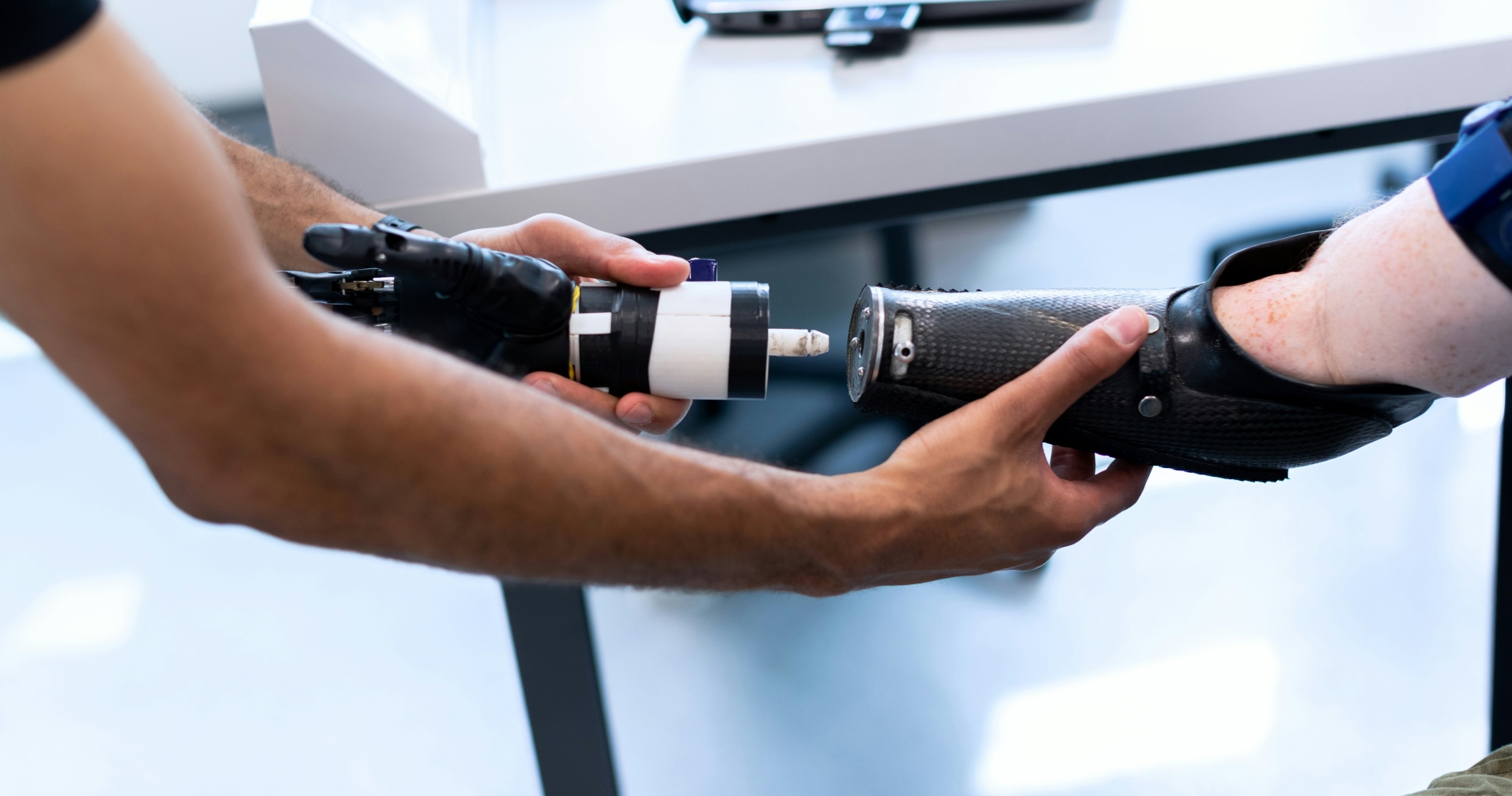
Step into the future of healthcare with our MSc in Biomedical Engineering—where engineering meets life sciences to shape groundbreaking medical technologies. From AI-powered diagnostics to advanced prosthetics, this programme equips you to innovate and lead in a rapidly evolving field.
Our MSc in Biomedical Engineering bridges the gap between engineering and the life sciences, preparing students to drive innovation across healthcare, biotechnology, and medical technology. Through a research-led curriculum, students gain hands-on experience in designing advanced medical devices, developing AI-driven diagnostic tools, and creating intelligent health systems. Graduates emerge ready to make an impact in roles such as biomedical engineers, research and development specialists, healthcare consultants, and regulatory affairs professionals—contributing to transformative advances in patient care and global health.
Course content
Year 1 - five core modules and one option module
Modules
Core modules
- Medical Imaging and Physics
- Future Healthcare and Computer Aided Diagnosis
- Biomedical Engineering Group Project
- Machine Learning
- Biomedical Engineering Research Project
Option modules
- Research Methods, Theory and Data Analysis
- Embedded Systems Design and Programming
- Sound Models and Systems
- Critical Evaluation of Intelligent Robots
- Robot Kinematics and Dynamics
Our modules may change to reflect the latest academic thinking and expertise of our staff, and in line with Department/School academic planning.
Learning outcomes
Every course at York is built on a distinctive set of learning outcomes. These will give you a clear understanding of what you will be able to accomplish at the end of the course and help you explain what you can offer employers. Our academics identify the knowledge, skills, and experiences you'll need upon graduation and then design the course to get you there.
Learning outcomes for this course
- Construct critical evaluations and summaries of scientific literature that demonstrate a deep understanding of the concepts and approaches at the forefront of research in Biomedical Sciences.
- Competently undertake the design of experiments for the collection, analysis and modelling of data, and carry out research tasks in Biomedical Sciences with autonomy and independence.
- Evaluate state-of-the-art experimental and analytical approaches in Biomedical Sciences, drawing upon first-hand practical experience working in research laboratories.
- Work with a minimum of guidance and supervision as an individual, team member or leader in collaborative groups, and use their initiative and originality to investigate sustainable and ethical solutions to Biomedical Science problems.
- Critically evaluate and communicate Biomedical Science research and its application in a variety of written and spoken formats.
- Apply their technical expertise, practical experience and other transferable skills to a wide range of working environments including research laboratories, industries and enterprises relating to Biomedical Sciences.
Fees and funding
Annual tuition fees for 2026/27
| Study mode | UK (home) | International and EU |
|---|---|---|
| Full-time (1 year) | £13,900 | £32,900 |
Fees information
UK (home) or international fees? The level of fee that you will be asked to pay depends on whether you're classed as a UK (home) or international student. Check your fee status.
Find out more information about tuition fees and how to pay them.
Funding information
Discover your funding options to help with tuition fees and living costs.
We'll confirm more funding opportunities for students joining us in 2026/27 throughout the year.
If you've successfully completed an undergraduate degree at York you could be eligible for a 10% Masters fee discount.
Funding opportunities
Chevening Scholarships
We are pleased to work with Chevening Scholars to offer funding for our Masters programmes. Chevening Scholarships provide one year of fully-funded postgraduate study in the UK for international (including EU) students. The scholarships are open to early and mid-career professionals who have the potential to become future leaders.
Teaching and assessment
You’ll work with world‐leading academics who’ll challenge you to think independently and excel in all that you do. Our approach to teaching will provide you with the knowledge, opportunities, and support you need to grow and succeed in a global workplace.
Teaching format
You'll be taught through a mixture of lectures, seminars, practicals and workshops.
Teaching location
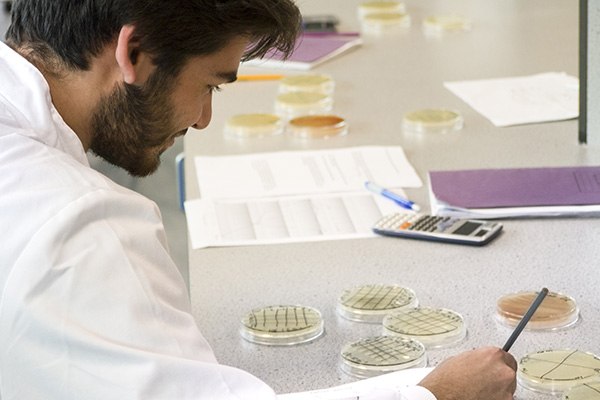
The School of Physics, Engineering and Technology is based on Campus West. You will have access to a dedicated area within the School, equipped with modern electronics bench equipment, a range of fabrication tools, and the purpose-built Medical Devices and Medical Imaging Laboratory. This will provide you with the space and facilities to design, fabricate, assemble, and carry out AI and imaging analysis.
About our campus
Our beautiful green campus offers a student-friendly setting in which to live and study, within easy reach of the action in the city centre. It's easy to get around campus - everything is within walking or pedalling distance, or you can always use the fast and frequent bus service.
Assessment and feedback
You will be assessed via a combination of exams, coursework, presentations, demonstrations and reports.

Careers and skills
This course is an essential step into further research or a career in industrial biomedical engineering. Around half of our students will pursue further study, while the other half go into industry.
Career opportunities
- Medical device engineer
- Clinical engineer
- Medical technology research scientist,
- Medical imaging specialist,
- Healthcare data/AI analyst
- Regulatory affairs specialist
- Rehabilitation engineer
- Entrepreneur
Transferable skills
You will develop the following transferable skills:
- Critical thinking
- Data interpretation
- Statistics
- Programming
- Written, oral and graphical presentation of scientific data and ideas

Turn ambition into achievement with our expert guidance and connections. From your first day here to life after graduation, we'll help you find your career advantage.
Entry requirements
| Qualification | Typical offer |
|---|---|
| Undergraduate degree | 2:2 or equivalent in Engineering, Computer Science, Physics, Mathematics and Biotechnology, or a relevant subject |
| Other international qualifications | Equivalent qualifications from your country |
English language
If English isn't your first language you may need to provide evidence of your English language ability. We accept the following qualifications:
| Qualification | Minimum requirement |
|---|---|
| IELTS (Academic and Indicator) | 6.0, minimum 5.5 in each component |
| Cambridge CEFR | B2 First: 169, with no less than 162 in each component |
| Oxford ELLT | 6, minimum of 5 in each component |
| Oxford Test of English Advanced | 126, minimum 116 in each component |
| Duolingo | 105, minimum 95 in all other components |
| LanguageCert SELT | B2 with 33/50 in each component |
| LanguageCert Academic | 65 with a minimum of 60 in each component |
| Kaplan Test of English Language | 444-477, with 410-443 in all other components |
| Skills for English | B2: Pass with Merit overall, with Pass in each component |
| PTE Academic | 55, minimum 51 in each component |
| TOEFL | 79, minimum of 17 in Listening, 18 in Reading, 20 in Speaking and 17 in Writing |
| Trinity ISE III | Pass in all components |
For more information see our postgraduate English language requirements.
If you haven't met our English language requirements
You may be eligible for one of our pre-sessional English language courses. These courses will provide you with the level of English needed to meet the conditions of your offer.
The length of course you need to take depends on your current English language test scores and how much you need to improve to reach our English language requirements.
After you've accepted your offer to study at York, we'll confirm which pre-sessional course you should apply to via You@York.
Next steps
Contact us
Get in touch if you have any questions
Discover York

We offer a range of campus accommodation to suit you and your budget, from economy to premium.

Explore campus and city life and hear what our current students have to say about living here.

Lively, full of culture and beautiful, York is regularly voted one of the best places to live and visit in the UK.
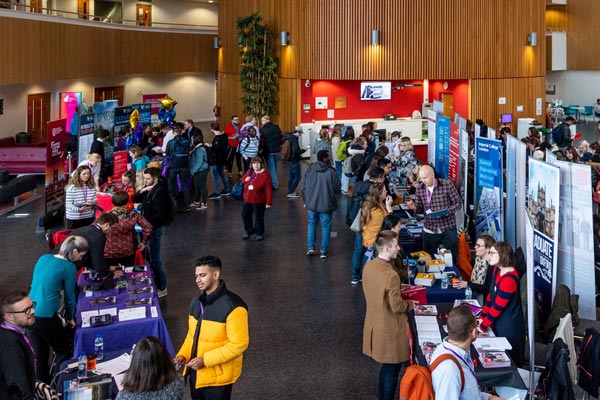
Find out more about York. Chat to staff and students and take the tour, on campus or online.