
MSc Artificial Intelligence
Study of the design, implementation and evaluation of intelligent systems.
Year of entry: 2026 (September)
Discover the impact of AI on industry, cutting-edge research and society as a whole.
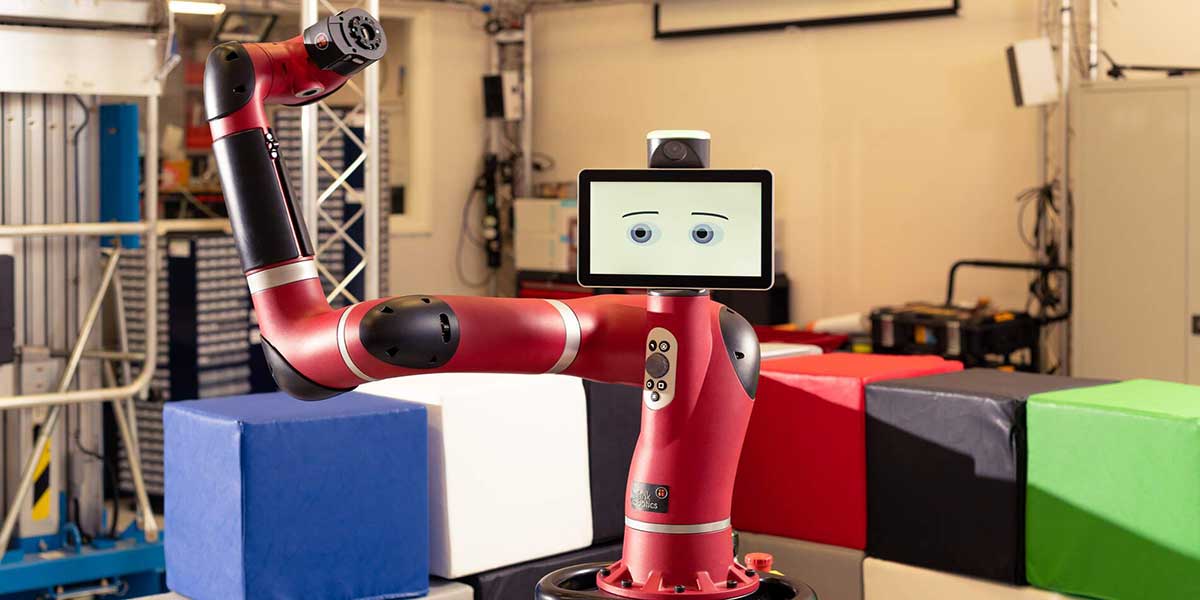
This course will build on a solid foundation in the principles and practices of computer science, including coding, mathematics and basic engineering. You will study both the underlying theory and practical skills used in symbolic and learning-based AI methodologies. You will see how these modern AI techniques and apply these to areas such as computer vision, robotics, graphics, analysis of data and games.
Course content
Throughout the year, you will study four core modules and two option modules.
You will also develop skills to enhance your computational thinking engineering to enable you to succeed in an industrial, academic or research environment. The research project allows you to develop knowledge in a specific area of AI or machine learning, while developing skills to contribute professionally to solving commercial and industrial engineering problems.
Modules
Core modules
- Foundations of Artificial Intelligence and Machine Learning
- Research Methods for Computer Science
- Deep Learning
Option modules
You will study two option modules. Examples can be found below. Some option module combinations may not be possible. The options available to you will be confirmed after you begin your course.
- Autonomous Robots
- Computer Vision and Graphics
- AI Search and Logic
- Evolutionary Intelligence
- Professional and Academic Development
- Cloud Based Data Analysis
- Governance of Data Science
Our modules may change to reflect the latest academic thinking and expertise of our staff, and in line with Department/School academic planning.
Research project
Work on your individual project will start around the beginning of April, and you will receive regular one-to-one supervisions throughout your project.
You will continue to work on your individual project over the summer, and there will be continuing supervision and research-group meetings to discuss your project. You will finish the course when you hand in your dissertation and paper for your project in September.
Learning outcomes
Every course at York is built on a distinctive set of learning outcomes. These will give you a clear understanding of what you will be able to accomplish at the end of the course and help you explain what you can offer employers. Our academics identify the knowledge, skills, and experiences you'll need upon graduation and then design the course to get you there.
Learning outcomes for this course
Differentiate between the different paradigms of AI, theoretical underpinnings, relative strengths and weaknesses, and suitability for solving different types of problems.
Adapt to new AI technologies, languages, paradigms, terminologies and models as they become available, being confident to use advanced techniques and tools in practice.
Design and build data-driven intelligent systems, using appropriate techniques to manage large volumes of data, using appropriate techniques for labelled and unlabelled data, while understanding limitations caused by data bias.
Engineer solutions in which intelligent systems are used to solve real-world problems at scale, using knowledge and skills across the full breadth and depth of computational, machine learning, and mathematical principles.
Make immediate and effective contributions as part of multidisciplinary teams in industry, consultancy or education, by managing workloads, optimising resources and meeting deadlines, using experiences from team projects.
Operate as responsible AI practitioners, by maintaining awareness of the safety, ethics and security of intelligent systems, how they can impact on society, and by continuing to expand and deepen their knowledge through critical engagement with the discipline.

Teamwork is an important part of computer science. Therefore, you’ll spend time discussing maths problems and working on group projects, which can be great fun!
Will, Computer Science student
Fees and funding
Annual tuition fees for 2026/27
| Study mode | UK (home) | International and EU |
|---|---|---|
| Full-time (1 year) | £13,900 | £32,900 |
Fees information
UK (home) or international fees? The level of fee that you will be asked to pay depends on whether you're classed as a UK (home) or international student. Check your fee status.
Find out more information about tuition fees and how to pay them.
Additional costs
There are unlikely to be any mandatory additional costs associated with the course, although you may want to set aside £200 for optional photocopying and personal stationery over the duration of the course.
Funding information
Discover your funding options to help with tuition fees and living costs.
We'll confirm more funding opportunities for students joining us in 2026/27 throughout the year.
If you've successfully completed an undergraduate degree at York you could be eligible for a 10% Masters fee discount.
Funding opportunities
Chevening Scholarships
We are pleased to work with Chevening Scholars to offer funding for our Masters programmes. Chevening Scholarships provide one year of fully-funded postgraduate study in the UK for international (including EU) students. The scholarships are open to early and mid-career professionals who have the potential to become future leaders.
Teaching and assessment
You’ll work with world‐leading academics who’ll challenge you to think independently and excel in all that you do. Our approach to teaching will provide you with the knowledge, opportunities, and support you need to grow and succeed in a global workplace.
Teaching format
Part of the course is taken up by taught modules. Each module comprises a mix of lectures, problem classes and practical classes, plus personal study time. You'll also undertake an individual research project under the supervision of a member of staff.
Throughout the course you will have a personal tutor, who will provide academic and pastoral advice. When you undertake your individual project, you will be allocated a supervisor within your area of interest. You should expect to be working on open assessments during vacation periods.
Due to the intensive nature of the course, you will need to be in York throughout both semesters and over the summer while you undertake your individual project.
Facilities
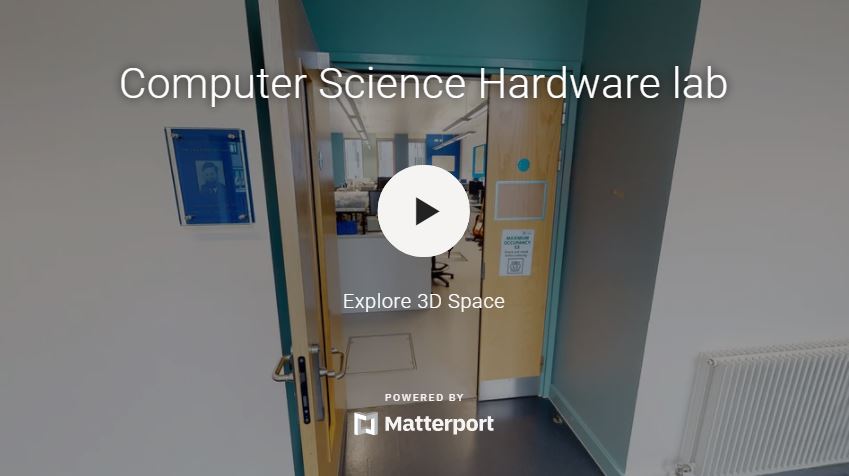
The Department houses four software and two hardware laboratories.
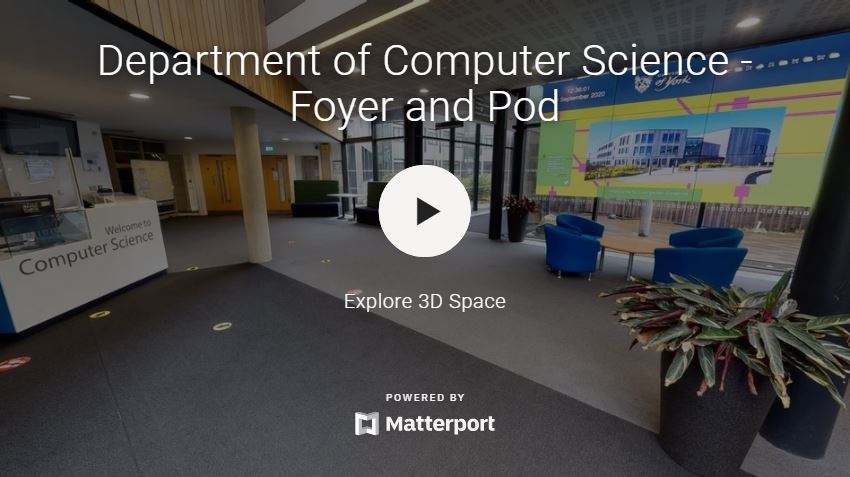
Our study and social pod is open 24/7 for group and individual study. It can also be booked for student society meetings and for events.
Find out more about our facilities, including a video tour, showing our labs, teaching and research spaces.
Teaching location
Computer Science is based on Campus East. The majority of teaching on this course takes place on Campus East in the Ian Wand building and Ron Cooke Hub.
About our campus
Our beautiful green campus offers a student-friendly setting in which to live and study, within easy reach of the action in the city centre. It's easy to get around campus - everything is within walking or pedalling distance, or you can always use the fast and frequent bus service.
Assessment and feedback
We assess modules in a variety of ways, including practical exercises, reports and closed examinations. Your project assessment will be made up of a dissertation.
Assessments take place at various times during the year. Closed examinations are taken in the three-week assessment periods at the end of each semester.
Practical exercises, reports and other forms of open assessment typically occur towards the end of the teaching sessions of a module. Work for these assessments must be submitted by fixed deadlines normally well after the conclusion of the taught sessions.


Virtual tours
Take a virtual tour of one or our modern, dedicated facilities.
Careers and skills
Skills for employability are embedded throughout the programme, with opportunities for you to return to these throughout the degree. Throughout the programmes, you'll study real cases from the industry, learn how to run projects and manage risks.
Career opportunities
- Programming engineer
- Software developer
- Higher education teaching and research
- Information analyst and app developer
- Systems architect
- Business analyst
- Artificial intelligence researcher
Transferable skills
- Advanced computational skills
- Project management and organisation
- Project evaluation
- Communication and time-management skills
- Research skills

Turn ambition into achievement with our expert guidance and connections. From your first day here to life after graduation, we'll help you find your career advantage.
Entry requirements
| Qualification | Typical offer |
|---|---|
| Undergraduate degree | 2:2 or equivalent in Computer Science or a relevant discipline. Successful applicants will demonstrate a strong background in the following essential topics: programming, maths and a knowledge of basic algorithms |
| Other qualifications and experience | We are willing to consider your application if you do not fit this profile, providing you are able to demonstrate that you have the required amount of Computer Science knowledge and experience to succeed on the programme |
| Other international qualifications | Equivalent qualifications from your country |
English language
If English isn't your first language you may need to provide evidence of your English language ability. We accept the following qualifications:
| Qualification | Minimum requirement |
|---|---|
| IELTS (Academic and Indicator) | 6.5, minimum 6.0 in each component |
| Cambridge CEFR | B2 First: 176, with 169 in each component |
| Oxford ELLT | 7, minimum of 6 in each component |
| Oxford Test of English Advanced | 136, minimum 126 in each component |
| Duolingo | 120, minimum 105 in all other components |
| LanguageCert SELT | B2 with 33/50 in each component |
| LanguageCert Academic | 70 with a minimum of 65 in each component |
| Kaplan Test of English Language | 478-509, with 444-477 in all other components |
| Skills for English | B2: Merit overall, with Pass with Merit in each component |
| PTE Academic | 61, minimum 55 in each component |
| TOEFL | 87, minimum of 21 in each component |
| Trinity ISE III | Merit in all requirements |
For more information see our postgraduate English language requirements.
If you haven't met our English language requirements
You may be eligible for one of our pre-sessional English language courses. These courses will provide you with the level of English needed to meet the conditions of your offer.
The length of course you need to take depends on your current English language test scores and how much you need to improve to reach our English language requirements.
After you've accepted your offer to study at York, we'll confirm which pre-sessional course you should apply to via You@York.
Next steps
Contact us
Get in touch if you have any questions

Department
Related courses
- Advanced Computer Science (MSc)
- Cyber Security (MSc)
- Data Science (MSc)
- Human-Centred Interactive Technologies (MSc)
- Safety Critical Systems Engineering (MSc)
- Social Media and Interactive Technologies (MSc) (Department of Sociology)
- Philosophy of Artificial Intelligence (MA) (Department of Philosophy)
- Artificial Intelligence for the Creative Industries (MSc) (School of Arts and Creative Technologies)
Discover York

We offer a range of campus accommodation to suit you and your budget, from economy to premium.

Explore campus and city life and hear what our current students have to say about living here.

Lively, full of culture and beautiful, York is regularly voted one of the best places to live and visit in the UK.

Find out more about York. Chat to staff and students and take the tour, on campus or online.