MA in Renaissance and Early Modern Studies

About the MA

Overview

MA Convenor: Mark Jenner, BA, MA, DPhil (Oxon) 

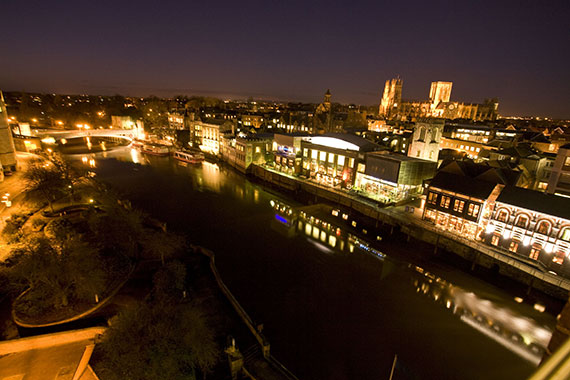
This interdisciplinary taught MA is offered by the Centre for Renaissance and Early Modern Studies. The Centre's home departments are English and Related Literature, History and History of Art, with a further five departments contributing to the teaching of the course: Archaeology, Music, Philosophy, Politics, and Theatre, Film and Television. Students taking this course are offered an unequalled choice of options, with expert tuition, in a supportive and stimulating interdisciplinary environment.  The Centre's home is in a new building dedicated to study of the Humanities at the heart of the York campus, and is well placed to take full advantage of the rich archival and cultural resources in and around York.

The MA can be studied full-time over one year or part-time over two years. Students are offered a rich and challenging research environment and encouraged to work independently within a clearly defined structure of regular discussion and supervision. On successful completion of the course students will have gained the professional and personal skills required to progress to PhD research or to pursue immediate employment in a relevant field such as teaching, curating or broadcasting.

The course focuses on the approaches and issues that make the study of the Sixteenth and Seventeenth Centuries such an exciting and consequential field.  It is designed to provide students with an advanced introduction to:

  • the relationship between English, British, European and Global cultures during this period of dramatic geographical and intellectual expansion and profound political and religious change
  • a broad range of primary materials (from literary texts and court records to paintings and musical compositions) documenting the intellectual, political, spiritual and aesthetic cultures of the Sixteenth and Seventeenth Centuries
  • the archival and interpretative skills and methodological training needed to find, read and interpret these materials and to identify and develop original research questions across departmental and disciplinary boundaries
  • the challenges and rewards involved in pursuing research questions across departmental and disciplinary boundaries
  • the kinds of work being developed in this area to help students cultivate their interests in their chosen field and help them to prepare for further postgraduate studies or relevant professional employment.

Course details

Course structure and entry requirements

  • The MA can be studied full-time over 1 year, or part-time over 2 years, starting in October each year
  • The MA is fully modularised and all elements of the course must be completed to qualify for the degree, although only the Optional Modules and the Dissertation will be examined and determine the level of the award
  • The course is fully interdisciplinary, administered by the Centre for Renaissance and Early Modern Studies, and governed by the Department of History's Graduate Examinations Board

Full-time students

In the Autumn Term full-time students take the team-taught interdisciplinary Core Module and choose one Optional Module from relevant MAs in the partner departments: English, History, History of Art, Politics, Music, Philosophy and Archaeology, plus part I of a Research Skills and Training course.

In the Spring Term they choose two Optional Modules and follow Research Skills  and Training Part II.

The Summer Term and the rest of the academic year (to September) is devoted to independently working on the Dissertation (with supervision).

Part-time students

Year 1: the programme of study  is agreed with the course convenor but normally students take the Core Module and Research Skills and Training in Term 1, one Option Module and Research Skills and Training in Term 2, and start work on the dissertation over the first summer term and vacation.

In Year 2 part-time students choose two Option Modules (one in the Autumn Term, one in the Spring Term),and  in the Summer Term and vacation continue to research and write-up the dissertation to completion.

Entry Requirements

Applications are welcome from both home and international students who wish to pursue postgraduate study with CREMS. See further details on How to Apply.

Candidates for the MA should normally have, or be expected to obtain, a good honours degree (2:1 or higher) or its equivalent in an appropriate subject at undergraduate level.

Graduate Students with English as a second language

If English is not your first language, we do expect you to be able to demonstrate a high level of proficiency. Our required IELTS language qualification score is 7.0:

  • TOEFL score 620 (paper based test)
  • TOEFL score 260 (computer based test)
  • TOEFL score 105 (Internet-based test iBT)
  • Cambridge Certificate in Proficiency in English: grades A and B accepted
  • Cambridge Certificate of Advanced English: grade A only accepted

Applications with an IELTS score of 6.5 will be considered if the candidate's application is otherwise impressive. In these cases attendance at the 4-week pre-sessional English Language Training course at York is required. Such admissions have to be approved by the Chair of the Graduate School Board.

Funding your studies

The Department has a good record of success in attracting funding for students through the Arts and Humanities Research Council (AHRC).

For more information on departmental scholarships and other postgraduate funding opportunities, see the postgraduate section on funding.


Assessment

Assessment

  • One 2000-word essay for the core course
  • One piece of coursework from each of the three option modules (a long essay, word length in accordance with the description of the course)
  • MA dissertation (15-20,000 words)

Option Modules

Option Modules

The programme is fully modularised and divided into 4 taught modules - one compulsory (the Core Module) and three optional modules, plus a research skills training programme, and a research dissertation.

Choosing Options

In the Autumn Term full-time students choose one optional module from relevant programmes in our partner departments: English, History, History of Art and Archaeology (further options may also be available in the departments of Music, Philosophy and Politics). In the Spring Term two optional modules are taken.

Part-time students agree their course of study with the MA convenor, but in most cases will choose their first option module in the Spring Term of Year 1, and their second and third Option Modules in the Autumn and Spring Terms of Year 2.

The optional modules offered vary from year to year, depending upon the interests and availability of staff. The following list is a sample of options recently offered to students taking the CREMS MA (but please note that not all of these courses will be available in the forthcoming year, see separate tab for current options)

Core Module

Core module: Renaissance and Early Modern Studies

In surveys of this kind, it is too easy to fall back on a numbing sequence of key figures, movements and monuments. We have instead chosen to identify and explore some of the issues that mattered most in the sixteenth and seventeenth centuries, and that continue to matter (in different ways) to the several disciplines that study this pivotal period today. Both the teaching faculty and the participants in the course come from a number of different departments and disciplinary backgrounds: students will be exposed to a range of interdisciplinary approaches and also encouraged to explore multiple perspectives on the same materials or questions.Examples of topics recently addressed are:

Renaissance and/or Early Modern (and/or Baroque): What’s in a Name?

  • Problems of periodization and nomenclature: would CREMS by any other name smell as sweet?
  • The period’s own temporal consciousness (e.g., ideas of the return of the Golden Age and the Quarrel between the Ancients and the Moderns)

Re-Orientations

  • The impact of Eastern cultures and of contact with new places, peoples and products
  • Centres and peripheries
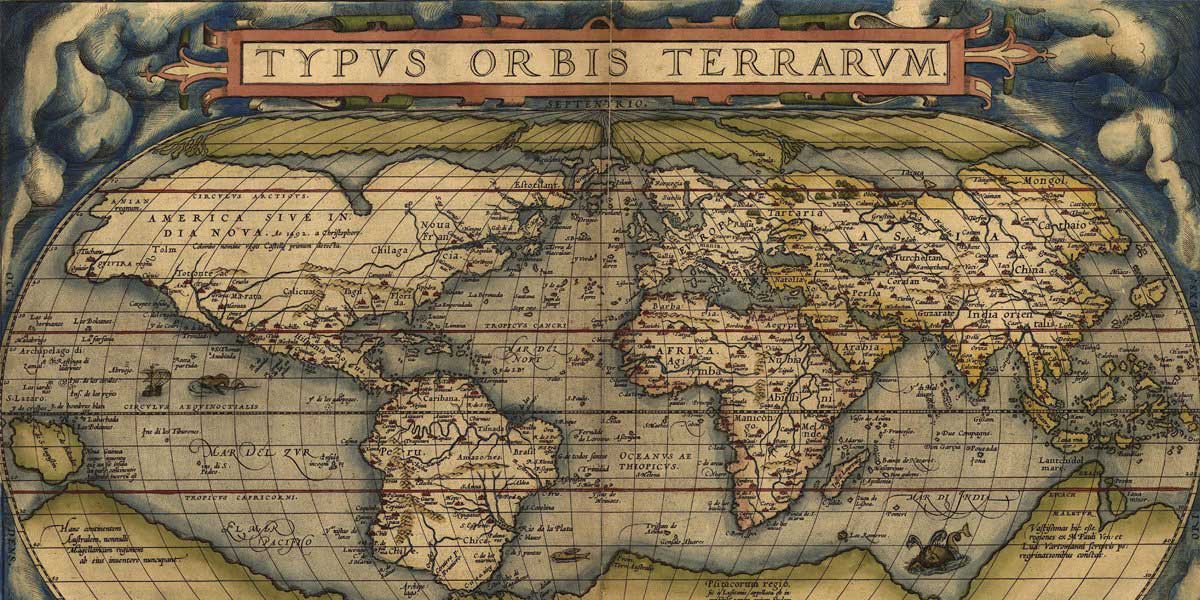
  • New geopolitical grids (maps, town planning, etc.)

Space and Place

  • The built environment and the social relations it reflects and structures
  • Fraught and liminal locations (borders, retreats and hiding places)
  • Contested demarcations between the public and private spheres

Producing Knowledge

  • The dissemination and control of ideas
  • Technologies of reproduction (manuscript, print, engraving, etc.)
  • Libraries, archives and the structures of information

Word and Image

  • Disegno and dispositio
  • Oral and visual modes of communication
  • Iconoclasm

Devotion and Dogma

  • Reformation and Counter-Reformation beliefs
  • The orchestration of religious rituals around the sacrament and salvation
  • Propaganda and proselytising, in Europe and in the New World

Questioning Authority

  • Absolutism and its discontents: monarchy, republicanism, utopias
  • Resistance and rebellion
  • The cultures of violence

Representing Bodies

  • Corporate institutions
  • Physical and political health
  • Anatomy and dissection
  • Distinctions of rank and gender

Artifice, Ornament & Affect

  • Order and excess
  • Emotion and interiority
  • Sprezzatura and the theatricality of everyday life

Multidisciplinarity, Interdisciplinarity and Omnidisciplinarity

  • The ideal of the ‘Renaissance Man’
  • Professions and specialisations


2011-12 Options

2011-12 Options

Download Options Sign-up form (MS Word  , 17kb)

Autumn Term 2011

Department
Module
 Module No.
Tutor
English & Related Literature
Objects and the Early Modern ENG00025M
Helen Smith
English & Related Literature
Rabelais and Montaigne ENG00046M Geoffrey Wall
English& Related Literature
Reading the Renaissance: Words, Texts, Discourses
(Core module for Renaissance Literature MA) 
ENG00031M
Helen Smith
History  Witchcraft and Gender in Early Modern England HIS00001M Jim Sharpe
History Approaches to Early Modern History
(Core module for Early Modern History MA)
HIS00029M John Cooper
History of Art Sir Christopher Wren
Anthony Geraghty
Archaeology Issues in historical archaeology 1 ARC00022M Jon Finch
Politics History of the Idea of Toleration POL00025M Jon Parkin
Theatre, Film & TV Directing & Performance: Elizabethan and Jacobean Theatre TFT00012M Mike Cordner

Spring Term 2012

 Department Module
 Module No.
Tutor
English & Related Literature
Classical Presences in Early Modern Culture 
  Tania Demetriou
English & Related Literature
Shakespeare and the Powers of Language
ENG00036M
John Roe
English & Related Literature
Theatres of Revenge 1580-1642 ENG00039M
Richard Rowland
English & Related Literature
Theories of Everything in Early Modern England
ENG00010M
Kevin Killeen
History From Body Beautiful to Body Politic: The Politics of the Body in England, c.1600-c.1700 HIS00002M
Mark Jenner
History
Enjoying the Saints: Sanctity and Society in the Early Modern Catholic World
HIS00021M
Simon Ditchfield
History of Art
The Domestic Interior in Italy c. 1400-1550   Amanda Lillie
History of Art
The Work of Art c.1550-c.1750: Redeeming Matter
HOA00039M
Alice Sanger
Music
English Church Music II
  Jo Wainwright
Politics
Approaches to the History of Political Thought POL00001M
Jon Parkin