

MSc Environmental Science and Management with Professional Practice
Combine environmental science with evidence-based management to help shape a more sustainable future.
Year of entry: 2027 (September)
Why study Environmental Science and Management with Professional Practice at York?
Develop the knowledge and practical skills to tackle today's environmental challenges. You'll explore environmental science and management from a multidisciplinary perspective, learning how to evaluate environmental problems and develop evidence-based solutions for the sustainable management of natural resources.
Gain valuable industry experience with an integrated 12 month Professional Practice placement. Working with an external organisation, you'll apply your knowledge in a professional environment while developing industry experience, professional networks and a competitive edge in the graduate job market.
Put your learning into practice through your dissertation. You'll investigate an environmental challenge and develop recommendations with relevance to business and policy. There is the option to complete your dissertation with a placement. You'll also have opportunities to engage with professional bodies throughout your studies.
Learn through case studies, published literature and applied learning. You'll critically analyse current and emerging environmental issues, understand the causes and impacts of environmental degradation, and explore innovative approaches to environmental management.
Graduate with the scientific knowledge, practical experience and transferable skills. You'll be well prepared for careers across environmental consultancy, industry, government, regulation and the not-for-profit sector, with the confidence to make a positive impact on environmental challenges.
Course content
- Year 1 - 4 core modules and 2 option modules
- Year 2 - Professional Practice Internship
Modules
Core modules
- Ecotoxicology and Environmental Health
- Environmental Management in Practice
- Monitoring and Control of Pollution
- Research Skills and Methods
- Professional Practice
Option modules
- Climate Science and Policy
- Ecosystem Services, Conservation and Protection
- Sustainable Business Innovation and Entrepreneurship
- Sustainable and Just Futures
- Spatial Analysis and Modelling for Flood Risk Management
- Sustainability Clinic
Our modules may change to reflect the latest academic thinking and expertise of our staff, and in line with Department/School academic planning.
Dissertation
- Either Dissertation or Dissertation with Placement
You will complete an 8,000-word dissertation as part of this MSc. This dissertation can either be York based (in the Department of Environment and Geography), or as a placement with an external partner.
For the former, staff in the Department can suggest a range of possible subjects and titles, but you can also devise your own title. For the latter, the dissertation topic will be of relevance to the external partner.
For both types of dissertation, you will have a departmental supervisor who will provide guidance and who can comment on drafts of your dissertation. If you are undertaking a placement for your dissertation, you will also be allocated a project supervisor within your placement company.
Learning outcomes
Every course at York is built on a distinctive set of learning outcomes. These will give you a clear understanding of what you will be able to accomplish at the end of the course and help you explain what you can offer employers. Our academics identify the knowledge, skills, and experiences you'll need upon graduation and then design the course to get you there.
Learning outcomes for this course
- Debate, interpret and explain current and emerging issues in environmental science and environmental management and engage critically with theory and current practices in identifying and managing human impacts on natural resources [Knowledgeable]
- Identify, synthesise and critically evaluate information from a wide range of reliable sources, and collate this information to establish current understanding and independently identify key research questions in specialised areas of environmental science and management [Independent learner]
- Work across disciplinary boundaries to link knowledge and experience from a wide range of research areas to understand the complex interactions between humans and natural environments, and anthropogenic pressures on the health and sustainability of our complex global environment [Interdisciplinary thinker]
- Develop novel hypotheses and plan, design and execute research that combines science-based theory and methodology to create new approaches to framing and addressing environmental issues. [Creator of new perspectives]
- Design and undertake critical analyses of quantitative data using appropriate tools to draw expert conclusions from research on the management implications of human interactions with the environment [Analytical and critical thinking]
- Effectively and professionally communicate knowledge, complex ideas and persuasive arguments to professional and non-specialist audiences using verbal, written, visual and digital media [Professional communicator]
- Recommend innovative and sustainable solutions to environmental challenges that consider broader social, political, economic and environmental contexts, and the ethical implications of their application by applying knowledge, theories and approaches from environmental sciences and environmental management [Problem solver]
- Critically reflect on professional experiences to demonstrate the integration of specialist disciplinary knowledge with workplace practice, while exhibiting high levels of professional ethics, organisational awareness, and self-directed development [Reflective professional practitioner]
Fees and funding
Annual tuition fees
| UK (home) | International and EU |
|---|---|
| TBC | TBC |
Fees information
UK (home) or international fees? The level of fee that you will be asked to pay depends on whether you're classed as a UK (home) or international student. Check your fee status.
Find out more information about tuition fees and how to pay them.
Funding information
Discover your funding options to help with tuition fees and living costs.
We'll confirm more funding opportunities for students joining us in 2027/28 throughout the year.
If you've successfully completed an undergraduate degree at York you could be eligible for a 10% Masters fee discount.
Funding opportunities
Chevening Scholarships
We are pleased to work with Chevening Scholars to offer funding for our Masters programmes. Chevening Scholarships provide one year of fully-funded postgraduate study in the UK for international (including EU) students. The scholarships are open to early and mid-career professionals who have the potential to become future leaders.
Teaching and assessment
You’ll work with world‐leading academics who’ll challenge you to think independently and excel in all that you do. Our approach to teaching will provide you with the knowledge, opportunities, and support you need to grow and succeed in a global workplace.
Teaching format
This course combines a range of different teaching methods to support your learning. You'll learn through formal lectures, practical sessions, labs and seminars. You'll also take part in industrial site visits and field trips, giving you the opportunity to explore environmental issues and management practices in real-world settings.
Guest lecturers from external organisations, including other universities and environmental organisations, contribute to the course, providing insight into the current state of Environmental Science and Management.
You'll use the University's Virtual Learning Environment (VLE) to support your studies, with access to additional materials that complement lectures and practical sessions. Some modules also offer optional drop-in help sessions for extra academic support.
As part of the teaching process, we've embedded a range of employability principles throughout the course, alongside practice-focused approaches. This helps prepare you for a wide range of careers after completing your degree.
Facilities
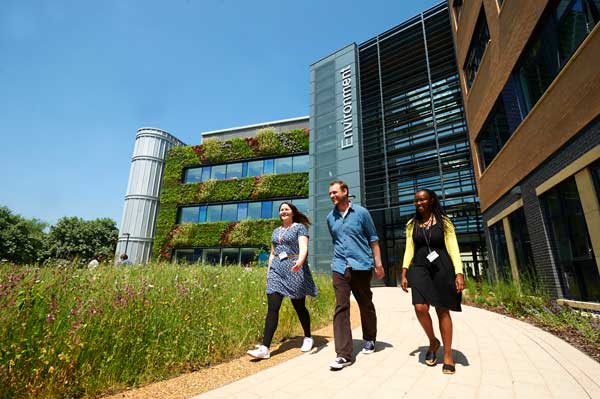
Our environment and geography building contains purpose-built labs, lecture theatre and seminar rooms.
Teaching location
You will be based in the Department of Environment and Geography with some additional teaching on Campus West.
About our campus
Our beautiful green campus offers a student-friendly setting in which to live and study, within easy reach of the action in the city centre. It's easy to get around campus - everything is within walking or pedalling distance, or you can always use the fast and frequent bus service.
Assessment and feedback
Assessments provide the opportunity for you to work on tasks with practical relevance as well as practise research skills, critical analysis and structuring an argument. Types of assessment in this course therefore include:
- essays of around 3,000 words
- models, maps and accompanying reports
- presentations, press releases and scientific posters
- laboratory practical reports of 2,000-3,000 words
- the Professional Practice module has a 2,000 words reflective professional portfolio that includes a learning log and reflection, evidence of professional impact and professional development plan
- an 8,000-word dissertation
Careers and skills
Environmental Science and Management graduates are in demand across a range of sectors. This course will equip you with the scientific knowledge, practical experience and professional skills to tackle environmental challenges and succeed in a wide range of careers.
Career opportunities
- Sustainability manager
- Environmental consultant
- Risk consultant
- Field engineer
- Geotechnical technician
- Water pollution consultant
Transferable skills
You'll develop a range of transferable skills during the course, including:
- Team leadership and team working
- Drafting skills
- Analytical and problem-solving skills
- Time management and organisational skills
- Ethical decision making
- Experience identifying, evaluating and prioritising 'triple bottom line' issues

Accelerate your professional network. We'll connect you with the guidance, industry links and experiences to help you stand out and find your career advantage.
Entry requirements
If you haven't met our English language requirements
You may be eligible for one of our pre-sessional English language courses. These courses will provide you with the level of English needed to meet the conditions of your offer.
The length of course you need to take depends on your current English language test scores and how much you need to improve to reach our English language requirements.
After you've accepted your offer to study at York, we'll confirm which pre-sessional course you should apply to via You@York.
Next steps
Department
Related courses
- Environmental Economics and Environmental Management (MSc)
- Environmental Science and Management (MSc)
- Environmental Sustainability Education and Communication (MSc)
- Sustainability Science (MSc)
- MSc Sustainable Business: Leadership, Innovation and Management
- Sustainable Business: Leadership, Innovation and Management (MSc)
- Sustainability Studies (MA)
Discover York

We offer a range of campus accommodation to suit you and your budget, from economy to premium.

Explore campus and city life and hear what our current students have to say about living here.

Lively, full of culture and beautiful, York is regularly voted one of the best places to live and visit in the UK.
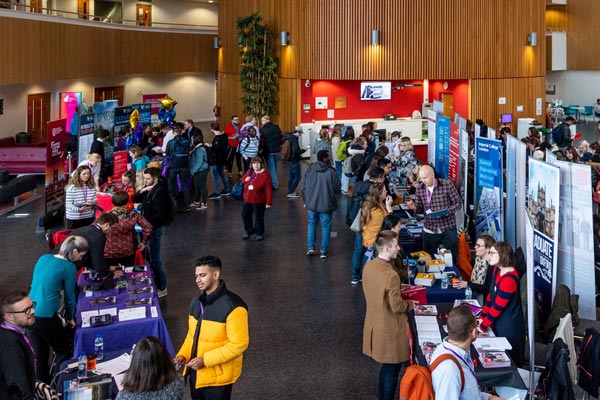
Find out more about York. Chat to staff and students and take the tour, on campus or online.