

MSc Bioinformatics
Join a high-impact industry and help tackle global challenges
Year of entry: 2027 (September)
Bioinformatics is an interdisciplinary field that applies and develops computational methods to extract and report on insights from biological data. It includes importing, tidying, visualising, analysing and communicating and is applied to complex problems in any domain of biology and beyond.
Discover how bioinformatics is transforming biological research: Explore how computational methods can be used to organise, visualise, analyse and communicate biological data, applying these approaches to complex challenges across biology and beyond. Learn how to transform biological questions into data science questions to produce insightful data stories.
Build scientific and computational skills: Develop expertise in bioinformatics alongside data analysis, AI-aware programming, and research methods, giving you the practical and analytical tools needed to tackle contemporary challenges in bioscience. Develop an awareness of how to integrate diverse datasets in genomics, single-cell transcriptomics, and multiomics in plant, animal and microbial systems. Develop skills to effectively critique data analysis and produce reproducible data analysis workflows.
Prepare for high-impact careers in bioinformatics research or industry: The course is designed to produce a portfolio of open-source projects that can be highlighted on a CV to showcase a diverse skill set, including two opportunities for original research. Designed as a next step for students, the course develops the specialist knowledge, AI-proof practical skills and research experience needed to progress into careers across bioinformatics and related industries. Several students have been accepted into PhD programmes or gotten roles in industry or the NHS.
Study in modern facilities within a vibrant, supportive community: You'll learn in custom-built teaching laboratories, a dedicated computing suite, collaborative workshop spaces, and a student study lounge. Guided by your personal supervisor, academic tutors, and research active project directors, you’ll discover your strengths, build career-ready skills, and receive tailored support throughout your degree and beyond. Students are encouraged to engage with wider regional bioinformatics networks, such as presenting their work at Northern Bioinformatics User Group meetings.
Course content
You'll complete research-led taught modules, comprising evaluation of contemporary research literature and seminars that highlight the research of bioinformaticians in the department. In addition, a group project, and valuable skills training will prepare you for the independent study module, in which you'll join one of our research teams to carry out an extended research project.
Modules
Core modules
- Advanced Research Topics in Bioinformatics
- Research, Professional and Team Skills
- Data Analysis and Programming in the Biosciences
- Group Project
- Research Plan
- Research Seminars in Bioinformatics
Our modules may change to reflect the latest academic thinking and expertise of our staff, and in line with Department/School academic planning.
Research project
You will complete an independent study module during the summer, which is designed to give you experience in managing and completing a project in a cutting-edge research context.
This is an opportunity to further develop and apply your skills to a current research question, and specialise in a particular area or research technique.
Most students choose to complete a project in collaboration with an academic supervisor within the University, but you may opt to complete this project as an external placement.
You will have full access to our dedicated Masters workspace while completing your project.
Learning outcomes
Every course at York is built on a distinctive set of learning outcomes. These will give you a clear understanding of what you will be able to accomplish at the end of the course and help you explain what you can offer employers. Our academics identify the knowledge, skills, and experiences you'll need upon graduation and then design the course to get you there.
Learning outcomes for this course
- Construct critical evaluations and summaries of scientific literature that demonstrate a deep understanding of the concepts and approaches at the forefront of Bioinformatics
- Competently undertake the design and execution of Bioinformatic analyses biological data, and carry out research tasks with autonomy and independence
- Evaluate state-of-the-art experimental and analytical approaches in Bioinformatics, drawing upon first-hand practical experience working in research laboratories
- Work with a minimum of guidance and supervision as an individual, team member or leader in collaborative groups, and use their initiative and originality to investigate sustainable and ethical solutions to bioscience problems
- Critically evaluate and communicate Bioinformatics research and its application in a variety of written and oral and spoken formats
- Apply their technical expertise, practical experience and other transferable skills to a wide range of working environments including research laboratories, industries and enterprises relating to Bioinformatics.
Now that I’m fully into my postgraduate studies, I can confidently say that it’s been both a rewarding and challenging experience. I expected the course to be intense and it is but I’ve also been pleasantly surprised by how collaborative, interactive and hands-on the learning environment is.
Fees and funding
Annual tuition fees
| Study mode | UK (home) | International and EU |
|---|---|---|
| Full-time (1 year) | £14,390 | £33,900 |
Fees information
UK (home) or international fees? The level of fee that you will be asked to pay depends on whether you're classed as a UK (home) or international student. Check your fee status.
Find out more information about tuition fees and how to pay them.
Additional costs
We will provide you with a lab coat, safety goggles, and access to online scientific journals and resources which are sufficient to complete your programme here. You may wish to buy other personal protective equipment (PPE) and additional textbooks to supplement your studies.
Funding information
Discover your funding options to help with tuition fees and living costs.
We'll confirm more funding opportunities for students joining us in 2027/28 throughout the year.
If you've successfully completed an undergraduate degree at York you could be eligible for a 10% Masters fee discount.
Funding opportunities
Chevening Scholarships
We are pleased to work with Chevening Scholars to offer funding for our Masters programmes. Chevening Scholarships provide one year of fully-funded postgraduate study in the UK for international (including EU) students. The scholarships are open to early and mid-career professionals who have the potential to become future leaders.
Teaching and assessment
You’ll work with world‐leading academics who’ll challenge you to think independently and excel in all that you do. Our approach to teaching will provide you with the knowledge, opportunities, and support you need to grow and succeed in a global workplace.
Teaching format
You'll be taught through a combination of lectures, seminars and small group teaching. You'll have the opportunity to work closely with academics, who will present a problem and demonstrate how their research may provide a solution. This will allow you to gain in-depth knowledge of current research and developments in the field.
Teaching location
The Department of Biology is located on Campus West - nearly all of your teaching will take place within the Department. The majority of departments, colleges and facilities are based nearby.
About our campus
Our beautiful green campus offers a student-friendly setting in which to live and study, within easy reach of the action in the city centre. It's easy to get around campus - everything is within walking or pedalling distance, or you can always use the fast and frequent bus service.
Assessment and feedback
You will be assessed in a variety of ways, including:
- written reports
- data analysis reports
- oral presentations
- group project work
- posters

Careers and skills
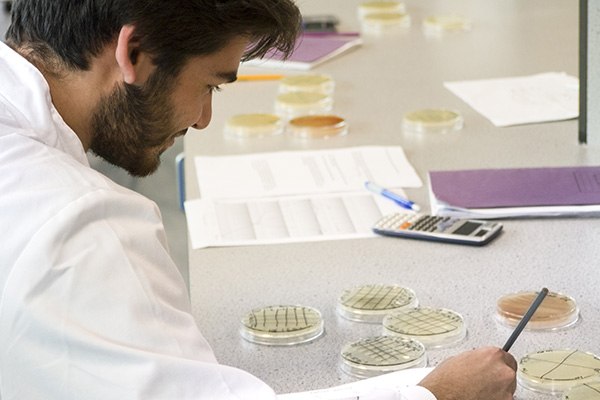
This programme gives you a thorough grounding in research bioinformatics that will enable you to pursue a bioscience PhD with a computational component or a range of other specialist career paths within industry. Around half of our students will pursue further study, while the other half go into industry.
Career opportunities
- Bioinformatics Scientist, Engineer or Technician
- Research Software Engineer
- Data Scientist
- Data science and analytical roles in other fields
Transferable skills
You will develop the following transferable skills:
- critical thinking
- data interpretation
- statistics
- programming
- written, oral and graphical presentation of scientific data and ideas

Accelerate your professional network. We'll connect you with the guidance, industry links and experiences to help you stand out and find your career advantage.
Entry requirements
| Qualification | Typical offer |
|---|---|
| Undergraduate degree | 2:2 or equivalent in bioscience. We also consider applicants who have substantial industry experience. If you have completed an integrated Masters, this course is not suitable for you. |
| International pre-masters programme | Pre-masters from our International Pathway College |
| Other international qualifications | Equivalent qualifications from your country |
English language
If English isn't your first language you may need to provide evidence of your English language ability. We accept the following qualifications:
| Qualification | Minimum requirement |
|---|---|
| IELTS (Academic and Indicator) | 6.5, minimum 6.0 in each component |
| Cambridge CEFR | B2 First: 176, with 169 in each component |
| Oxford ELLT | 7, minimum of 6 in each component |
| Oxford Test of English Advanced | 136, minimum 126 in each component |
| Duolingo | 120, minimum 105 in all other components |
| LanguageCert SELT | B2 with 33/50 in each component |
| LanguageCert Academic | 70 with a minimum of 65 in each component |
| Kaplan Test of English Language | 478-509, with 444-477 in all other components |
| Skills for English | B2: Merit overall, with Pass with Merit in each component |
| PTE Academic | 60 with 52 in Listening, 53 in Reading, 65 in Speaking, and 59 in Writing |
| TOEFL | 4.5, with 5 in Listening and 4.5 in each other component |
| Trinity ISE III | Merit in all requirements |
For more information see our postgraduate English language requirements.
If you haven't met our English language requirements
You may be eligible for one of our pre-sessional English language courses. These courses will provide you with the level of English needed to meet the conditions of your offer.
The length of course you need to take depends on your current English language test scores and how much you need to improve to reach our English language requirements.
After you've accepted your offer to study at York, we'll confirm which pre-sessional course you should apply to via You@York.
Next steps
Contact us
Get in touch if you have any questions

Department
Related courses
- Biomedical Sciences (MSc)
- Biomedical Sciences with Bioenterprise (MSc)
- Bioinformatics with Bioenterprise (MSc)
- Biotechnology (MSc)
- Biotechnology with Bioenterprise (MSc)
- Data Science (MSc) (Department of Computer Science)
- Data Science (Artificial Intelligence and Statistics) (MSc) (Department of Mathematics)
- Data Science (Human Behaviour) (MSc) (Department of Psychology)
- Data Science (Scientific) (MSc) (Department of Chemistry)
- Business Analytics (MSc) (School for Business and Society)
Discover York

We offer a range of campus accommodation to suit you and your budget, from economy to premium.

Explore campus and city life and hear what our current students have to say about living here.

Lively, full of culture and beautiful, York is regularly voted one of the best places to live and visit in the UK.
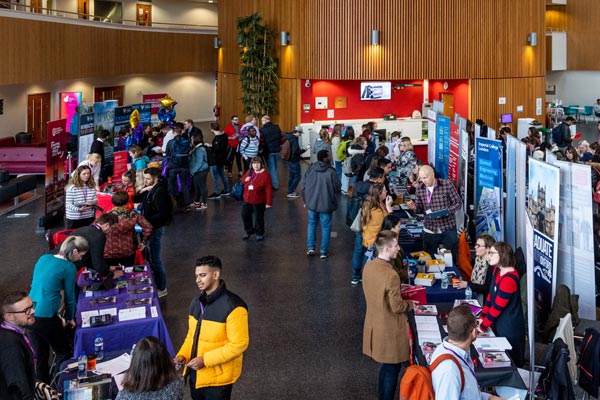
Find out more about York. Chat to staff and students and take the tour, on campus or online.