
Supervision and thesis advisory panels
What is different about a formal supervision meeting?
A formal supervision meeting may (particularly in some disciplines and departments) be very similar to any other (ie informal) supervision meeting, but in order for it to count as a formal supervision meeting, it should:
- be an individual meeting between you and your supervisor(s) i.e. not a research/laboratory or other group meeting
- be in person (or by video conferencing if you are on a distance learning programmes or away from York on approved academic business eg field work)
- normally include substantial discussion of, and feedback on, research progress and plans but may additionally, or alternatively, focus on development and training needs.
- be recorded as a formal supervision meeting on SkillsForge (see below).
There is no minimum duration for a formal supervision meeting but it is unlikely that such a meeting could ever be less than 30 minutes and will normally be substantially longer.
Frequency of supervisory meetings
The University requires that formal supervision meetings are held at least every 6-7 weeks throughout the calendar year for full-time PGRs (pro-rata for part-time PGRs) during the normal enrolment period and more frequently if a department prescribes. This equates to a minimum of eight formal supervision meetings per calendar year for a full-time PGR.
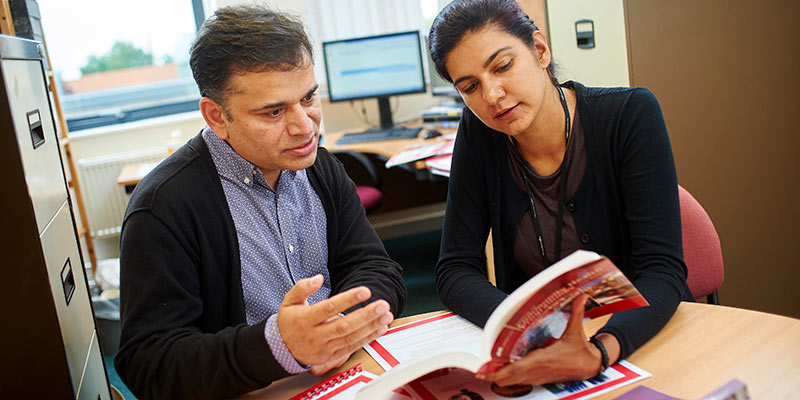
There is no University requirement for the frequency of informal supervision meetings, although this may be prescribed by a department. In practice, the frequency of informal supervision meetings will depend on a range of factors including disciplinary and departmental norms, the relationship between you and your supervisor, and your needs.
At these meetings you can:
- discuss your research progress in depth
- discuss development and training needs
- identify any non-academic issues that might impede progress (such as health, welfare or financial concerns)
- make plans for your next steps.
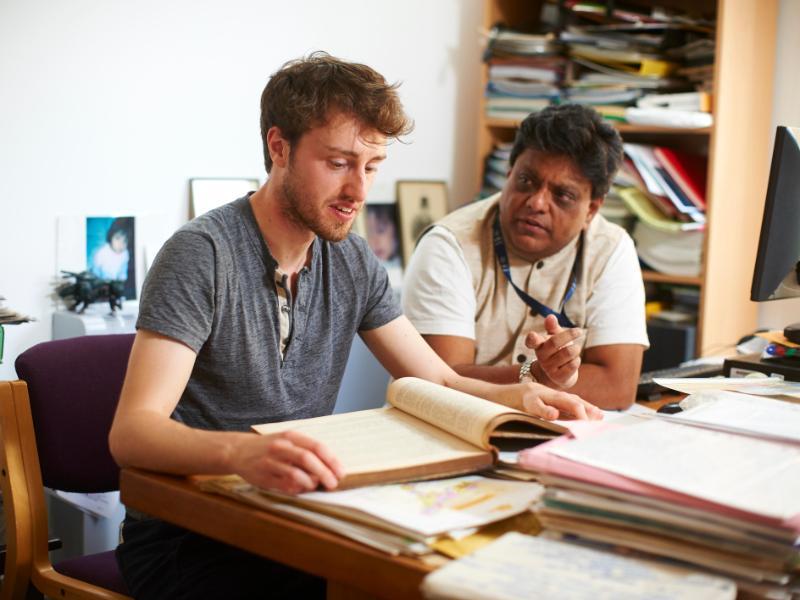
Pastoral support and supervision meetings
Supervision meetings (whether formal or informal) will normally include a pastoral element, with the supervisor checking that you feel supported and encouraging you to develop resilience to deal with the inevitable challenges associated with undertaking a research degree. In addition, you and your supervisor should identify any non-academic issues (e.g. physical or mental ill-health, financial or welfare concerns) that could have a negative impact on your progress through the research degree and consider how these issues might be addressed (e.g. through access to a support service or a leave of absence).
Where non-academic issues prove difficult to address and/or pastoral support dominates supervision meetings (to the exclusion of the research project and/or personal and professional development), you and your supervisor should seek further advice. Supervisors can contact the Chair of their Graduate School Board (or equivalent), and PGRs the Chair of their Graduate School Board.
Mentoring for personal and professional development
A key role of the supervisor is to support you in your personal and professional development, working with you to consider, prioritise and access opportunities for:
- training (for research and transferable skills)
- networking (including conferences, international mobility)
- publication
- teaching
- outreach/impact (e.g. Three Minute Thesis)
- career development (e.g. internships, careers advice)
You and your supervisor may find it beneficial to adopt a mentoring/coaching approach, where there is a greater focus on the supervisor guiding you rather than directing them. Advice on mentoring and coaching is on the Vitae website.
Recording your progress
You should record each formal (and informal) supervision meeting using the ‘Create a Formal Supervision Record’ function in SkillsForge. You will normally draw up the record, which is then approved by the supervisor(s) present.
SkillsForge: Getting started (PDF  , 249kb)
The record will remain accessible in SkillsForge for both you and your supervisor(s) to view after submission. The record should include the date of the meeting, a summary of the content, and future actions to be performed, including agreed training. The record will also note if you were present in person.
The purpose of the SkillsForge record is to serve as a useful reminder for you and your supervisor(s) of what was agreed, but it also provides a reference point should disagreement arise in future.
Principles of supervision
Within three months of the start of your registration, you and your supervisor(s) are expected to sign in Skillsforge that you have read 'Principles of supervision', summarising what is most essential to a successful supervisory relationship.
Thesis Advisory Panel (TAP) meetings
Full-time postgraduate researchers meet with their TAP once a year, and part-time students on a biennial basis. Your TAP, will provide you with advice and guidance in relation to your research.
You and your TAP will document your meeting in SkillsForge. You and your TAP will complete a formal record of the meeting, highlighting your progress and any goals that you should be working towards for the next meeting.
Please refer to your school/departmental PGR handbook for specific details about timings, deadlines, and what work you will need to provide in advance of a TAP meeting.
Review of supervision
At the end of a TAP/progression meeting you should complete a Review of Supervision form with your independent panel member (your supervisor(s) must not be present). Your department may use a Word or a Google form version of the Review of Supervision form - contact your departmental graduate administrator if unsure.
The Review of Supervision form is confidential and will not be made available to your supervisor(s) without your direct consent.
You may also complete a Review of Supervision form outside a TAP/progression meeting; just follow the instructions on your departmental version of the form or use the Word version of the form below.
 , 12kb)