
.jpg)
BLOG
Exploring Our Latest Endeavors: A Tapestry of Progress and Impact
We welcome you to delve deeper into the dynamic world of our Criminalisation Research Excellence Group (REG) and explore the vibrant, multi-faceted landscape of our most recent and ambitious initiatives. This is more than just an update; it is an invitation to witness the momentum of our collective mission which focuses on investigating the processes and consequences of criminalisation.
Our success is rooted in the powerful collaboration that defines our community. To offer you the most comprehensive and authentic perspective on our advancements, we have gathered voices from the core of our ecosystem: our highly dedicated members and our esteemed network of external collaborators.
Hear directly from the source about our:
- latest activities
- groundbreaking projects
- impactful engagements
Latest Posts
___
By Kajsa Dinesson, Atoosa Khatiri, Ailbhe O’Loughlin - 15 May 2026
Criminalisation Research Excellence Group (REG) 22 April 2026 event
We marked the first criminalisation REG event by inviting Dr Louise Kennefick to YLS on 22 April 2026. Dr Kennefick joined us to talk about her book The Boundaries of Blame: Towards a Universal Partial Defence for the Criminal Law which was published with CUP in 2025. Dr Kennefick’s work spans across the fields of criminal law theory, criminal justice and criminology. She examines how and why we blame each other, considering responsibility attribution, agency, excuse, and the interaction between social justice and criminal law and justice. This topic is of particular interest within the Criminalisation Research Excellence Group here at YLS, as we often engage with questions related to criminal responsibility and blame, and concerning the understanding and treatment of mental health and disability in the realm of criminal law. Her book makes a significant contribution across these areas, and sparked some fascinating discussion amongst the audience.
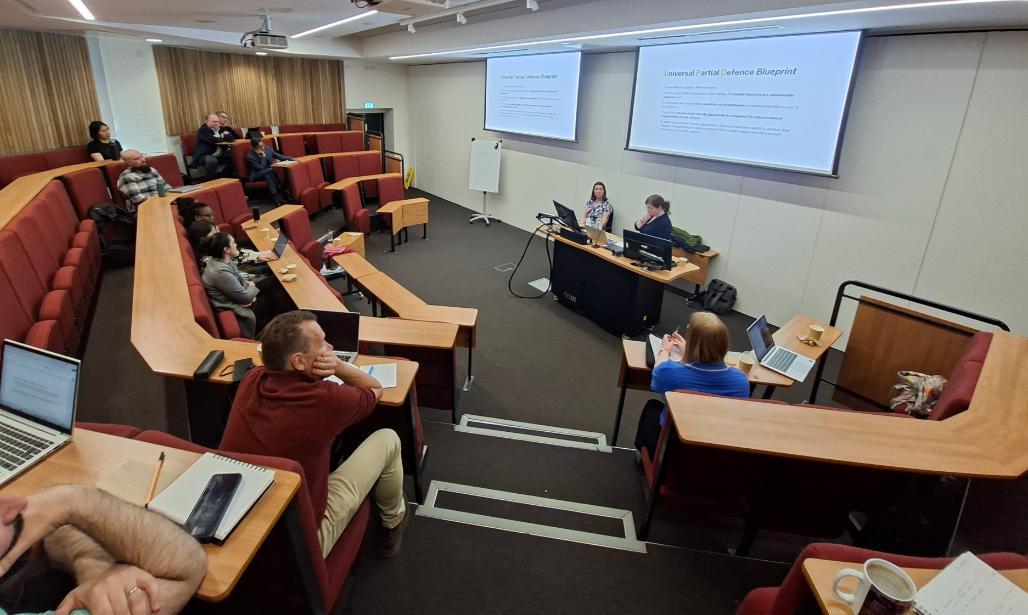
Dr Kennefick started with the provocation, T. Honoré’s ‘awkward question’:
“How can people both be responsible for what they do and at the same time be caused to act as they do by circumstances that impair their self-control?”
This tension continues to be explored by numerous scholars, however, few have endeavoured to meet it head on in doctrine. Dr Kennefick’s book attempts to do so and to push back against punitive trends in criminal justice that seem to be gaining force. There are already tools within the law – such as partial excuse – that acknowledge that responsibility is not always absolute. The book takes this further, widening the scope, and offering what the author describes as a richer and more real understanding of human agency and vulnerability.
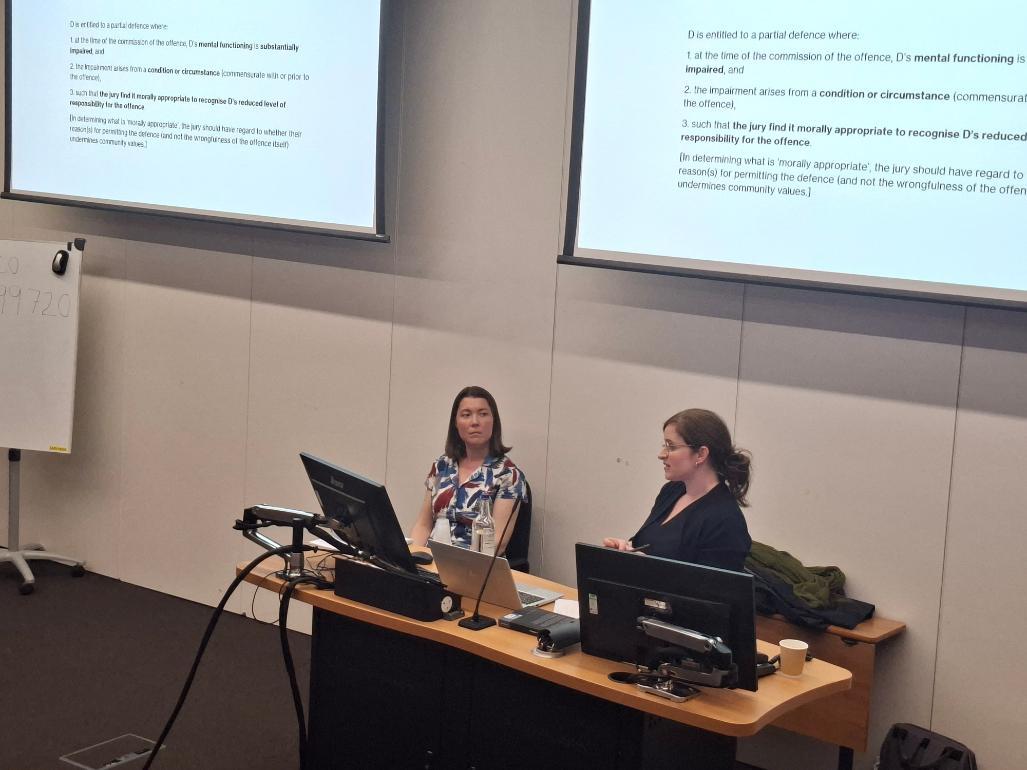
York Law School’s Dr Ailbhe O'Loughlin acted as discussant. She prompted the room to consider that, although an individual’s particular vulnerabilities and circumstances can already be taken into account at sentencing, there is considerable value in the idea of introducing a partial defence at an earlier stage in the criminal justice process. This opens up the possibility for different verdicts, different levels of offences, and for convictions to better reflect gradations in blame. She drew on insights from Chapter 7 of her book ‘Law and Personality Disorder: Human Rights, Human Risks, and Rehabilitation’ (Oxford, 2024), to consider the types of evidence that could demonstrate more complex circumstances of vulnerability, for example, psychiatric evidence, social worker reports, and how such forms of evidence could be practically utilised in court.
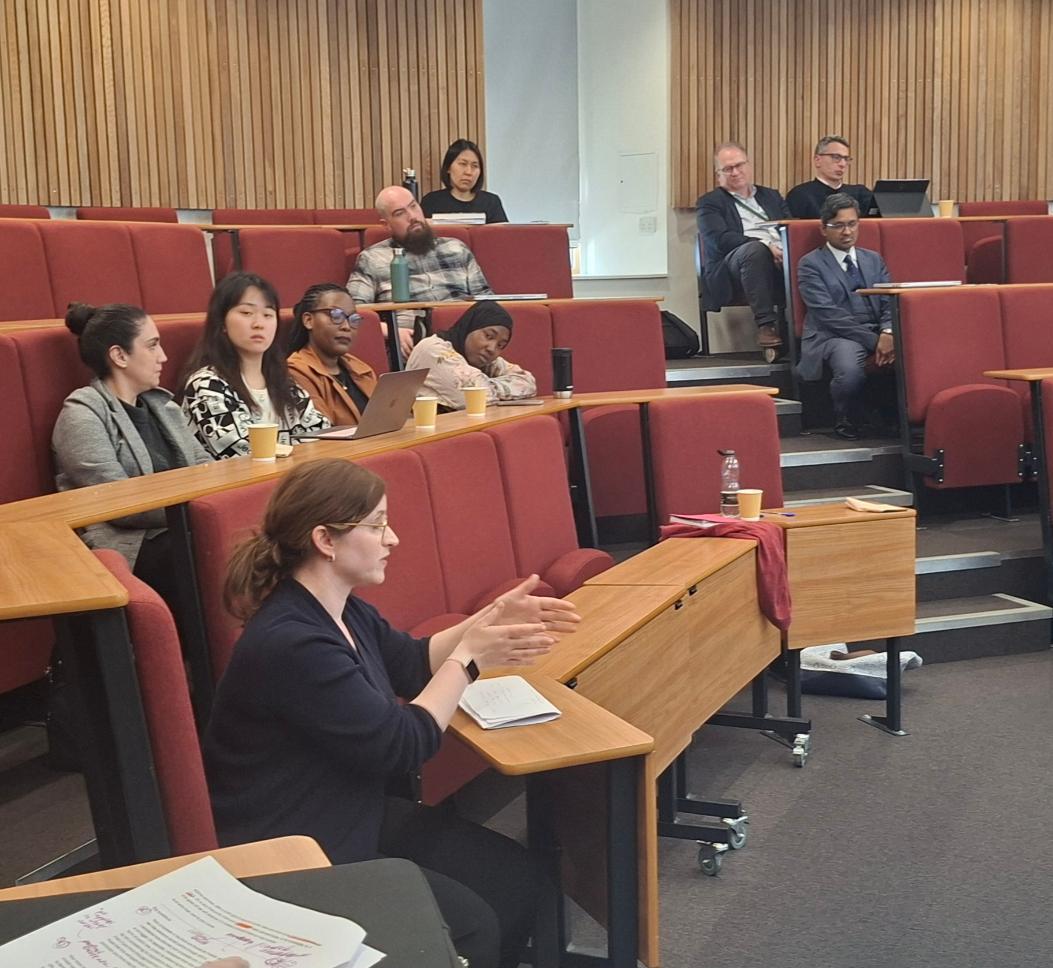
In opening up the discussion to the audience, the first provocation was on the point that, given the book’s social justice grounding, should we be considering all of a defendant’s material circumstances, rather than focusing on their mental functioning? There is, Dr Kennefick argued, a potential wider understanding of what cognitive functioning is within the book’s approach. For example, domestic abuse situations, cultural, socio-economic contexts, can be taken into account. Dr Kennefick reflected that the book’s approach is modest in that it aims to utilise tangible mechanisms within the law that already exist based on practical considerations, and a need to maintain the importance of accountability.
The audience and speaker reflected on the relationship between the State and the individual, and a wider connection to and potential tensions with social justice aims. And whether such proposals as argued in the book create more opportunities for discretion within the law, and indeed, further ‘grey’ areas. Dr Kennefick asserted the need for discretion for the type of moral complexity we are considering here – uncertainty is not to be shied away from. The room explored the ‘slippery slope’ of such an approach; everything potentially has a prior cause, and indeed, there are different understandings of causality. However, as studies show, juries tend to be particularly cautious, and there is an argument that they should be trusted to consider such complex assessments, and are already doing so! We thank Dr Kennefick and the attendees of our first talk for a lively and enlightening discussion. We invite you to engage with the Criminalisation REG and with our future events.