Skip to content Accessibility statement
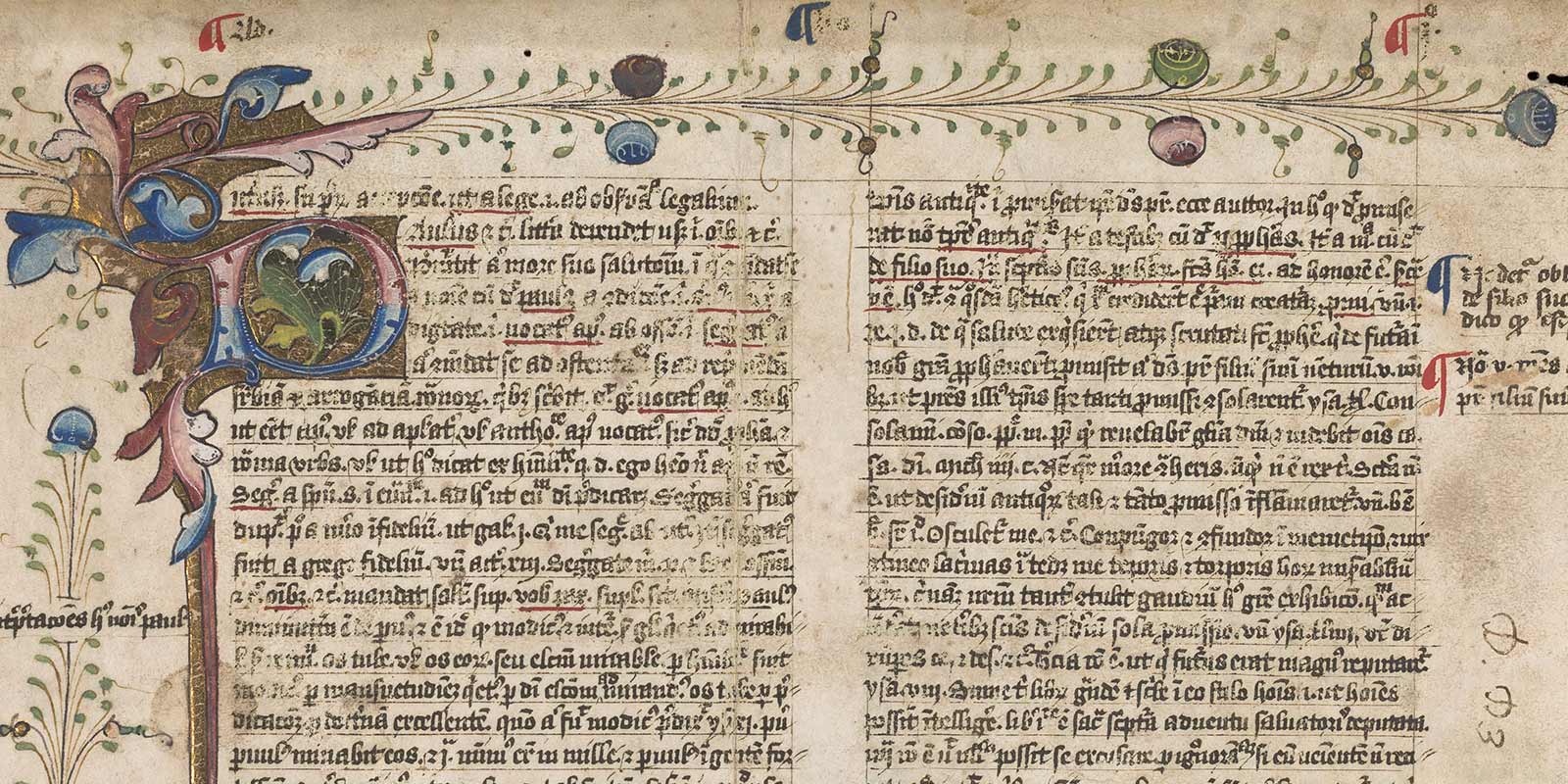
Reproduced from an original in the Borthwick Institute, University of York. Reference TAK/1/28, Takamiya Manuscripts Collection.

MA Medieval History

Study medieval history in one of the most historic cities in the UK.

Year of entry: 2027 (September)
Show year of entry: 2026/27

Start date
September 2027
View semester dates
Length
1 year full-time,
2 years part-time
School/department

Applications open 21 September 2026

Why study history at York?

Explore new approaches to the history of medieval Britain, Europe and beyond. Acquire new knowledge and develop valuable skills alongside extensive training in research techniques and methodology.

Make use of exceptional facilities and resources. Gain access to the Borthwick Institute for Archives, one of the largest archives in the UK outside London. The city of York also has amazing museums, libraries and archives that cover the medieval period.

Collaborate with York’s Centre for Medieval Studies. You'll be invited to academic seminars, reading groups and conferences. You'll collaborate with both staff and other postgraduates.

Join a friendly, intellectual community, where teaching is informed by groundbreaking research. Our influential staff feature regularly in the media.

and third nationally for the impact of our research in the Times Higher Education’s ranking of the latest REF results (2021).
Join a faculty full of leading researchers in a range of heritage areas. Make interdisciplinary connections, explore partnerships and become part of a pioneering community.
=12th in the UK
for History, in the QS World University Rankings by Subject, 2026.
The Medieval History MA has been a fantastic opportunity to delve into a period I simply wanted to know more about, facilitated and thoroughly supported by top academics in a city famed for its medieval heritage. The combination of knowledge and skills based modules has been especially enjoyable and I've got to know a lovely group of other students who share my interests.
Connie, MA Medieval History student

Course content

The course consists of:

  • a core module
  • skills options, typically Latin and Palaeography
  • taught option modules
  • 14,000–16,000-word dissertation

Modules

Core modules

Option modules

You will study three option modules in total, one of them a skills option. Examples can be found below. Some option module combinations may not be possible. The options available to you will be confirmed after you begin your course.

The Centre for Medieval Studies also offers a variety of option modules which may be available to Medieval History students, subject to availability.

You will also be able to choose from other option modules in the Department, such as:

Reading the Middle Ages skills options

Students may study a variety of skills, including medieval languages and palaeography. Language options include Latin, Old English, Old Norse and Old French. Palaeography options are early book hands, administrative hands, or late book hands. Arabic is taught through a separate module. Many students include Latin as one of their skills and the teaching programme caters fully to the needs of complete beginners as well as those with some acquaintance with the subject.

Our modules may change to reflect the latest academic thinking and expertise of our staff, and in line with Department/School academic planning.

Dissertation

You will write a dissertation of between 14,000 - 16,000 words on a topic of your choice. Using a variety of source materials and analysis techniques, you will craft the findings into an independently researched dissertation.

You will receive support, advice and guidance from your dissertation supervisor throughout your project. The range of expertise of our staff and of our source materials means we can provide you with guidance on a wide range of topics. 

You will have five one-to-one meetings with your dissertation supervisor across Semester 2 and the summer period (June/July). In these meetings, you will discuss the feasibility of your project and receive feedback on two draft chapters of your dissertation.

Learning outcomes

Every course at York is built on a distinctive set of learning outcomes. These will give you a clear understanding of what you will be able to accomplish at the end of the course and help you explain what you can offer employers. Our academics identify the knowledge, skills, and experiences you'll need upon graduation and then design the course to get you there.

Learning outcomes for this course
  • Understand and provide illuminating interpretations of a range of primary sources for medieval history, in their original form and in published editions and translations, showing sensitivity to the epistemological and interpretive challenges associated with the use of these materials.
  • Evaluate historical arguments and deploy diverse methods to construct their own arguments, with a critical understanding of a variety of methodologies and approaches to medieval sources and historical subjects.
  • Work with medieval texts and documents in their original form, demonstrating a basic mastery of medieval language and, if relevant, palaeography.
  • Identify appropriate primary and secondary material in appropriate media and formats, including digital media.
  • Formulate original and well-targeted research questions, drawing on an understanding of the state of debate and what are likely to be fruitful areas of investigation.
  • Respond appropriately to the ethical and epistemological issues that arise during advanced historical research, including interdisciplinarity.
  • Express their findings in lucid, persuasive prose.

Fees and funding

Annual tuition fees

Study mode UK (home) International and EU
Full-time (1 year) £12,420 £27,840
Part-time (2 years) £6,210 £13,920

Fees are for year one. Fees for future years are subject to confirmation.

Fees information

UK (home) or international fees? The level of fee that you will be asked to pay depends on whether you're classed as a UK (home) or international student. Check your fee status.

Find out more information about tuition fees and how to pay them.

Additional costs

There is no obligation to purchase books or other texts - all core texts and resources will be available in our library or online.

Funding information

Discover your funding options to help with tuition fees and living costs.

We'll confirm more funding opportunities for students joining us in 2027/28 throughout the year.

If you've successfully completed an undergraduate degree at York you could be eligible for a 10% Masters fee discount.

Funding opportunities

Chevening Scholarships

We are pleased to work with Chevening Scholars to offer funding for our Masters programmes. Chevening Scholarships provide one year of fully-funded postgraduate study in the UK for international (including EU) students. The scholarships are open to early and mid-career professionals who have the potential to become future leaders.

Departmental Funding Opportunities

We offer a range of departmental funding opportunities for Masters students.

Teaching and assessment

You’ll work with world‐leading academics who’ll challenge you to think independently and excel in all that you do. Our approach to teaching will provide you with the knowledge, opportunities, and support you need to grow and succeed in a global workplace.

Teaching format

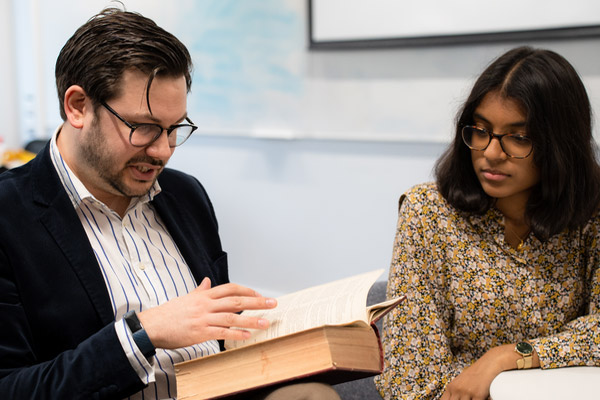
Most of your modules will consist of weekly two-hour seminars. You will normally work in small groups of fewer than 15 students.

Teaching location

You will be based between the Department of History in Vanbrugh College and the Centre for Medieval Studies in Heslington Hall.

About our campus

Our beautiful green campus offers a student-friendly setting in which to live and study, within easy reach of the action in the city centre. It's easy to get around campus - everything is within walking or pedalling distance, or you can always use the fast and frequent bus service.

Assessment and feedback

You will be primarily assessed by essays and your dissertation. You will have the chance to submit assignments for formative assessment, enabling you to get and use feedback before the final summative assessment. 

A city rich in history and heritage
York is the ideal place to be inspired to study the past, with a rich and turbulent history stretching back to the Romans. Today the city boasts beautiful historic architecture, as well as a variety of museums, galleries and heritage organisations.
As well as your department's facilities you'll have access to the Grade II listed Heslington Hall, a hub with space for events and collaboration

Careers and skills

An MA in Medieval History will prepare you for a diverse range of careers. The degree is equally suitable for students who wish to pursue doctoral research or careers in teaching, public history, archives, or for those with enthusiasm for the subject but do not yet have a clear career direction.

While completing your MA, you will gain essential skills in research, presentation and analysis. The skills training modules will provide you with additional, specialist skills in areas of your choice.

Career opportunities

You will be able to explore careers in the following areas:

  • schools and academia
  • library and archives
  • civil service and government
  • communications and media
  • business and administration
  • charitable sector

Transferable skills

  • analytical thinking
  • formation of original arguments
  • effective time management
  • communication skills
  • efficient organisation, use and management of electronic research resources
  • ability to carry out independent research using primary sources
  • professional presentation skills
  • ability to analyse new information and draw conclusions

Entry requirements

Qualification Typical offer
Undergraduate degree 2:2 or equivalent in History or a relevant subject.
Other qualifications and experience We would consider a 2:2 but our decision would depend on the whole application including the quality of the written work submitted.
Other international qualifications Equivalent qualifications from your country

Additional requirements

You will need to submit examples of written work with your application. Please see our guidance on submitting written work.

English language

If English isn't your first language you may need to provide evidence of your English language ability. We accept the following qualifications:

Qualification Minimum requirement
IELTS (Academic and Indicator) 6.5, minimum 6.0 in each component
Cambridge CEFR B2 First: 176, with 169 in each component
Oxford ELLT 7, minimum of 6 in each component
Oxford Test of English Advanced 136, minimum 126 in each component
Duolingo 120, minimum 105 in all other components
LanguageCert SELT B2 with 33/50 in each component
LanguageCert Academic 70 with a minimum of 65 in each component
Kaplan Test of English Language 478-509, with 444-477 in all other components
Skills for English B2: Merit overall, with Pass with Merit in each component
PTE Academic 60 with 52 in Listening, 53 in Reading, 65 in Speaking, and 59 in Writing
TOEFL 4.5, with 5 in Listening and 4.5 in each other component
Trinity ISE III Merit in all requirements

For more information see our postgraduate English language requirements.

If you haven't met our English language requirements

You may be eligible for one of our pre-sessional English language courses. These courses will provide you with the level of English needed to meet the conditions of your offer.

The length of course you need to take depends on your current English language test scores and how much you need to improve to reach our English language requirements.

After you've accepted your offer to study at York, we'll confirm which pre-sessional course you should apply to via You@York.

Next steps

Contact us

Get in touch if you have any questions

Dr Harry Munt

harry.munt@york.ac.uk

Discover York

We offer a range of campus accommodation to suit you and your budget, from economy to premium.
Explore campus and city life and hear what our current students have to say about living here.
Lively, full of culture and beautiful, York is regularly voted one of the best places to live and visit in the UK.
Find out more about York. Chat to staff and students and take the tour, on campus or online.