Skip to content Accessibility statement

Safe Maritime Autonomous Systems

Researchers are exploring how lightweight AI and underwater acoustic networks could allow autonomous submarines to safely monitor vital coastal defences and offshore wind farms.

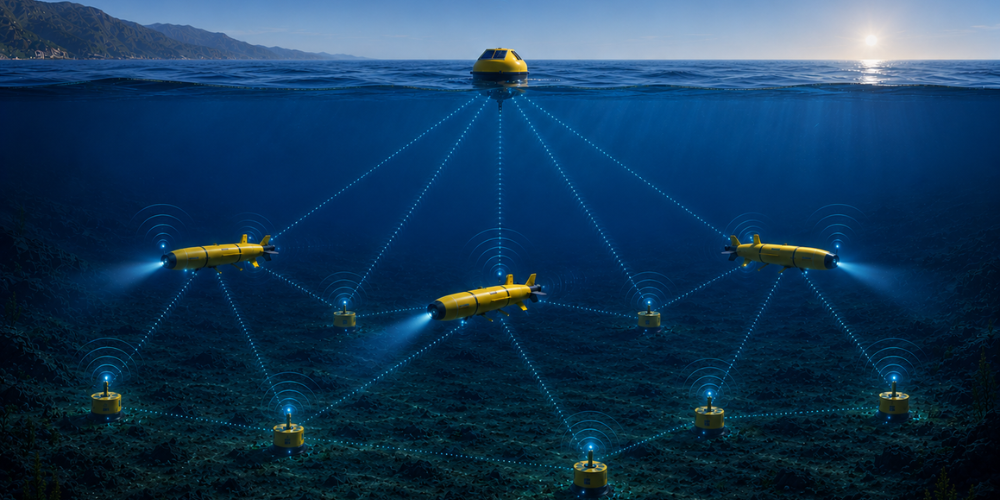
Offshore wind farms, subsea pipelines and coastal defence systems require constant monitoring and maintenance. Historically, this has meant deploying divers and remotely operated vehicles, methods that are costly, labour-intensive and carry significant safety risks. Maritime autonomous systems (MAS) offer a powerful alternative to make offshore inspection faster, cheaper and safer. This project is exploring how to realise this potential responsibly by deploying underwater sensors and autonomous vehicles as an acoustic mesh network, and developing lightweight machine learning models suited to autonomous maritime operations alongside the rigorous safety assurance frameworks needed to deploy them in high-stakes environments.

What sets this project apart is its interdisciplinary approach, with the research team uniquely drawing on expertise from across all three of ISA’s core research pillars:

  • Communications: Leveraging expertise in underwater communication, sensing systems, and terrestrial/high-altitude 5G/6G networks to keep autonomous systems connected.
  • Design & Verification: Building the physical and digital architecture for autonomous underwater vehicles (AUVs) and marine robots.
  • Assurance: Applying frameworks like AMLAS (Assurance of Machine Learning in Autonomous Systems) and SACE (Safety Assurance of Complex Environments) to map hazards, define mitigations and ensure reliable decision-making under severe communication disturbances.

A major highlight of the project has been a public workshop bringing together over 50 experts from industry, academia, and government to discuss the future of safe maritime autonomous systems.

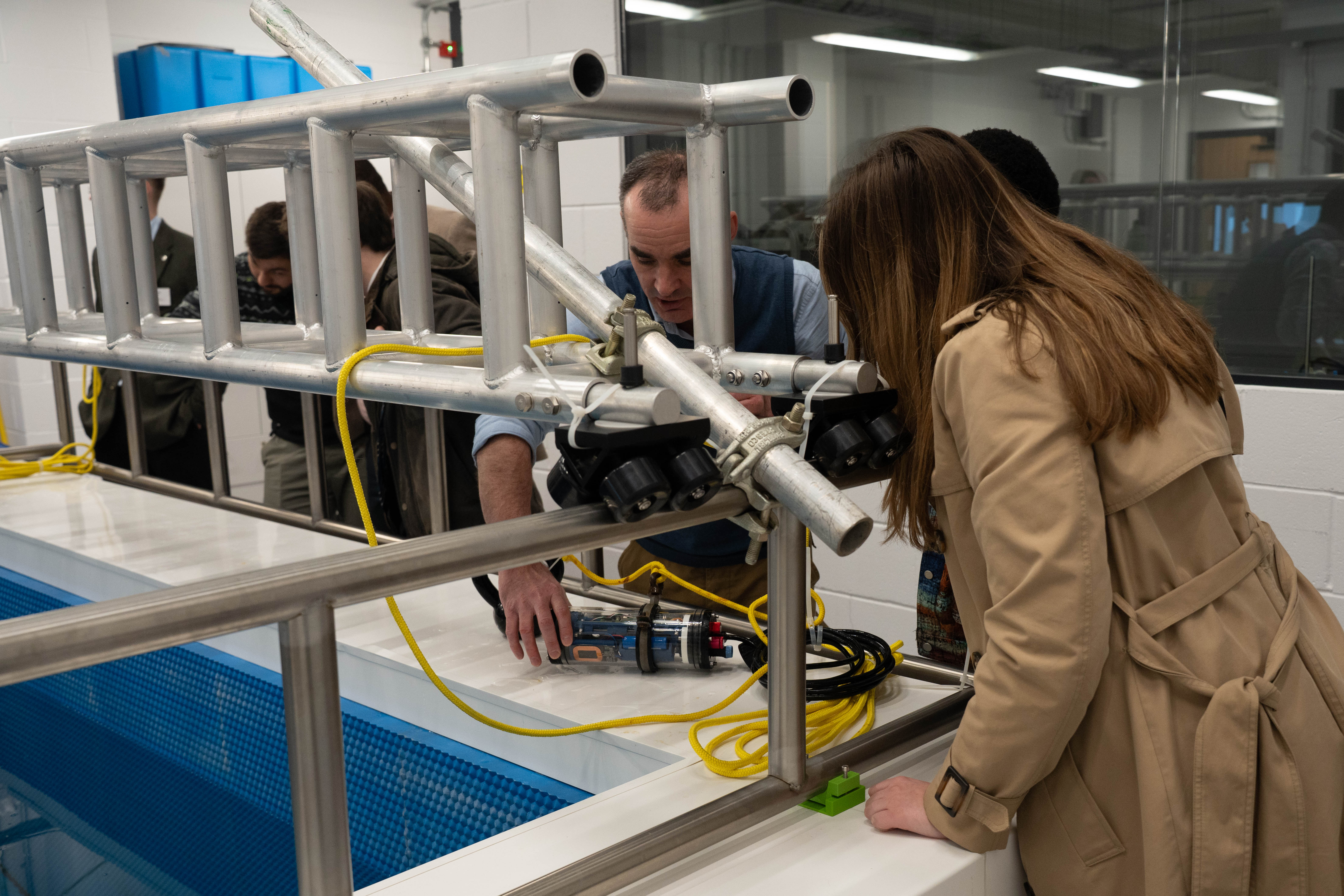
The event featured a live demonstration in ISA's anechoic tank of NEMO, a prototype device that connects underwater sensor nodes, AUVs and surface buoys into a wireless acoustic mesh network. The aim of the NEMO system is to enable real-time monitoring, control and positioning of subsea assets. This includes the development of a novel acoustic communication protocol stack that allows the telemetry, control and positioning signals to coexist and operate concurrently on the same acoustic network.

Read more about the workshop

Project leads: Nils Morozs, Tian Gan

Other examples of leading research carried out by the Underwater Information Systems group include:

Are you interested in working with us on this project?

We welcome opportunities for partnership with industry, researchers, funding bodies and policy-makers.

For more information, contact Nils Morozs at nils.morozs@york.ac.uk.

Training courses

Sign up to our new CPD course on Underwater Acoustic Communication and Networking.

This course covers the challenges, applications and technology behind reliable underwater communication and networking.

Tuesday 8 – Thursday 10 December 2026
Book your place


a graphic representation of an underwater acoustic network