CfAA newsletter
Sign up to receive the latest news, research and events related to the CfAA

Posted on Friday 3 July 2026
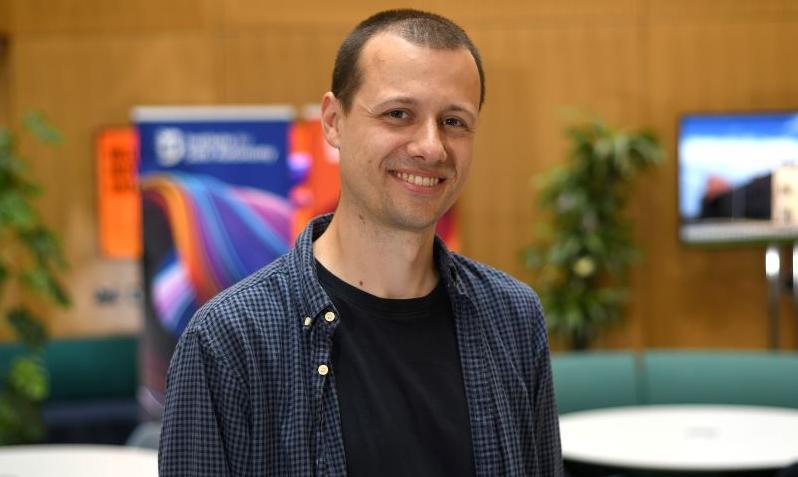
I attained my PhD in Robotics and Autonomous Systems from the University of Edinburgh. I explored a wide variety of topics, with my thesis focusing on swarm robotics. These projects covered both fundamental research, like information overload in evolving controllers, and applied research, such as AI-enabled meal worm farms.
After my PhD, I joined the CfAA team in 2021, which back then was AAIP. I continued with the fundamental and applied research balance I had during my PhD studies. I have found this to be useful to maintain as it allowed me to have the flexibility of researching more abstract ideas, while at times forcing myself to remain aware of the practical implications and concerns.
My main areas of interest are the assurance of robotics, and intelligent systems. Be it uncertainty quantification for learning optimal controllers, to understanding assurance practices for reinforcement learning agents. I am also still very interested in topics surrounding swarm robotics. But, to be honest, I tend to get quickly interested in just about any topic I come across.
Swarm robotics are successful as they rely upon the principles of swarm intelligence. Essentially, an individual in the swarm is limited in their capability to both perceive and act upon the environment. The individuals, though, will also usually have local interactions amongst themselves. Through these local interactions they can exhibit an implicit high-level collective intelligence. Ants are a good example of swarm intelligence, as they use pheromone trails when searching for food. These are known as self-organising systems, and the simplicity of the individual provides great benefits for the collective. For example, the swarm will adapt to changes within the environment, as well as robustness if individuals are lost.
However, predicting these emerging behaviours within self-organising systems is incredibly difficult, if not impossible. This is not just limited to collections of robots or agents, but also encompasses the components of an individual as well. Here, this could be the machine vision for object detection or the AI driven controller. There is a critical need to understand good practices for identifying and analysing emerging behaviours, as these unpredictable phenomena can be dangerous.
As mentioned, there is no existing method for predicting or informing what the emerging behaviour will be. However, there are techniques developed for quantifying to some degree the emergence of a system. At the very least, these could act as indicators to initiate an investigation of what the possible emergence is. I am currently interested in how we could include emergence quantification approaches for monitoring systems once deployed.
AI adoption is relatively new for the maritime sector. This is because of the global impact the shipping industry has, and any perturbation is strongly felt; say, canals or straits becoming impassable, for example. Though, with pressure of removing carbon fuels and declining uptake within the workforce, huge interest in AI and autonomy has grown exponentially.
The infrastructure and operational practice within maritime is well established, and works fantastically well; perhaps a little too well. Let’s take COLREGs, the regulations about collision avoidance when encountering other ships. These are standards that seafarers globally adhere to, with rules for overtaking, crossing, and oncoming scenarios. Further, there is a rule that states if the neighbouring vessel does not appear to be following COLREGs, then it is still the responsibility of the ego vessel to avoid collision. Essentially, the ego vessel should not follow COLREGs in this instance, and this rule is key for safe navigation as it provides vital flexibility. The rules for specific scenarios can be encoded for autonomous ships, but not the flexibility rule detailed above. Or at least, in a manner that we could test this and be comfortably confident that we know what it will do most of the time. But, COLREGs being adapted for the benefit of AI would drastically hinder seafarers.
Additionally, there is not much, if arguably any, data of the real world impact of deploying autonomous ships. If a crewed ship comes upon an autonomous ship, they may respond differently as they do not trust said autonomous ship. On top of this, the autonomous ship will now behave differently, and a behavioural feedback loop will occur. Effectively, the entire maritime operational network could evolve in ways that were not captured during the assurance process. And all of this is but one example of the holistic considerations and challenges for AI adoption in maritime.
We recently won a Knowledge Transfer Partnership (KTP) grant to work with the DNV digital team in the UK. They are interested in assuring AI technologies for the energy sector, which has the added challenge of the energy transition. While there are a variety of green energy sources, it is unclear exactly what will replace fossil fuels. It will likely be a hybrid approach as each energy resource has different limitations, including geographic location and supply chain constraints. For both the planning and execution of establishing this transition, AI can provide valuable assistance, but as always, needs to be responsibly achieved.
A KTP is a government funded scheme for partnerships between an academic institute and industrial company. The funding is to recruit an associate to conduct research at the company., and act as a conduit to transfer the knowledge from the academic institute to the company. For our KTP, we will have our associate develop CfAA’s existing assurance methodologies, and investigate the applicability and necessary adaptations for energy based applications. We are really excited to be working with DNV as they have brilliant and in depth insight of the energy sector, and directions of the energy landscapes as well as AI’s role. Currently, we are in the throes of recruiting, with the aim of starting later this year.
I am a fan of any sort of game, video game or board game, even though I am fairly terrible and lose far too often. I am also trying to be more physically active, including running more and playing squash.