BSc Interactive Media

UCAS code Typical offer Length
WG24 AAB (See full entry requirements) 3 years full-time
Apply now

Received an offer?

Log in to You@York to track your application

Students in the Media Lab

Students in the Media Lab

Mixing sound

On this degree, you'll discover new ways to create digital content. You'll gain experience in the latest digital technologies, and a theoretical and practical understanding of how they can be used interactively. Using our state-of-the-art facilities, you'll create apps, games, virtual worlds and other forms of digital entertainment and communication, as well as developing skills that range from programming to storytelling, and from systems development to interface design. (Detailed content subject to final University approval.)

About This Course

The Programme:

  • Is a new course, carefully tailored to the needs of the interactive media industries.
  • Is taught by academics at the cutting-edge of research and with hands-on industry experience in the fast-evolving world of interactive media.
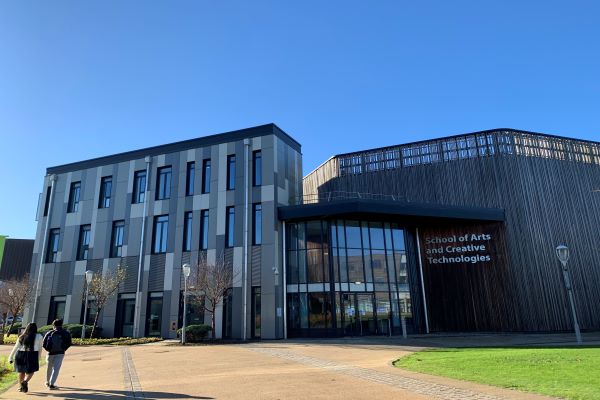
  • Is based in a £30m high-spec building opened in 2010 and housing one of the best media and performance facilities in any UK university.
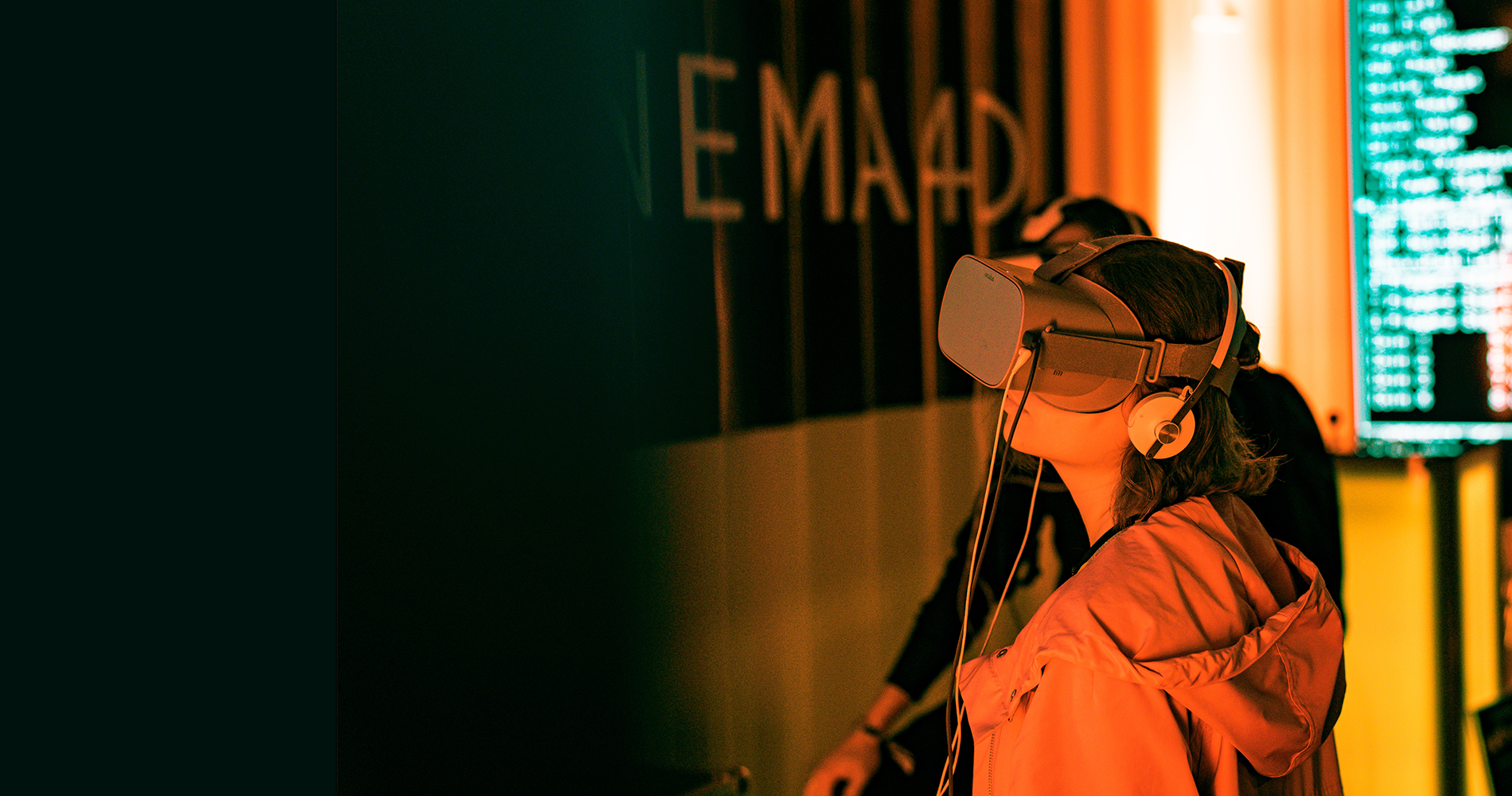
  • Has resources including state-of-the-art computer and app labs and mobile multi-media devices; systems for 3D sound and image display, eye gaze tracking and motion capture; television studios with virtual set facilities, shooting stages, a digital cinema, and workshop and performance spaces; and specialist facilities for creating sound designs, visual effects and immersive virtual environments.
  • Has excellent contacts with the interactive media and games industries, including regular visits and masterclasses from industry professionals at the top of their game.


Download

Theatre, Film & TV Brochure (PDF  , 1,618kb)


What you'll study

This new, multidisciplinary degree combines theory and practice, and brings together technical, creative and socio-cultural perspectives on new media systems, interactive technologies and digital culture. It will develop your skills in audio and video production, computer programming, graphic design, and storytelling; and your understanding of the cultural, social and historical impact of interactive media.


You will learn how to create interactive media software, content and products for a variety of platforms and uses, from mobile phones to 3D TV, from games development to web design, from apps to immersive environments, from social media to virtual worlds, from augmented realities to massively multi-player online games.


Stage One

You will learn the fundamental principles of software programming for media systems, how to create audio and visual assets, and the nature of interactive storytelling. You will also explore the historical development and social and cultural impact of interactive digital media, ranging from video games and online shopping to Facebook.

Stage Two

You will learn how interactive media are formed from the coming together of traditional media production methods – especially film – with human-computer interactive technologies. You will develop your technical understanding by enhancing your programming skills for manipulating sound and graphics and learning the crafts of moving image and sound production. You will then begin to specialise in particular disciplines, with optional routes emphasising theoretical and aesthetic understanding of new media or more technical applications development. Finally, we will support you in finding interactive media industry placements towards the end of the academic year.

Stage Three

The optional pathways continue, and you can choose to specialise in areas such as graphics, sound manipulation, games design, motion capture or animation. You will also develop an understanding of the business and workflows of interactive media. For the final assessment work, you will undertake a production or research-based project.

(Detailed content subject to final University approval.)


How you'll be taught

The characteristic teaching methods on the BSc in Interactive Media include:

Lectures: usually an hour in duration but sometimes two, these range in subject from the analysis of digital media and their contexts, to the consideration of technological, scientific and practical issues relating to interactive media production.

Seminars: groups of 12-20 students, under the direction of one or more tutors, working together on previously arranged topics. Even if you are not providing an introduction or presentation, seminars require careful preparation and a willingness to regard them as collaborative investigations.

Workshops and Practicals: hands-on sessions typically lasting between one and four hours depending on the nature of the session. 

Tutorials: one-to-one consultations with your module tutor - for example, on feedback sessions on written assignments in Year 1, and on planning sessions for your Research Projects in Year 3.

Screenings: These will be timetabled and will normally take place in the fully-equipped, Dolby certified Digital Cinema.

Masterclasses: We think it's very important that you should have the opportunity to listen to the views of, engage in dialogue with, and observe the work of interactive media professionals who have achieved distinction in their careers. Regular masterclasses will provide you with this opportunity. These special sessions will be well advertised in advance. However, it is worth noting that professionals will sometimes have to make last minute changes to plans because of their production activities etc, so we sometimes have to make late changes to published schedules. Also bear in mind that some sessions will have limited numbers, so we operate a "first come, first served" system. Book your place early.

The department uses the university's Virtual Learning Environment (VLE); as well as posting information, schedules and lecture notes, there are forums where students can discuss any topics or issues that have arisen.


How you'll be assessed

Across the three years of the programme you will be asked to produce several different kinds of written and practical assignments for assessments. These include exams, writing essays and technical reports, and (for the practical parts of the course) producing assets and media.

In Years 2 and 3, some of the written assignments you will be asked to complete will be on topics and projects you design for yourself, assisted by thorough discussion with, and careful and precise advice from, your module tutors. But once again you will experience a broad range of types of assessment and you will also receive detailed guidance as to the desired design, and specified aims, of these different kinds of project, as well as the criteria by which they will be assessed.

Practical skills will be assessed using clear marking criteria provided to you when the assignment details are made available.  In production areas, this typically involves a comparison of the technical production quality (such as ease of use, smoothness of animation, clarity of sound, etc.) against established industry norms.  This type of assessment represents only one component of an overall mark for assignments and is never the sole criterion used to determine a module mark.

Careers and employability

The BSc in Interactive Media combines rigorous academic work (as you'd expect in a Russell Group university) with practical training. When you graduate, you will have a range of valuable transferrable skills:

  • thinking
  • teamwork
  • leadership
  • planning
  • communiction
  • discipline
  • writing clearly

These skills will make you suitable for graduate jobs in many areas of work.

You will also have learned professional and technical skills that relate specifically to the interactive media industries, so you can find work in technical roles such as graphics or web programming; or highly creative roles such as games designer or sound designer. And you'll ave learned to think about the context and meaning of what you do - so will be well suited to management and leadership roles in the years to come.

During your degree there will be many opportunities for professional work experience. We highly recommend that you take up some of these opportunities, as they enhance your CV.


Further information

Our industry connections


Find out more about how we can help make you more employable 

How to apply

All applications to undergraduate degree courses at York must be made through the Universities and Colleges Admissions Service (UCAS).

Interviews

Once your application has been reviewed by the course admissions tutor, you may be invited to attend an interview afternoon. Invitations will be sent out from the department at least two weeks prior to the date of interview. The afternoon will include a talk about the BSc in Interactive Media and tours of the department's state of the art facilities.

 Departmental Visits

For general visits to the department, please sign up to one of our scheduled tours by emailing tftv-enquiries@york.ac.uk

Groups are limited to 15 and booking is essential.

  • Wednesday 15 May 2013 at 1.15pm
  • Wednesday 12 June 2013 at 1.15pm

(Please note that we are unable to accommodate individual tour requests.)

All students considering study at the University of York are invited to attend a full University Open Day.

Post-offer Visit Days

Occasionally, applicants will be made an offer without interview. The department will hold BSc Post-Offer Visit afternoons for these prospective students. Invitations will be sent out from the department at least two weeks prior to the scheduled dates. Again, the afternoon will include a talk on the programme and tours of the department.

Entry Requirements

Given the technical demands of the programme, applicants must have at least one A level or equivalent in a science subject, mathematics or computing/ICT.

Entry requirements

A levels

Our normal offer is AAB. However we sometimes make lower offers to applicants who can demonstrate talent and passion for the subject. (A level General Studies and Critical Thinking are not accepted.)

GCSEs

We look for a good standard at GCSE or equivalent, across a range of high quality subjects.

International Baccalaureate

Obtain the Diploma with a score of 35 points overall.

Scottish Highers / Advanced Highers

AAAAB at Higher Level

Irish Leaving Certificate

AAAABB

BTEC

BTEC National Diploma: DDD

BTEC Level 3 Extended Diploma: DDD

European Baccalaureate

80% overall average.

Other qualifications

Cambridge Pre-U: D3, D3, M2

Access to HE: Obtain Access to HE Diploma with 30 credits achieved from units awarded Distinction and 9 awarded Merit or higher

Other qualifications are accepted by the University: please contact Undergraduate Admissions for more information.

English Language Requirements

Applicants whose first language is not English are normally asked to provide evidence of English language ability. Exceptions may be made where an applicant's other
qualifications provide sufficient evidence of ability to use English in an academic setting at degree level. One of the following:

  • IELTS: score of 6.5 overall, with 5.5 or better in each section
  • TOEFL: 87 overall, with no less than 17 in Listening, 18 in Speaking, 20 in Reading and 17 in Writing
  • Pearson PTE Academic: 61 overall with no less than 51 in all components
  • Cambridge Certificate of Proficiency in English (CPE): grade C
  • Cambridge Certificate in Advanced English (CAE): grade A
  • GCSE/IGCSE/O Level in English (as a first language): grade C

Mature students

The department welcomes applications from mature students.

Any questions?

Contact our friendly admissions tutor if you've got any questions:

Dr Gavin Kearney


More about York