Transatlantic partnership signed to accelerate fusion energy
Posted on Wednesday 23 September 2026
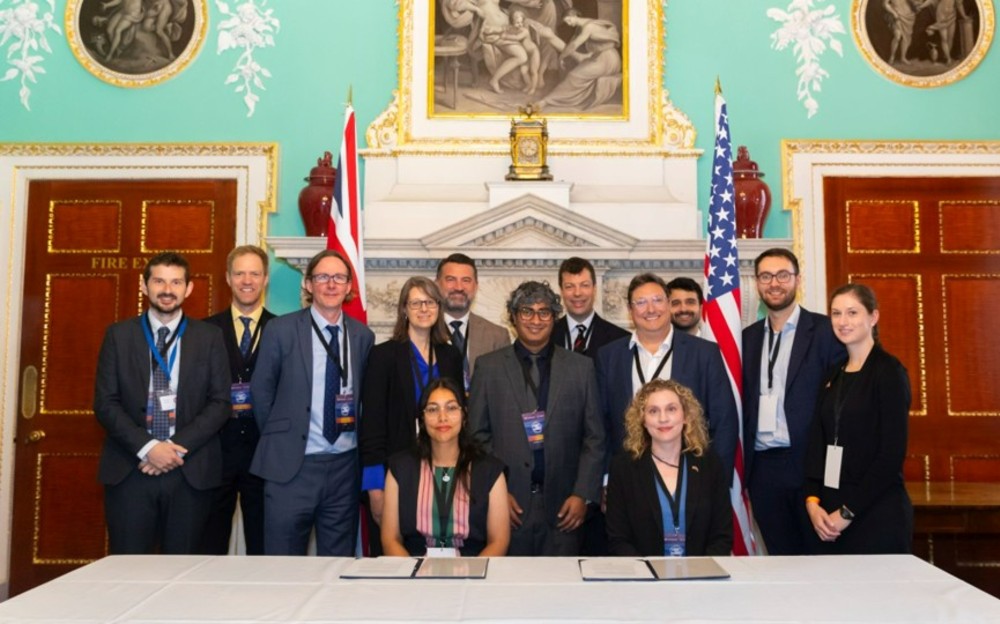
The partnership, which includes researchers at the University of York, was signed at the Global Fusion Policy Summit in London.
The landmark Memorandum of Understanding (MoU) establishes a collaborative framework between the US-based University Fusion Association and a coalition of 16 UK universities.
The agreement focuses on collaborative research and technology development, which will help inform science policy, as well as education and training initiatives to support the next generation of skilled professionals into the fusion sector over the coming decade and beyond.
Economic growth
The partnership will also promote entrepreneurship and commercialisation routes to help generate economic growth. High standards of research ethics whilst prioritising student and trainee welfare and future careers, are central to the agreement.
Professor Roddy Vann, from the University of York’s School of Physics, Engineering and Technology, said: “York has long been committed to advancement in fusion energy research through its York Plasma Institute. Study in this field is not only about solving challenges and accelerating technological development, but also providing the skills for a new generation to keep us moving forward.
“We need this research and workforce to operate at a significant scale; however, we need to keep pace with industrial advances, and so joining forces with international collaborators is the best way to create the knowledge base required for long-term energy security.”
Energy landscape
By bringing together leading academic institutions across the Atlantic, the agreement establishes a unified foundation to train the next generation of scientists and engineers, accelerate technical breakthroughs, and strengthen the global fusion energy landscape.
David Capper, Director for Net Zero Buildings, Clean Heat UK Department for Energy Security & Net Zero (DESNZ), said: "Delivering fusion will require collaboration across academia, industry, and government, alongside a strong pipeline of skills and talent. Universities have an important role in making fusion possible which is why we welcome partnerships like the one being forged today."
Matthew Lanctot, Acting Research Division Director, US Department of Energy (DoE), Fusion Energy Services, said: “This partnership will strengthen the publicly funded research base that drives fusion innovation while helping develop the talent and technology needed for a competitive private fusion sector. By connecting expertise across the Atlantic, this partnership can help close critical gaps on the path to commercial fusion.”
The York Plasma Institute delivers research in areas such as next-generation fusion power plants, laboratory astrophysics, space propulsion, and plasmas with applications in the medical and environmental sectors.