Evidence of Iron Age brain removal and bone tools found in Scotland
Posted on Wednesday 10 June 2026
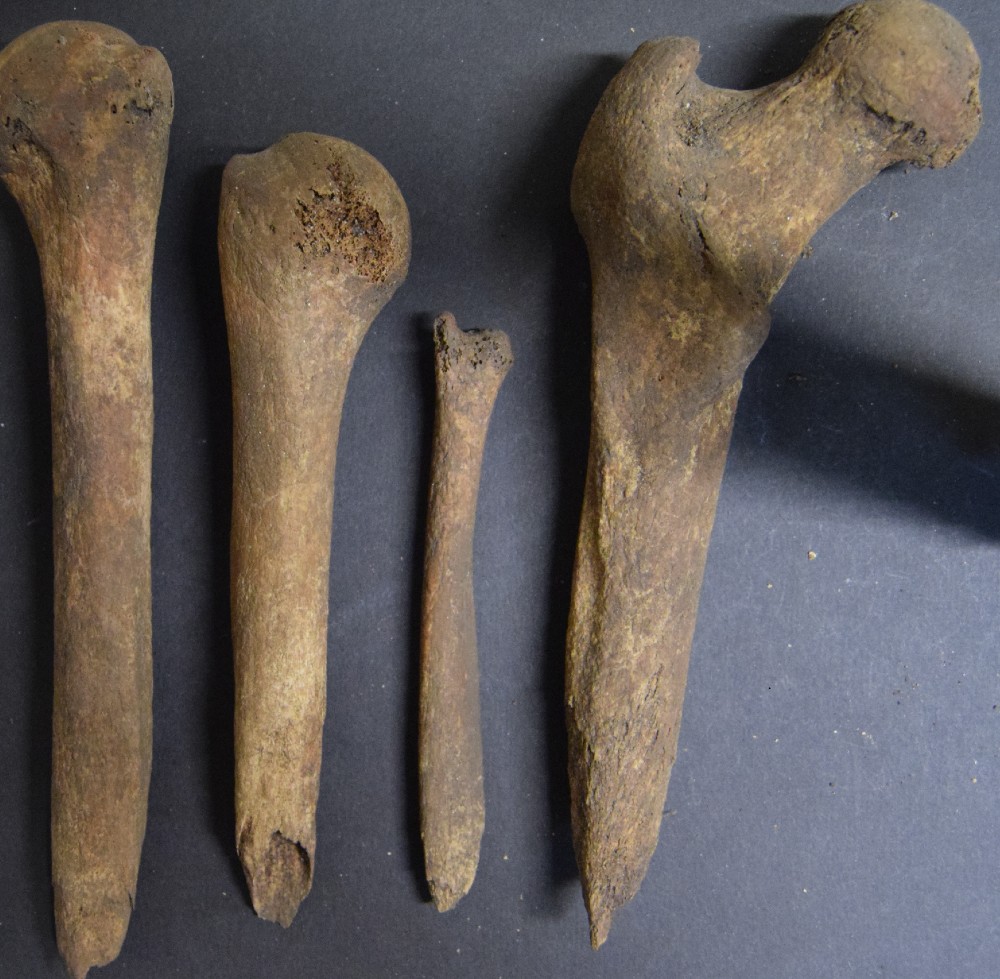
The discovery was made after a team of researchers examined the rare, well-preserved remains of two individuals discovered at Loch Borralie in Sutherland, near the north-west tip of the Scottish mainland.
Identifying funerary practices in Iron Age Britain c. 800 BC–AD 43 is notoriously difficult because human remains rarely survive. However, the unique environmental conditions of north-west Scotland support the preservation of bone, allowing scientists to take a rare glimpse into the prehistoric past.
The two individuals - an adult female and a juvenile male - were found buried together in a low stone cairn. When experts conducted an osteological examination of the bones, they discovered evidence of postmortem skeletal modification.
Surprise find
Dr Laura Castells Navarro, from the University of York’s Department of Archaeology, said: “To find bodies of this age so well preserved is rare, but to discover evidence of a funeral ritual we previously knew nothing about was such a surprise, and very exciting.
“The adult female displayed incisions on the inside of her cranium, suggesting her brain had been intentionally removed after death. We have no other comparison of this type of practice, but we know that the dead were curated and treated carefully in Iron Age Britain, so our understanding is that this bone modification is within that same tradition of care.”
Bones, including both humeri, ulna, and femur, had also been carefully tapered toward the ends into sharp points, suggesting they may have had use as tools before being carefully buried.
DNA mapping
To understand who these people were, the team combined bone analysis with isotope testing and ancient DNA (aDNA) mapping.
The results, published in the journal Antiquity, revealed that the two individuals were closely related, most likely maternal second cousins. Isotope analysis showed that both had grown up around 50 miles south-east of where they were buried at Loch Borralie.
Dr Castells Navarro said: "The motivation behind the extensive manipulation of the skeletal remains is very difficult to interpret, but the care with which she was reassembled and deposited in the cairn possibly suggests she commanded a level of reverence and respect by her community."
Cultural practice
The genetic data revealed family connections stretching much further across the sea: to the Orkney Islands, roughly 108 miles to the north-east, and to Applecross, about 140 miles to the south-west.
Researchers argue that this web of DNA proves that family groups in prehistoric Britain were highly mobile and interconnected by water.
Dr Castells Navarro explained: "Our research shows that prehistoric maritime communities periodically moved around the north coast and Northern Isles of Scotland, possibly in small groups. This movement allowed for the spread and maintenance of cultural practices and traditions."
Time and distance
The findings add a new layer to the understanding of social networks in prehistoric Britain, suggesting that complex mortuary traditions were likely shared and maintained across vast distances.
Dr Castells Navarro: “I think we can assume that the Iron Age dead were not forgotten, and still had meaning to the living, with a continued interaction between the living and the dead across time and distance.”
Further information
The research is part of the COMMIOS project led, led by Professor Ian Armit and funded by an ERC Advanced Grant, which aims to combine ancient DNA, isotope analysis, osteoarchaeology and funerary archaeology to investigate diversity, mobility and social dynamics in Iron Age communities in Britain within their wider European context.
The University of York is a hub for heritage research excellence. Centred in the historic Heslington Hall – the new home of our Humanities Research Centre – our expertise spans from the Middle Ages to the modern day.
By making sense of our past, heritage research provides the essential context we need to tackle today’s social challenges and navigate our collective future. It is a living, breathing part of our identity.