York scientist receives £6m to fund climate change-combatting algae research
Posted on Wednesday 12 August 2026
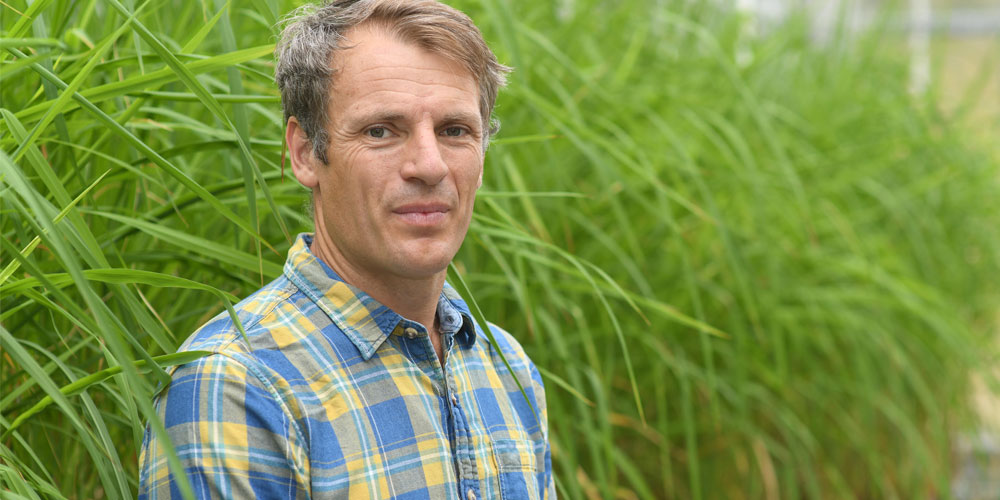
Professor Mackinder will receive £6m funding from the Royal Society, having secured a Royal Society Faraday Discovery Fellowship, to understand algae’s ability to capture carbon so efficiently, then, using engineering biology and robotics, recreate it from scratch.
Prestigious
Faraday Discovery Fellowships are prestigious long-term awards that support researchers to undertake high-quality, original research, with only a handful being awarded annually.
Professor Mackinder says: “While forests are often viewed as the primary solution in the fight against climate change, the true heavy lifters of the global carbon cycle are microscopic ocean algae, but much of how they do this is not fully understood.
“Unlocking the secrets of these organisms offers a powerful, yet largely untapped, biological solution to the climate crisis.”
Efficiency
He explains that ocean algae possess structures called pyrenoids, which he describes as “a biological turbo-charger." Pyrenoids enable algae to capture carbon with incredible efficiency, but our understanding of how this mechanism works remains incomplete.
“This project will bridge that gap,” he says. “By utilising advanced robotics and engineering biology, the research will not only decipher this genetic blueprint but re-write it, building the first synthetic algal chromosome and constructing artificial pyrenoids from scratch.”
And Professor Mackinder adds the impact of mastering these biological designs in society could be huge.
“From engineered "super-crops" that yield more food while actively stripping CO2 from the atmosphere, to developing sustainable algal factories for green biotechnology, this research aims to transform microscopic biology into planetary-scale solutions,” he says.
Further information
Professor Luke Mackinder is based in the University of York’s Centre for Novel Agricultural Products, where he is Chair in Algal Cell and Molecular Biology.