New project to create lasting legacy of 17th-century trailblazer Margaret Cavendish
Posted on Monday 3 August 2026
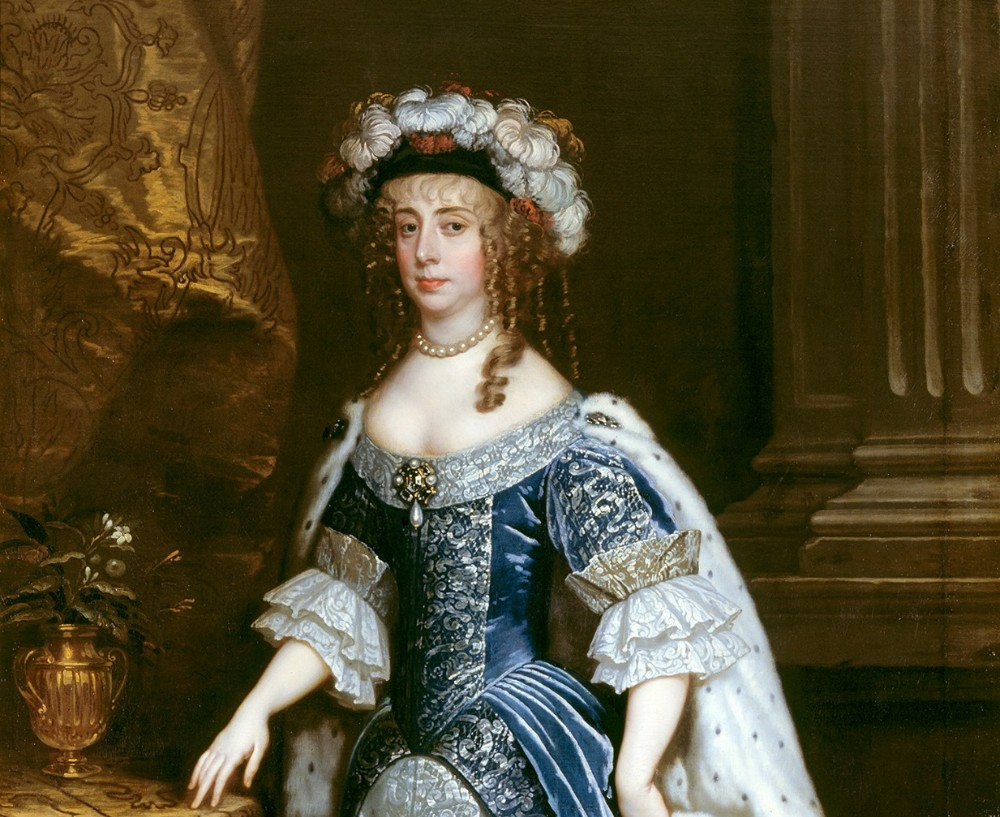
In a collaboration between the University of York and English Heritage, and supported by a grant from The National Lottery Heritage Fund, the Margaret Cavendish Mind Lab project will challenge historic narratives surrounding women in STEM and philosophy.
Through a series of events, local school children, community groups, artists, and researchers from the University, will work side-by-side to dissect Cavendish’s philosophical explorations and translate them into heritage ideas that the Castle might present to visitors for years to come.
Some of these collaborative ideas were featured at MindFest! this summer, a family-friendly festival that offered the public hands-on creative workshops and immersive STEAM (Science, Technology, Engineering, Arts, and Mathematics) activities directly inspired by Cavendish’s theories.
Pioneer
Currently, visitors to Bolsover Castle are invited to follow in the footsteps of William Cavendish, who owned the estate and established the property as a place for lavish aristocratic entertainment. Well known as a pioneer of early modern horse dressage and a patron of the arts and sciences, he was a great supporter of his wife’s work, despite history confining her to fringes of science as ‘Mad Madge’.
Professor Keith Allen, from the University of York’s Department of Philosophy, said: “Whilst it is only appropriate that English Heritage represent the life and works of William Cavendish through the estate of Bolsover, Margaret is still a person of great fascination, and it is truly exciting that we now get the opportunity to restore her to Bolsover and represent her in a way that resonates with visitors, and in particular the next generation of artists and scientists.
“She was prolific in her output, publishing theoretical essays, poetry, plays, and early science fiction, as well as breaking the glass ceiling and being the first woman allowed to attend a Royal Society meeting.
“Some of her ideas may have been labelled as ‘mad’, but by looking at her work through a modern lens, we can see just how ahead of her time she was. Her views on technology for example, and how new tools of science can sometimes distort reality, diminishing the value of what human sensory experience of the natural world can tell us, is the very debate we are facing today with the development of AI and autonomous machines.”
Lasting legacy
As a visual and sensory tribute to Cavendish’s vast imagination, MindFest! also featured the globally acclaimed Luminarium Daedalite by Architects of Air. Designed by Alan Parkinson, this large, walk-in pneumatic sculpture invited visitors into a labyrinth of winding paths and color-illuminated domes.
Megan Leyland, Senior Curator of History at English Heritage, said: “Margaret Cavendish was one of the most original minds of the 17th century. We hope to introduce more people to her remarkable life and work, and to show why her ideas still matter hundreds of years later.”
At the end of the project, it is hoped that the collaboration between researchers and the community of visitors to Bolsover will help create a permanent and lasting legacy of Margaret Cavendish, reshaping how the public views the historical role of women in philosophy and science, and celebrate her achievements as an individual, as well as the successful partnership she built with her husband, William.
For more information on the project visit the English Heritage website.
Further information
The University of York is a hub for heritage research excellence. Centred in the historic Heslington Hall – the new home of our Humanities Research Centre – our expertise spans from the Middle Ages to the modern day.
By making sense of our past, heritage research provides the essential context we need to tackle today’s social challenges and navigate our collective future. It is a living, breathing part of our identity.