Farmers boosted Europe's biodiversity over the last 12,000 years
Posted on Monday 15 December 2025
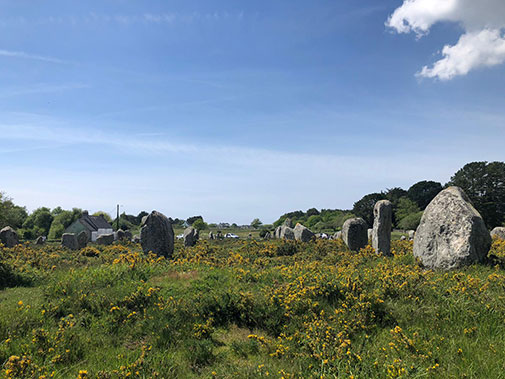
A team of researchers at the University of York analysed fossil pollen records from Europe to track vegetation changes stretching back 12,000 years. They discovered that as new populations of farmers from Turkey moved into Europe 9,000 years ago, far from destroying plant diversity, they actually enriched it.
Dr Jonny Gordon is a Postdoctoral Research Associate in the Leverhulme Centre for Anthropocene Biodiversity and lead author of the new paper, Increased Holocene diversity in Europe linked to human-associated vegetation change, which has been published in Global Ecology and Biogeography.
Important
He says: “Our models show that humans were the most important force affecting plant biodiversity over the last 12,000 years in Europe - and their effect was overwhelmingly positive.
“We think that as farming communities expanded from Turkey into Southern Europe, and then into Northern and Western Europe, they chopped down some of the forest that met them, planted crops and grazed their sheep and cows.”
Beneficial
Rather than harming the diversity of Europe’s plant communities, Dr Gordon explains that this partial clearing of trees was beneficial. By opening up the canopy, early farmers created a “mosaic” of habitats - a patchwork landscape that made space for a range of other plants that could not survive in dense forests.
“Where there was once mainly forest, there were now smaller patches of forest interspersed with new fields of crops, such as wheat, weeds that grew around the edges of these fields, as well as species that thrived in meadows and when grazed. A farmed Europe had a wider range of habitats for plants to live in than an unfarmed Europe.”
Influence
Dr Gordon believes these findings challenge the common assumption in conservation that human influence must be removed for ‘nature’ to thrive – a concept embedded into many ‘restoration’ strategies, such as rewilding. Instead, the research suggests that in a European context, low-intensity, traditional farming methods practised over multiple millennia were the very driver of the elevated biodiversity levels that conservation today seeks to protect.
“This provides hope for the future,” he says. “Humans need not be in opposition to biodiversity; in fact, if you consider the last 12,000 years, our work shows that humans and biodiversity can thrive together.”