One of the world’s most famous wildlife coexistence schemes falls short
Posted on Monday 1 June 2026
In 2015, Sweden was celebrated worldwide when a study revealed that its Conservation Performance Payment (CPP) scheme - the oldest of its kind - had successfully promoted the recovery of the endangered wolverine population.
Now, more than a decade after gaining international acclaim, the scheme designed to protect both wolverines and the Indigenous Sámi reindeer herders they share space with, is failing to sustain this success.
Research at the University of York in collaboration with the Swedish Agricultural University has shown that documented wolverine numbers have fallen significantly in its northern strongholds, with government funds frozen for the past 20 years, and communities reporting a lack of trust in the scheme.
Financial issues
The study, published in the journal Conservation Letters, highlights that government neglect of the financial and social consequences of long-term wildlife recovery can result in local communities left to shoulder the burden.
Dr Hanna Pettersson, from the University of York’s Leverhulme Centre for Anthropocene Biodiversity, said: “Implemented in 1996, the scheme was at the time revolutionary. Instead of paying reindeer herders for damages caused by predators, the government paid communities for coexisting with them, whether or not damage actually occurs.
“The idea is to tie an income to the presence of the predator, providing an incentive to find ways to live alongside them, thus decreasing conflicts and improving social justice.
“Initial findings showed encouraging results of the scheme, namely a marked increase of the wolverine population, but after studying 30 years of data from the scheme, we have shown that this success has not been sustained.”
Decreasing numbers
Dr Pettersson shadowed wildlife rangers in the Arctic, and the research team combined ecological monitoring data with interviews in Norrbotten, Sweden’s northernmost county. The results showed a scheme in turmoil, and a warning sign for other global conservation initiatives.
The team found that while wolverines are expanding into southern Sweden, they are decreasing in their northern strongholds. In the early 2000s, Norrbotten accounted for two-thirds of all documented wolverine reproductions nationwide.
Today, that share has plummeted to less than one-third, and the region consistently misses its minimum conservation targets.
Dr Pettersson said: “The payments to the reindeer herders from the scheme have remained frozen at 200,000 SEK per predator reproduction since 2002, but due to rising costs and meat prices, the real value of the payment has approximately halved over the last two decades.
“While the Sámi Parliament calculates the legal payout should be at least 480,000 SEK to comply with the law, the government offered only a 25,000 SEK increase in 2024.”
Climate change
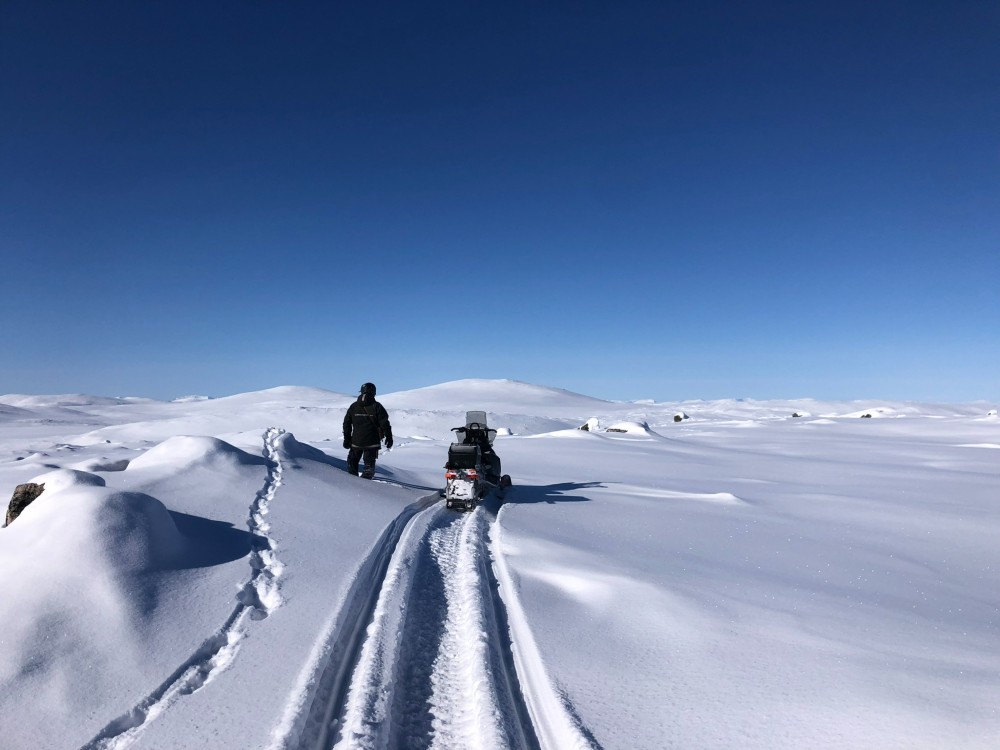
The study also showed that the scheme had been challenged by climate change, which has altered Arctic snow conditions, making wolverine tracks difficult to find. This means that the number of documented wolverines may be inaccurate, and many clear sightings of them were disqualified by officials due to strict documentation rules.
Dr Pettersson said: “If a government fails to adapt payments to rising costs of coexistence, the burden is shifted onto local, often marginalized, communities, who in this case are already straining under the cumulative impacts of mining, forestry, and climate change.
“It is a warning sign for other global conservation efforts. Governments must plan ahead and adapt interventions to changing conditions and local needs.”