Ancient rubbish shows how early farmers learned to live with waste
Posted on Tuesday 25 November 2025
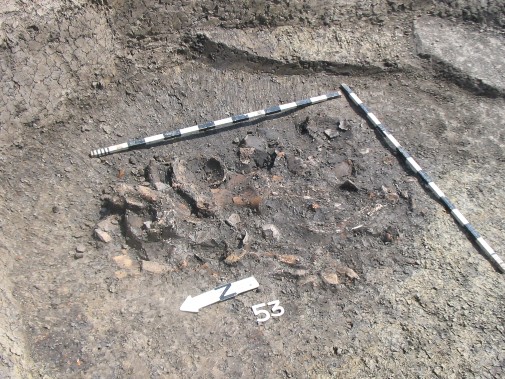
Although broken pots, animal bones and everyday leftovers make up much of what archaeologists find today, the role waste played in people’s daily lives is still not well understood.
From around 8,000 years onwards, people in Europe began to farm and as a consequence stayed in one place for longer. These settled communities created and accumulated more things than ever before, and so for the first time, people needed a strategy on how to deal with waste.
Unlike earlier hunter-gatherer groups that had led mobile lives in the European region, these first farmers could not simply move on any more when rubbish built up. But instead of moving the waste further away from the home, much like it is today, they often chose to keep rubbish in a pit within the grounds of their homestead.
Taking responsibility
Professor Penny Bickle, from the University of York’s Department of Archaeology, said: “Keeping rubbish close to the home, could suggest a sense of ownership - did they feel responsible for their waste and therefore chose to deal with it within the vicinity of their home?
“It may also mean that there was an understanding that some of these discarded items could potentially be used again. In the Western world putting items in a recycling bin and having others 'deal with it’ is common, but not all cultures operate this way, and so it is possible that the ancient Neolithic farmers had the view that waste is the responsibility of the owner.”
The study, led by experts at the University of York, UK, and Freie Universität Berlin, Germany, could improve how archaeologists understand ancient sites, but it will also potentially inspire new ways of thinking about and tackling our modern waste problem.
Emotional reasoning
Using a sophisticated analysis technique, developed by project researcher Dr Bruno Vindrola-Padros, archaeologists can detect that some pottery has been repurposed. Some of the earliest forms of recycling can be seen in pots that have been adapted for other uses, but what experts don’t know is how knowledgeable early farmers were of what impact rubbish had on the environment.
Dr Vindrola-Padros, from Christian Albrecht University of Kiel, Germany, said: “One possible explanation for keeping waste items close to the home is an emotional one - these possessions often carry meaning beyond their practical use, as demonstrated by their inclusion in burial rituals.
“By delving into these questions, we could help reframe the way we think about waste. Today we push it away from the home for mostly hygiene purposes, but not all waste is unsanitary, and so we hope that in understanding how societies in the past dealt with waste it could provide us with some new ways of thinking about our attitudes towards it today.”
Pottery and bone
The new project looks at how these communities dealt with their growing piles of waste, focusing mainly on pottery, which survives for thousands of years, and animal bones, which decay more easily. The team will develop and apply a range of cutting-edge scientific techniques to study the afterlife of these materials following their discard, and to understand how waste impacted on homes, villages and everyday routines.
The team will study four archaeological sites across Europe from the Balkans to the Baltic coast. Using scientific techniques and digital tools, they will piece together the “life stories” of discarded objects: how they were used, reused, broken and eventually abandoned.
Professor Henny Piezonka, from Freie Universität Berlin’s Institute of Prehistoric Archaeology, said: “Today we see rubbish as a problem, but did early farmers see it that way too? We want to look at this question more closely and understand what were the challenges of having waste on the doorstep as well as the opportunities for repairing, reshaping, repurposing and reusing it.”
The research, supported jointly by the Deutsche Forschungsgemeinschaft (DFG) and the Arts and Humanities Research Council (AHRC), is a collaboration between the University of York, the Freie Universität Berlin and partners in Austria, Poland, Romania, Serbia and Slovakia.