BA Writing, Directing and Performance

UCAS code Typical offer Length
W440 AAB (See full entry requirements) 3 years full-time
Apply now

Received an offer?

Log in to You@York to track your application

Play rehearsal in the Black Box

Adjusting lights in the main theatre.

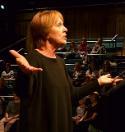
Movement class in the theatre

This exciting degree explores writing, directing and performance in the theatre through a combination of textual/historical analysis, practical training, and production experience in state-of-the-art facilities.          


About This Course

This is a theatre-based degree, which is centred on the exploration of the creative collaborations and negotiations between writers, directors, and actors.

Year 1 introduces students to a crucial array of key skills, from those needed to read scripts with an intelligent alertness to their stage potential; through voice and movement training; to experiments in scriptwriting. As you progress through this training and through the degree, you will make increasingly ambitious use of the superb theatres, rehearsal rooms, and workshop spaces in the Theatre, Film and Television building; and this will result, in Years 2 and 3, in assessed public performances of major playscripts. 

Throughout the course you receive careful and detailed feedback on your progress. In its early stages special attention is paid to assisting you to adjust to the challenges and opportunities of university study. At each stage of the degree, the analytical and historical work you undertake is designed to inform and shape your performance experiments and practice, and vice versa. Accordingly, written assessments are intermingled with practical ones throughout the course. 

In Year 2, the two major themes are Comedy (from Shakespeare’s time to ours) and Political Theatre. The Political Theatre strand climaxes in the researching, writing, and performance of new "verbatim" plays – scripts in which all the dialogue is derived from student-conducted interviews and material which is a matter of public record (for example court records and published interviews). Year 3 builds on the rich array of skills you will have acquired through the staging of major plays in the department’s two largest, lavishly resourced, performance spaces.

Throughout the three years film and television material is used in teaching, in dialogue with the theatre works that are the main preoccupation of the course. We find the dialogue between the three media both stimulating in itself, and a valuable reflection of the fluidity which characterises many contemporary acting, directing and writing careers, where practitioners move fluently between one medium and another.

We also believe it is important to facilitate dialogue between students and leading figures from theatre, film, and television.  We have therefore developed a vigorous professional visitor programme which runs throughout the academic year, and which brings a rich array of prestigious visitors (including York graduates) to the department for masterclasses. Observing high-profile, in-demand, professional theatre directors, actors, and playwrights at work, and being able to question them about career routes, ideas, and opportunities, is  an invaluable addition to the learning experience.

Recent visitors have included first-rank actors like Penelope Wilton and Sam West; directors like Max Stafford-Clark (the Department’s Visiting Professor of Theatre), Sean Holmes and John Barton; and writers like David Edgar, Simon Stephens, Alan Ayckbourn and Laura Wade.

Download Theatre, Film & TV Brochure (PDF  , 1,618kb)

What you'll study

Stage one

Across the three terms in the first year you will learn:

  • to read playscripts from different periods, with a close eye on their performance possibilities;
  • how to prepare a playscript from a director's perspective;
  • how to notate and analyse actors in performance. 

You will also study the history and analysis of film and television - particularly looking at moments of creative, stylistic, and technological transformation and innovation. (The film and TV modules are studied jointly with students on the BSc in Film and Television Production.)

Stage two

In year 2 you'll look in detail at comedy (from Ancient Greece and Rome to contemporary television and political theatre, film, and television (again, across a wide historical range).  Both these sequences of modules conclude in practical projects in the third term of the year, with assessed performances.

Stage three

In year 3, most of the first two terms is given over to two theatre production projects, focused respectively on twentieth-/twenty-first century and on sixteenth- to eighteenth-century scripts. Students also study scriptwriting for TV and theatre; and study and create TV studio drama - the production method used for "continuing series" such as Coronation Streeet, Eastenders and Emmerdale. In the final term, you will produce an Independent Research Project, which can either be practical or theoretical.

How you'll be taught

The characteristic teaching methods on the BA in Writing, Directing and Performance include:

Lectures: usually an hour in duration but sometimes two.

Seminars: groups of 12-20 students, under the direction of one or more tutors, working together on previously arranged topics.

Workshops and Practicals: hands-on sessions typically lasting between one and four hours depending on the nature of the session. These include movement classes, rehearsals and some work in the TV studio.

Tutorials: one-to-one consultations with your module tutor - for example, feedback sessions on written assignments in Year 1, and on planning sessions for your Research Projects in Year 3.

Masterclasses: We think it's very important that you should have the opportunity to listen to the views of, engage in dialogue with, and observe the work of theatre, film and TV professionals who have achieved distinction in their careers. Regular masterclasses provide you with this opportunity.

VLE: The department uses the university's Virtual Learning Environment (VLE); as well as posting information, schedules and lecture notes, there are forums where students can discuss any topics or issues that have arisen.


How you'll be assessed

We set you assessments for three reasons:

  1. So you can demonstrate what you’ve learned, and practise your skills. The assessments also give you something to aim for, and an extra reason to learn.
  2. So that we can assess how you’re doing, and help you in areas where you are weaker by giving you constructive feedback.
  3. So that we can use the average marks that you get to award you an appropriate qualification at the end of the degree course.

Across the three years of the BA programme you will be asked to produce several different kinds of written and practical assignments for assessments. The analytical writing required on the course ranges in scale from short essays, to portfolio and record-book submissions (for instance, logs of practical exercises), to a possible 10,000-word essay for the Independent Research Project. Practical work is often created in groups, and is assessed using clear marking criteria provided to you when the assignment details are made available, mainly by observation of the finished work.  


Careers and employability

Employment prospects

Some of our graduates have gone on to careers as writers, directors or performers; but others have favoured different choices, including arts journalism, teaching, drama therapy, literary management, publishing, stage management, theatre/film/television production, academic research and arts administration.

Some have moved into fields not directly connected to theatre, film or television. The core emphasis of this programme on studying and experiencing the complex collaborative work processes characteristic of all three of these media generates a professional flexibility and responsiveness to the input of others which makes our graduates attractive prospects to a range of potential employers.

Making the future

This BA equips students with high-calibre research and practical skills. Our dual strategy is unique and the result of detailed negotiations with industry professionals and academic researchers operating at the top levels. It is a highly innovative and competitive course, allowing students to analyse and experiment with processes from writing and commissioning, acting and directing, right through to the finished product and its reception. Visiting professionals have frequently told us that students on our courses are very privileged. We think we’re privileged to teach you – come and make the future with us!

Further information

Find out more about how we can help make you more employable 

How to apply

All applications to undergraduate degree courses at York must be made through the Universities and Colleges Admissions Service (UCAS). (Link to UG Admissions pages http://www.york.ac.uk/study/undergraduate/applying/)

Once you have submitted an application

You may be asked to attend an interview in the department, for which you will need to bring along two pieces of analytical writing.

The ideal students for this programme will combine intellectual ambition and historical curiosity with an eagerness to gain stretching experience of creative practice in theatre, film and television. We will be looking for a combination of strong analytical ability and a capacity to work cooperatively, ambitiously and productively with others, plus experience in a related field of activity. We are not assuming that this experience will be of a professional nature. Involvement in amateur theatre or film-making would, for instance, be apt; and that involvement could be in stage management or design, for example, as relevantly as in acting, directing or writing.

Entry requirements

A levels

AAB

We don't accept Critical Thinking or General Studies A-levels as part of the AAB requirement.  

We will sometimes accept students with lower grades who show passion and talent for the subject.

It is not necessary to have A Level Theatre Studies to apply for the BA; extra-curricular interests and experience will be taken into account when considering the application as a whole.

GCSEs

We look for a good standard at GCSE or equivalent, across a range of high quality subjects. Note that it is not necessary to have GCSE Theatre Studies to apply for the BA.

International Baccalaureate

Obtain Diploma with 35 points overall

Scottish Highers / Advanced Highers

AAAAB at Higher level

Irish Leaving Certificate

AAAABB

BTEC

BTEC National Diploma: DDD

BTEC Level 3 Extended Diploma: DDD

European Baccalaureate

80% overall average

Other qualifications

Cambridge Pre-U: D3, D3, M2

Access to HE: Obtain Access to HE Diploma with 30 credits achieved from units awarded Distinction and 9 awarded Merit or higher

Other qualifications are accepted by the University: please contact Undergraduate Admissions for more information.

English Language Requirements

Applicants whose first language is not English are normally asked to provide evidence of English language ability. Exceptions may be made where an applicant’s other qualifications provide sufficient evidence of ability to use English in an academic setting at degree level.

One of the following:

  • IELTS: score of 6.5 overall, with 5.5 or better in each section
  • TOEFL: 87 overall, with no less than 17 in Listening, 18 in Speaking, 20 in Reading and 17 in Writing
  • Pearson PTE Academic: 61 overall with no less than 51 in all components
  • Cambridge Certificate of Proficiency in English (CPE): grade C
  • Cambridge Certificate in Advanced English (CAE): grade A
  • GCSE/IGCSE/O Level in English (as a first language): grade C

Mature students

We welcome applications from mature students.

Any questions?

Contact our friendly admissions tutor Dr Ben Poore if you've got any questions. If you can, please use email for inquiries in the first instance:


Understanding the KIS

More about York