Living in private sector accommodation and need help with your tenancy? We're here to offer advice and support whenever you need it.
Private housing drop-in sessions
More housing events coming soon. Check back for details.
You should be provided with an inventory on the day you move in. This should list all of the items within and condition of the house. You are usually given seven days to check through everything thoroughly. The inventory is useful to compare the condition of the house at the beginning and end of the tenancy in order to dispute any charges when your deposit is returned. If you haven't been provided with an inventory, write one up yourself, sign and date it, and provide a copy to your landlord. You may also wish to take photos as additional evidence to record the condition of the property.
As a tenant you have responsibilities at the start of your tenancy and during your tenancy. It's important you are aware of these to secure your property and avoid any extra charges at the end of your tenancy.
Expand the drop down boxes below to view your responsibilities at the start of your tenancy and at the end of your tenancy.
At the end of your fixed term you will need to make sure the property is clean and all rubbish is removed from the property. The City of York Council has information about responsibly dealing with end of term waste as a student.
Before you move out, it’s important to check you have:
Your landlord will likely provide you with final communications or a check-out list of items that need to be completed when handing in your keys.
The University cannot offer legal advice, however there is lots of information and guidance on the following websites:
Have a browse through the following questions and answers for further guidance.
During Semester 1 and Semester 2, we will be holding housing drop in sessions at The Baroness Hale Legal Clinic next to the Information Centre. This will include services where you can have your accommodation contract checked over by a Law School student or one of the housing advisors on site. To help you read through your tenancy agreement and make sure it’s right for you, you can use our helpful Tenancy agreement checking guide (PDF
, 341kb) as well.
If there is a problem with the property, you need to inform your landlord or letting agent immediately. Take photos of the problem and keep a record of communications such as emails, letters, and maintaining notes of phone calls. The action your landlord or agent takes and how quickly the situation is addressed will depend on the severity of the problem.
If you and your housemates are struggling to get along, your College teams can help with housemate mediation, if that is something you feel might be helpful in getting everybody onto the same page. Contact your respective college for further information. This mediation could help you to come together as a group, and decide in a controlled environment what the best situation will be moving forward, whether that is to all live together, one of you leave, or a number of other scenarios, and agree as a group.
If your neighbours are causing problems, you can get advice from:
Show consideration for your neighbours:
We take misconduct in the community very seriously and repeat offenders may find themselves facing disciplinary action under Regulation 7.
If you pay an advanced payment when booking your accommodation, this will be deducted from your first rent payment. If you pay a security deposit, this secures your accommodation booking and once you move into the property it converts into a damage deposit. This will then help cover any costs for broken or damaged items at the end of your tenancy if there is any, otherwise the full/remaining amount will be returned to you once you move out. The timeline of this and where the deposit is held will be written into your tenancy agreement.
If you are on an individual tenancy, you are only responsible to pay for your own rent. However if you are on a joint tenancy, or anyone else is named on your contract, then anyone named is responsible for the payment. Therefore if one person refuses to pay, everyone in the property named on the contract must cover the owed amount. Therefore it is really important to ensure you all have trusted guarantors and people you wish to rent with. If in any doubt, always check your tenancy agreement.
If you are a full time registered student, you are exempt from paying council tax. This is not automatic and you will need to apply for a council tax exemption so you don’t receive a council tax bill. Even if you are living in a shared house, you will all need to individually apply to be exempt. You can find out further information on council tax exemptions here.
Most purpose built student accommodation (PBSA’S) and some letting agents will offer bills included within the rent, however it is more common for shared private houses to not have bills included. You will need to check the accommodation advert and your tenancy agreement to see if you have to pay bills separately.
A TV licence is required if you watch any live TV or BBC iPlayer. Note, TV licences are backdated to the beginning of the month.
If you are caught watching live TV on any device without a licence, fines can be up to £1,000.
If you are sharing your house as a part of a joint tenancy, then you will only need one TV licence for the entire property. If you each have individual tenancy contracts and you wish to watch live-streamed TV (whether on a TV, computer or phone) you will each have to pay for your own TV licence.
If you live with your landlord in the same property, you will need a licence to watch live TV in your own room.
Find out about Students and the TV licence.
The main things you will need to set up:
You can find out more detailed information on how to set your bills up on our useful moving in checklist.
Many private landlords and estate agents require tenants to provide a rent guarantor who will be required to pay rent should the tenant fail to do so.
We’ve officially partnered with Housing Hand, which means University of York students who do not have a UK guarantor can use their service at a discounted rate upon successful application. Use the unique referral link below to access the 50% discount.
If you're looking for housing in the private sector for your first, second, third year or beyond, we can help. Take a look at our dedicated web page Finding private sector accommodation for advice and support.
Remember to update your details on the electoral register when you move house. Not only will this ensure you can vote in elections but it also enhances your credit rating, too.
Before you can rent a property you must prove you have the right to rent in the UK. You will be asked to show documentation to your landlord.
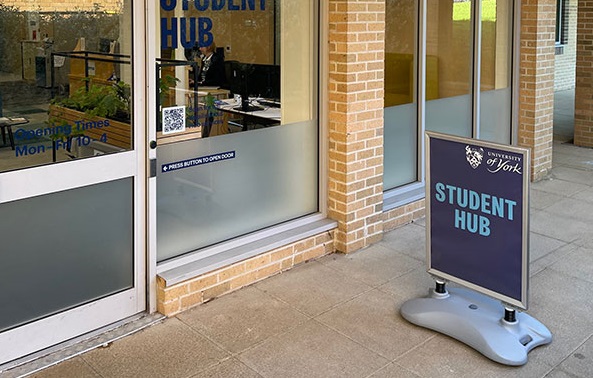
A first point of contact for advice on issues including financial support and money management, housing advice, academic progress issues and support for under-represented student groups.
You can self-refer to our Support and Advice team by completing the student self-referral form. A member of our team will contact you by email as soon as possible and if you are offered an appointment, this can be conducted by telephone, video call or in-person.
Working hours: Monday to Friday, 10am to 4pm (excluding public holidays)
Student Hub