Hunter-gatherers cooked complex plant and meat dishes earlier than previously suggested, study shows
Posted on Thursday 26 March 2026
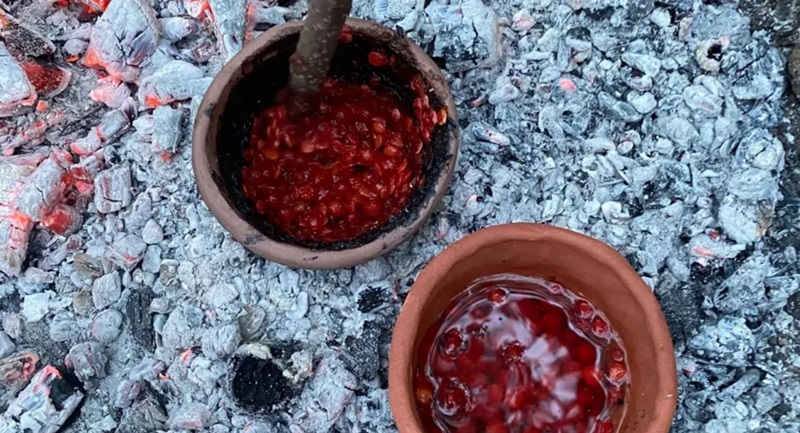
By examining carbonised food remains trapped on the surface of ancient pottery dating to between 4,000 and 7,000 years ago, the researchers were able to show that many ancient societies were combining specific plants to create distinct, flavoured dishes even before the adoption of agriculture.
Ceramic vessels
The study, published in PLOS One, conducted an analysis of 85 ceramic vessels from 13 different sites across the Baltic area and around the rivers of Volga and Don in Eastern Europe.
To uncover the food remains, the team utilised high-resolution Scanning Electron Microscopy (SEM) technology to identify the microscopic structures of plant matter preserved among other charred food remains on the surface of the pottery shards.
For example, in the Baltic and Upper Volga regions, the researchers found evidence of communities cooking guelder rose berries, which are usually bitter and slightly toxic when raw, together with fish. Because the heat of the cooking process would have neutralised the toxins, this suggests a sophisticated understanding of food processing and flavouring.
Plant processing
While previous research has often suggested that the adoption of pottery was primarily associated with the need to process fish and meat, the results from the study show that plant processing was also a central reason for the hunter-gatherers’ use of ceramics.
Dr Lara González Carretero, lead author from the University of York’s Department of Archaeology, said: “For a long time, we have viewed hunter-gatherers through a very narrow lens, assuming their diet was almost entirely dictated by the availability of animal protein.
“Our findings show a much more nuanced reality. These people weren't just gathering anything green, they were making deliberate choices based on taste, texture and perhaps even the medicinal properties of plants. We are seeing the very first evidence of what we might call ‘culinary traditions’, recipes that were specific to certain groups and regions.”
Expert botanist
These discoveries challenge the long-held scientific narrative that combining plants and animal protein into complex dishes only began with the adoption of agriculture. Instead, it suggests that the skills usually associated with farming, such as identifying, harvesting and processing specific plant species, were already deeply embedded in the hunter-gatherer culture.
Professor Oliver Craig, Director of the BioArCh research centre at the University of York, said: “The transition to farming is often seen as the key revolution in how humans related to plants. Whilst ultimately domestication was of critical importance, wild plants were likely to have been carefully managed much earlier in prehistory. Prehistoric hunter-gatherers were expert botanists and creative cooks.”
Further information
The project involved a collaboration between the University of York, The British Museum and several European institutions including the Museum Lolland-Falster, Denmark, University of Łódź, Poland, State Hermitage Museum, Russia.