York professor wins prestigious ERC grant to study centuries of global corporate risk
Posted on Tuesday 23 June 2026
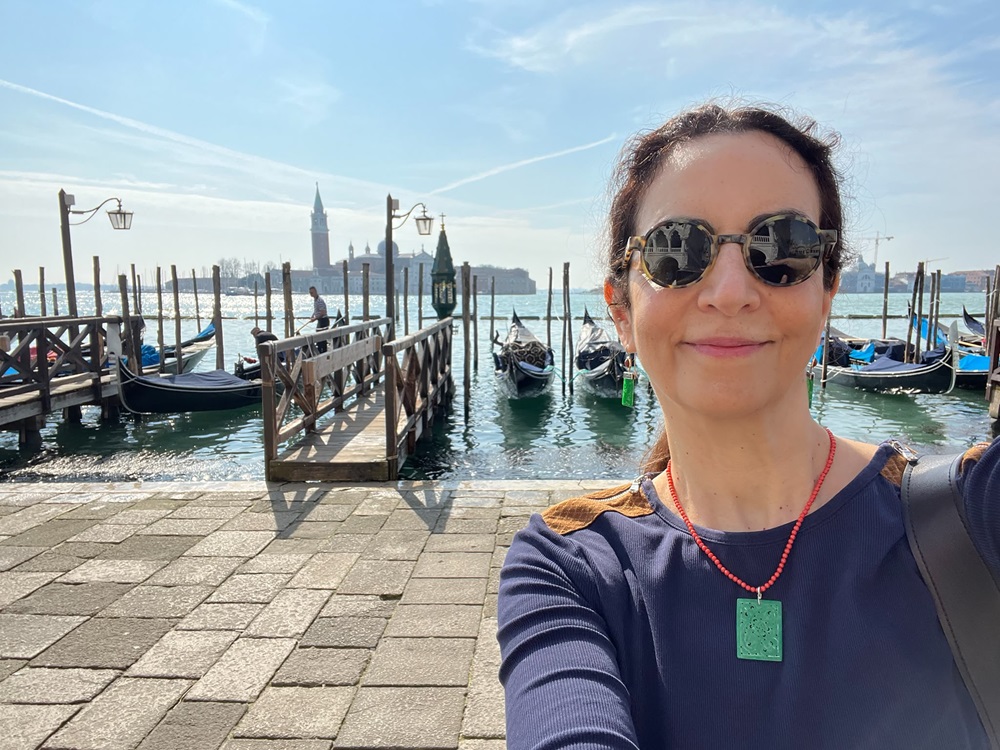
Professor Teresa da Silva Lopes, Professor of International Business and Business History at the School for Business and Society and Director of the Centre for the Evolution of Global Business and Institutions (CEGBI), will lead the five-year project, entitled Risk Societies: The Global Firm as a Laboratory of Risk Management, 1280–2030.
Historical junctures
Combining deep archival research across the UK, continental Europe, India, and Hong Kong with oral history, group biography and computational network modelling, the project will produce the first long-run typology of how firms have governed risk, bridging medieval credit enforcement and modern corporate compliance, within a single analytical framework.
The project will examine four British global firms active at critical historical junctures that also overlap in space and time: the medieval Merchants of the Staple, the English East India Company, the Hong Kong conglomerate Jardine Matheson and the defence multinational BAE Systems.
Taken together these firms span the wool trade of the late thirteenth century to the cyber and defence frontiers of the twenty-first. Each will be treated as a case study in institutional experimentation, facing distinct and historically-embedded social, political, economic, environmental and technological risks.
Professor da Silva Lopes said: “I’m incredibly honored and thrilled to be undertaking this major research project, which has only been possible thanks to the support of the University of York and of my collaborators.”
Modern condition
The new project challenges a common assumption: that the awareness and management of complex, overlapping risks (what some commentators now call “the polycrisis”) is a uniquely modern condition.
RISK-LABS argues, instead, that companies and firms have long served as experimental sites where risk and uncertainty were observed, measured and governed. That they developed strategies of prevention, mitigation, and even exploitation long before the rise of modern insurance, probability mathematics, actuarial science and the welfare state.
Professor da Silva Lopes’s project will bring new historical depth to these discussions, showing how firms have grappled with compounding crises for centuries and interrogating how the strategies they devised still shape how corporations and governments behave today.
Competitive
The ERC is the premier European funding organisation for excellent frontier research. It funds creative researchers of any nationality and age, to run projects based across Europe.
ERC Advanced Grants are among the most competitive research awards in Europe, reserved for established leaders and top scholars pursuing high-risk, high-reward Research. The Advanced Grants give senior researchers the opportunity to pursue ambitious, curiosity-driven projects that could lead to major scientific breakthroughs.
President of the European Research Council, Prof. Maria Leptin, said: “The new Advanced Grant projects demonstrate the creativity, ambition, and intellectual boldness that frontier research requires. The ERC’s role is to support researchers who are asking difficult scientific questions and want to venture into unexplored territory in pursuit of new knowledge.”
International
In addition to an international advisory board, Professor da Silva Lopes will be joined by two Senior Investigators with whom she developed the research program. Professor Matthew Johnson of Durham University, who will lead the computational modelling and social network analysis, and Dr Robert Fredona of Harvard Business School, who brings expertise in medieval and Early Modern business history.
The grant will also fund a team of PhD students and postdoctoral researchers, thereby training a new generation of UK and European scholars in interdisciplinary and cutting edge methods.
“This project offers a new framework for understanding capitalism in crisis, placing the firm at the heart of its evolving architecture. It will challenge the presentism of recent approaches and displace the nation state and the insurance market as privileged sites of risk governance. The ERC funding will allow me to integrate my previous work and expand on my long-term research agenda for the next five years”, said Professor da Silva Lopes.