Scientists solve 200-year-old puzzle of how tobacco plants make nicotine
Posted on Monday 18 May 2026
The discovery, published in Nature Communications, could lead to safer production of medicines and vaccines using tobacco plants, without the unwanted nicotine.
Nicotine, the chemical that makes tobacco products addictive, has been used by humans for over 10,000 years. But despite decades of study, scientists never fully understood how plants like Nicotiana tabacum - the main source of tobacco - actually build the nicotine molecule.
Scientists have now discovered the missing genes and enzyme that tobacco plants need to make nicotine, and recreated the process in the lab and inside living plants, proving how it works.
Contamination
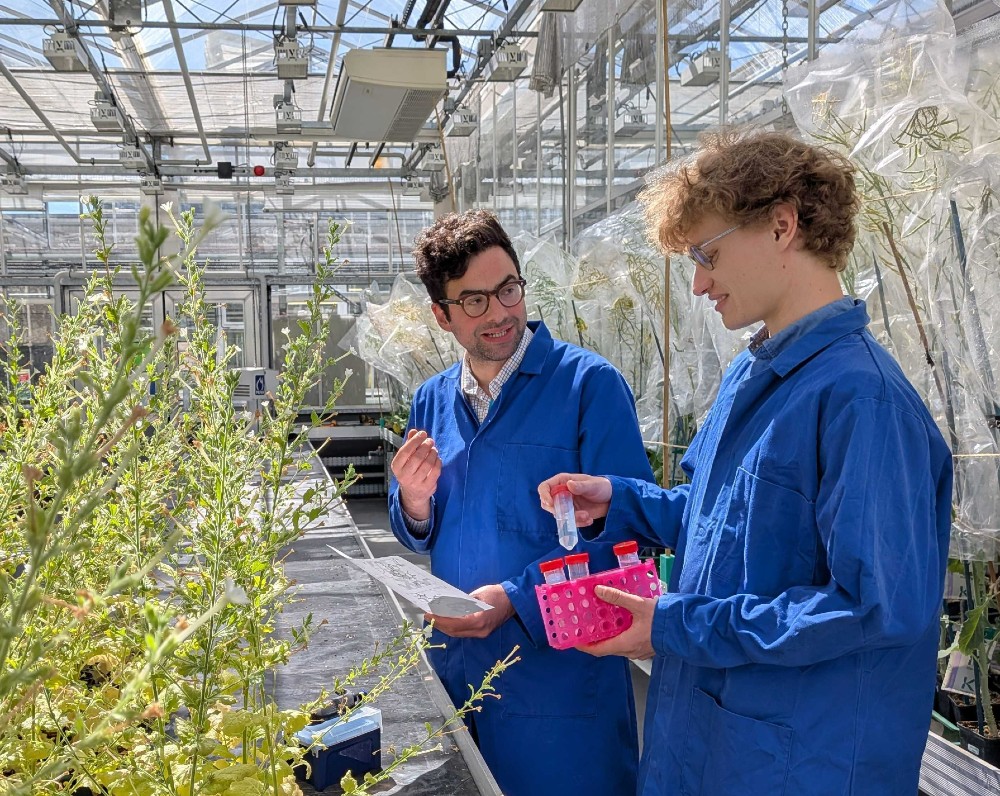
Dr Benjamin Lichman, from the Centre for Novel Agricultural Products (CNAP) at University of York’s Department of Biology, said: “Tobacco plants can be used in biotechnology as platforms for producing vaccines or other pharmaceutical products, but it is plagued by the presence of nicotine which contaminates the products and requires processing to remove it.
“The puzzle of how tobacco plants produce nicotine, however, has been around since the late 1820s, when nicotine was first extracted from the plants. Since then no-one had cracked the mystery of how it was made. It is a big moment in plant science and biochemistry that we now have the answer we have been chasing for more than 200 years!
“With this new knowledge we can remove or repurpose the nicotine that is produced naturally by the plant and create better biotechnology tools, and there is also exciting potential for the future to adapt tobacco's nicotine forming system to make useful pharmaceutical compounds.”
Glucose molecule
The team, which included researchers from the University of Copenhagen, discovered that nicotine is initially formed attached to a glucose molecule, which is added to give its building blocks the energy boost they need to snap together. However, the glucose is removed at the final step, appearing to vanish. This hidden step explains why the mystery endured for so long.
Benjamin Schwabe, a University of York PhD student and first author of the study, also discovered the exact structures of two special plant enzymes - NaGR and NicGS - that help assemble the nicotine molecule from smaller pieces. The molecule itself is made of two connected rings, each made in a different part of the plant’s metabolism. One comes from a vitamin-like compound, and the other from an amino acid related to protein building.
Dr Lichman said: “It is exciting because it has real-world applications. A close relative of tobacco, Nicotiana benthamiana, is already used in “molecular farming” to produce life-saving drugs and vaccines.
“It opens up new ways to use tobacco plants for good: not in cigarettes, but for medicines and other valuable products.”