Study explains why some osteoporosis drugs may protect against Covid-19
Posted on Tuesday 14 January 2025
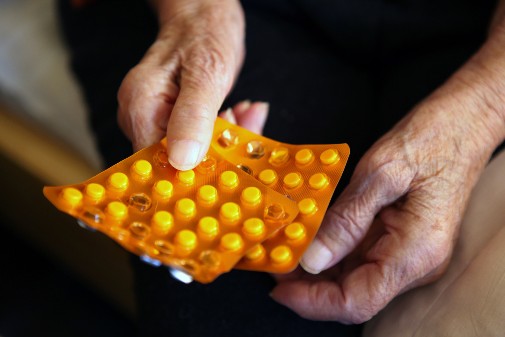
The study, by researchers at the University of York, builds on work conducted by Harvard Medical School that compared more than 450,000 users of a class of drugs, called bisphosphonates, with non-users during the months leading up to the pandemic in 2020.
The Harvard study showed that those who used drugs, such as alendronate and zoledronate, had lower odds of testing for SARS-CoV-2 infection, Covid-19 diagnosis and Covid-19-related hospitalization, but the study didn’t explain why this was the case.
Top candidates
To understand why this might be the case, researchers at York and India’s Birla Institute of Technology and Science, Pilani, explored all bisphosphonates listed in a drug candidate database that could potentially bind to a specific enzyme domain found in nidoviruses, which are a group of viruses that includes coronaviruses.
The researchers applied this technique to the top candidates in a drug repurposing database, called ‘CoviRx’, and after analysing the data, the researchers narrowed down their selection to seven promising bisphosphonates. Among these, two compounds were found to be similar to already approved drugs, minodronate and zoledronate.
They showed that alendronate is also similarly promising, suggesting all three could be potential candidates for further research and clinical trials.
Vaccine
Honorary Professor Seshadri Vasan from the University of York’s Department of Health Sciences, said: “Although vaccines have proved effective against Covid-19 and its variants, they are not able to prevent their transmission, and so new drugs are being sought to keep pace with the continuously mutating virus.
“One approach to this challenge is to use drugs already in-use for other conditions, and so in 2023 we released a database of drugs that allows scientists to narrow their search from a list of 7,817 potential candidates to a ‘top 214’. We also screened 1,992 bisphosphonates in another public database.
“Using this approach we were able to provide a molecular explanation for osteoporosis drugs such as alendronate and zoledronate protecting against Covid-19, and predict that other molecules like minodronate, a drug used in Japan, may also be beneficial.”
Clinical trials
Researchers are now calling for further studies that build on the work of Harvard, and others that have shown the potential of osteoporosis drugs, and extend to human clinical studies to explore their potential in Covid-19 and other coronaviruses.
The research is published in the Journal of Molecular Graphics and Modelling.