New study on medicinal plants established with York’s twin city in China
Posted on Monday 24 March 2025
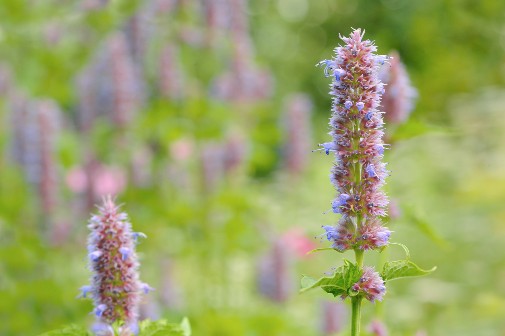
The plants, which include herbs such as mint, rosemary and hyssop, are well known for their fragrance and therapeutic potential in both western and eastern traditional medicines.
They are commonly used in treatments to tackle cold, fever, indigestion, and irritable bowel conditions.
By understanding how the plants make therapeutic chemicals, such as limonene and menthol, the team at the University of York and Nanjing University of Chinese Medicine hope to discover new ways to make the chemicals in the laboratory to help in the creation of modern medicine.
This can be achieved by removing genes from the plants and using fermentation or enzymes in test-tubes to make the chemicals, a process that should help scientists control dosage and reduce any risks associated with people taking the chemicals in medicinal form.
3D form
Scientists have already shown that the chemicals the plant produces are made up of clusters of genes, but this new study aims to use technologies that will allow researchers to look at the clusters in 3D form to understand, for the first time, how plants control and organise the genes to make therapeutic chemicals.
Dr Benjamin Lichman, from the University of York’s Centre for Novel Agricultural Products, said: “Chinese traditional medicine has evolved over thousands of years and the therapeutic chemicals of some plants are now used in some modern medicines, but how these chemicals work still holds some mystery.
“We were fortunate enough on a recent trip to Nanjing, funded by the Royal Society, to sample some of these medicinal benefits in a unique food banquet, demonstrating how versatile these plants are. Our partnership with the Nanjing University of Chinese Medicine is truly exciting and will give us the opportunity to see the genes in the plant that control these important chemicals in 3D for the first time.
“With this information we should be able to extract the genes we need from the plant to help us control these chemicals, which in natural form are highly volatile, for a much wider range of use within modern medicine.”
The city of York and the city of Nanjing in China have been twinned since 2016 due their famous city walls. The Nanjing City Wall is the world's longest circular city wall, and is one of the city's main attractions.