Proteins from two-million-year-old teeth reveal unprecedented insights into extinct human relative
Posted on Thursday 29 May 2025
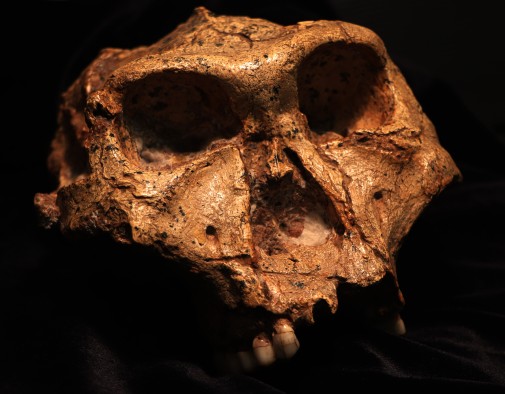
A team of European and African researchers, including scientists from the University of York, used a method known as paleoproteomics to retrieve protein fragments from dental enamel on four fossil teeth. The teeth were uncovered in Swartkrans cave in South Africa and belonged to an early human called Paranthropus robustus.
The researchers used state-of-the-art mass spectrometry techniques to partially reconstruct the protein sequences, marking a significant breakthrough in the study of human evolution by providing some of the oldest human genetic data from Africa.
The research pushes the boundaries of what we can learn from ancient fossils, especially in regions like Africa where the preservation of ancient DNA (aDNA) is often limited to around 20,000 years. A vast number of ancient human remains, once thought to be beyond genetic analysis, could now yield vital biomolecular data, potentially revolutionising our understanding of early human evolution.
Astonishing
Dr Marc Dickinson, co-author of the publication, and Postdoctoral Researcher from at the Department of Chemistry at the University of York, said: “To extract ancient amino acids from hominin enamel this old and from this region of southern Africa, is astonishing. It opens entirely new avenues for understanding our evolutionary history on the continent.”
Key insights revealed by the study include:
- For the first time, the scientists could identify the biological sex the individual Paranthropus robustus specimens. By looking at specific protein patterns, they were able to tell that two of the teeth belonged to male individuals and infer that the other two specimens were female. This ability to accurately determine the biological sex of fossilised remains is a critical advance, because it finally allows us to study sexual dimorphism (differences in size due to biological sex) in the hominin record. This gives us new clues about how these early human relatives might have lived, moved, and interacted within their groups.
- The study also revealed surprising genetic differences within the Paranthropus robustus population, identified through variations in a protein called enamelin. This finding challenges earlier ideas based solely on the shape and size of bones and opens doors to understanding the complex population dynamics and relationships among these ancient groups.
Original amino acids
The study was spearheaded by leading institutions including the University of Copenhagen and the University of Cape Town. The University of York played a crucial role in a vital step: confirming that the protein sequences examined in the study were genuinely ancient and could offer reliable insights into the past.
York researchers analysed the teeth using a technique called chiral amino acid analysis to better understand how well the proteins inside have been preserved over time. Co-author of the study, Professor Kirsty Penkman from the Department of Chemistry at the University of York, said “by assessing how much the proteins had broken down, we were able to confirm that the teeth definitely contained original amino acids that were not the result of contamination.”
Evolutionary tree
Paranthropus robustus is an extinct hominin genus that emerged and evolved in Africa between 2.8 and 1.2 million years ago. Considered to be a “side branch” of our evolutionary tree, Paranthropus coexisted with early species of Homo (our direct ancestors) in Africa and possibly interacted with them. Paranthropus was bipedal, but also showed adaptations of the upper limb for climbing and a broad dietary niche, relying on several kinds of plants and maybe on insects.
Most of the recovered Paranthropus protein sequences were remarkably similar to modern humans, differing in only two places. This suggests a close relationship to the Homo lineage (our own family, including Neanderthals and Denisovans), though they remain slightly distinct. The extreme age of the samples, however, made it challenging to pinpoint all the subtle protein differences needed for more precise family tree comparisons.
Diversity and variation
This research highlights both the immense potential and current limits of technology. It shows how ancient protein analysis works hand-in-hand with studying fossil shapes, especially for understanding human evolution in deep time and challenging environments where DNA rarely survives.
Dr. Palesa P. Madupe, co-lead author of the publication, Postdoctoral Research Fellow at the Globe Institute, University of Copenhagen, and Research Associate at the Human Evolution Research Institute (HERI), University of Cape Town, added: “The study of ancient proteins has the potential to transform our understanding of diversity and variation that was present million years ago in hominins from Africa. This research should be carried out through meaningful and impactful collaboration with local stakeholders where the fossils are discovered. We are excited to have achieved this and hope to see more such work in the future.”