Study to recover hidden history of once-banned LGBTQ+ novel
Posted on Friday 11 April 2025
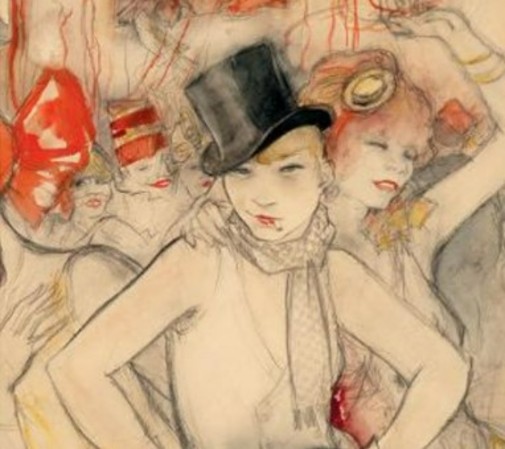
Written by British author Radclyffe Hall, and often referred to as “the Lesbian Bible”, the novel was banned as obscene in the UK following its publication in 1928.
Now, in the build-up to the centenary of that ban, a team of experts in late 19th and early 20th-century culture will carry out new research and create the first oral history of the novel’s reception, interviewing 100 readers of the book from different communities and generations to record their interpretations of it.
Dr Hannah Roche, from the University of York’s Department English and Related Literature, said: “For almost a century, the novel has fuelled debates about sex, gender, and sexuality; freedom of expression and censorship; and the identity-shaping potential of literary fiction.
“Bringing together academic researchers, heritage specialists, and creative practitioners, this new project will address historical forms of erasure and marginalisation while fostering connections across communities.”
Campaign
The Well of Loneliness, brought to print by British publisher Jonathan Cape, follows the life of Stephen Gordon, a ‘sexual invert’ who falls in love with another woman and eventually finds temporary happiness with another female partner while serving as an ambulance driver during the First World War.
A campaign against the book was launched soon after its release in 1928, and this culminated in a court ruling that it was obscene. The judgment removed it from print in the UK until 1949, but did little to stop it from being translated into multiple languages and read around the globe.
Professor Jana Funke, from the University of Exeter, said: “Radclyffe Hall’s The Well of Loneliness is one of the most contested books in LGBTQ+ history. It has served as a source of affirmation for generations, resonating with different LGBTQ+ readers, including trans and non-binary individuals.”
Legal censorship
Over the span of the research project, which is supported by funding of over £1 million from the AHRC, the team will examine how the novel came to be published, translated and reinterpreted against this backdrop of legal censorship and social hostility.
They will look at the impact that the book has had upon different communities around the world; its representation of domesticity and national identity, including Welsh and Irish identities; and the expression of LGBTQ+ cultures through fashion and photography.
Through a public-facing website, a new short film by award-winning filmmaker Campbell X, and a series of public showcases, displays, workshops, and events, 100 Years of The Well of Loneliness will work to engage, educate, and connect with a wider public audience.
Archival traces
Victoria Iglikowski-Broad, from The National Archives, said: “The policing of gender and sexuality through censorship, conversely leaves us vital archival traces to interrogate and explore our understanding of how this seminal text was received. The state response to The Well of Loneliness highlights the fears and opportunities the novel presented.”
The project’s insights into public engagement practice will be shared through a heritage toolkit, co-produced with The National Archives, and a knowledge exchange event aimed at heritage, archive, and museum specialists.
The research project, called 100 Years of The Well of Loneliness will run for the next five years, and is a collaboration between the Universities of York, Exeter, Loughborough, and Cardiff Metropolitan, The National Archives, and the Harry Ransom Center in Austin, Texas.