York Research maps 27 ways to fix the UK’s food system
Posted on Thursday 18 September 2025
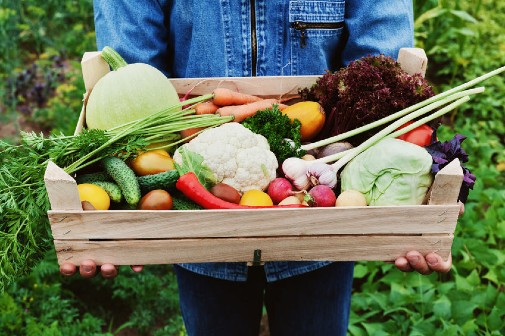
The recommendations, brought together by a team led by University of York researchers, have been published in a landmark special issue of the Royal Society’s journal Philosophical Transactions B.
The publication is the culmination of a £47.5 million, five-year research programme funded by UK Research and Innovation (UKRI). A core part of this national effort is FixOurFood, a major project led by Professor Bob Doherty, Dean of the School for Business and Society at York.
Of the 14 papers selected for the special issue, four feature academics from the FixOurFood team. Crucially, the paper that brings together all 27 national recommendations is lead-authored by the University of York’s Professor Sarah Bridle.
National Recommendations
The way the UK produces, sells, and consumes food is the source of major challenges, from diet-related disease and the cost-of-living crisis to climate change and biodiversity loss. The UKRI ‘Transforming the UK Food System for Healthy People and a Healthy Environment’ (TUKFS) programme was set up to tackle these issues.
Professor Sarah Bridle’s summary paper synthesises the key action areas identified across the entire TUKFS programme. It provides evidence and recommendations for policymakers, including work from FixOurFood led by Professor Maria Bryant on improving access to free school meals. Key recommendations highlighted include:
- Improving school meals through national auto-enrolment for free school meals and simple changes like introducing higher-fibre bread.
- Making surplus food work harder by moving from guidance to legislation, ensuring usable "waste" food is redistributed to disadvantaged groups by default.
- Creating lower-carbon hospital meals by smartly swapping dishes on menus, which could cut emissions by nearly 20%.
- Making healthy food more affordable by expanding voucher schemes for low-income households.
Professor Sarah Bridle, Chair of Food, Climate and Society at the University of York, said: “The UK food system is complex. There is no one size fits all solution but the 27 actions we’ve suggested demonstrate that practical solutions do exist.
“From getting surplus food to families who need it most, to cutting hospital meal emissions, the TUKFS programme has demonstrated that by working directly with communities, producers and organisations on the ground, it is possible to build a greener, healthier and more equitable food system that benefits both people and the planet.”
FixOurFood Research
Beyond the summary paper, three other articles in the special issue showcase the depth of research from the University of York’s FixOurFood team and its collaborators.
Vertical Farming for Social Impact
A paper led by Dr Alana Kluczkovski provides novel insight into the social benefits of urban vertical farming. Moving beyond a purely technical perspective, the research highlights how vertical farms can create green jobs, build local food supply chains, and transform "food deserts" by providing greater access to fresh, healthy food for urban communities.
Regenerative Agriculture
Co-authored by Professor Pippa Chapman, Ruth Wade (University of Leeds), and Professor Bob Doherty, another paper demonstrates the importance of genuinely co-designing trials with regenerative farmers. It outlines how to maximise knowledge exchange and highlights the need to engage with policymakers and industry partners to encourage wider uptake of sustainable farming practices.
Social Innovation
Finally, a paper co-authored by Professor Bob Doherty explores the potential for social innovation to transform the food system. The research identifies key examples, including place-based initiatives like community cafes, supply chains focused on social justice, and behaviour change activities. It also highlights critical processes like collaborative partnerships and the development of alternative social enterprise business models.
Professor Bob Doherty, Dean of the School for Business and Society and Principal Investigator for FixOurFood, said: "It is fantastic to see the significant contributions of the FixOurFood team featured so prominently in this landmark Royal Society publication. It's a testament to the collaborative work of our researchers, partners and the wider community.
“Our research aims to find practical, real-world solutions to complex problems, and this collection of papers – on topics from social innovation and vertical farming to regenerative agriculture – shows what is possible. We are proud that this work places the University of York at the centre of the vital national conversation on creating a healthier, more equitable, and sustainable food future for all."