Climate change impacts in African mountains are greater than previously thought
Posted on Wednesday 5 February 2025
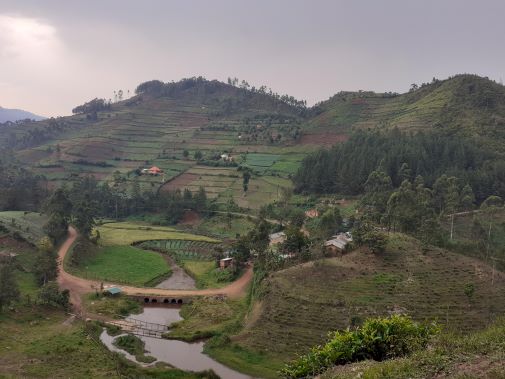
A new study from researchers at the University of York shows that climate change is impacting mountain communities in equatorial Africa more than previously thought which means that a critically urgent response is required.
Climate impacts
The research led by University of York, including lead author Dr Aida Cuni-Sanchez and YESI Resilient Socio-ecological Systems Research Theme Lead, Professor Rob Marchant, is published in Nature Climate Change. It involved interviews with 1,500 smallholder farmers from ten mountain regions in eight countries across equatorial Africa.
The study found numerous similarities in climate changes and impacts across mountain ranges in all eight countries studied - Cameroon, Ethiopia, Uganda, Rwanda, Burundi, Democratic Republic of Congo, Kenya, and Tanzania. Farmers reported increased temperatures, reduced fog, changes in rainfall amount and distribution, and an increase in extreme climate events.
Unpredictable patterns
They also reported increasingly unpredictable weather patterns which are leading to less reliable planting and harvesting schedules and increased pests and diseases, due to climate change, which are disrupting traditional agricultural practices and reducing crop yields.
These changes are having profound effects on food security, human health and local livelihoods, even beyond mountain regions as water and food from these regions is often used by thousands of people further downstream.
Diversifying livelihoods
The researchers also found that in response to these impacts, mountain communities are employing a wide range of adaptation strategies including changing farming practices such as adopting new crop varieties, investing in water and soil management, using agrochemicals, and using more veterinary care.
In some mountains farmers are diversifying livelihoods by starting animal rearing or getting involved in vegetable farming, but livelihood diversification was highly variable across sites.
Adaptation responses
However, the study also highlights that the number and type of adaptation responses character of responses varies significantly across the ten mountains, underlining that a ‘one-size-fits-all’ approach to climate change impacts does not work.
Professor Marchant emphasised the importance of these findings. He said: “African mountain regions are hotspots of biodiversity and cultural heritage, but they are increasingly vulnerable to climate change. Our research underlines the critical and urgent need for localised adaptation strategies to mitigate the socio-ecological and economic impacts communities face.”
Shaping policy
Professor Marchant explained: “Adaptation strategies must be tailored to the specific environmental, social and political dynamics of each mountain region and should carefully consider the unintended consequences of some national policies and the constraints of ongoing violent conflicts.”
A policy brief by the Basque Centre for Climate Change (BC3) led by Dr. Noelia Zafra-Calvo titled Climate Change in African Mountains: An Increasing Challenge and Contribution of Local Adaptation Responses calls for increased investment in community-driven solutions that respect the unique characteristics of each region. It also advocates for collaborative action between local communities, governments, researchers and international organisations to co-develop sustainable adaptation strategies.
Participatory approaches
Lead author Dr Aida Cuni-Sanchez highlights the uniqueness of the research approach. She explained: “In most African mountains there are no meteorological stations, or long-term records of crop yields. Just because changes have not been recorded, it doesn’t mean they did not take place.
“We approached farmers’ perceptions and their indigenous knowledge as living records of past changes, and we show that there have been numerous climatic changes and impacts, in all mountains studied. “We hope that our approach inspires researchers and practitioners working in other data-deficient regions, as climate change is affecting us all.”
Accelerating learning
Professor Marchant added: “The profound effects of climate change on mountain communities should not be underestimated. But it is a positive that our research is helping people to co-design and co-develop strategies that really work.
"By working with international partners on land use policy development and implementation we hope to accelerate learning and support change from the ground up.”